8 Effective Home Remedies for Dust Allergy

allergy with dust

Do you feel irritated with a very little particle of dust? Or, Do you often start to sneeze, cough or wheeze while cleaning the house or wearing new clothes? Do you often have itchy red eyes, runny nose, nose blockage etc? You’re right! You have allergy with dust.
Skin tests reveal that between 5 and 30 percent of the general population is sensitive to house dust mites. Although, household allergies affect people differently. Some people don’t react to dust mites at all, while others have itching, a runny nose, and sneezing. Here are some effective home remedies and foods that can help with dust allergy.

WHATSAPP for concerns like Speech Delay, Low Weight, Frequent Illness, Hyperactivity, Low Concentration, Weak Eyesight, Improper Sleep, Pigmentation, Pores, Face Marks, Fine Lines , Lactation etc.

A MOM’S OPINION ABOUT HOW IMMUNITY BOOSTER HELPED TO FIGHT AGAINST ALLEGIES

What are allergens?

Allergies are abnormal reactions from your immune system to things that are usually harmless to most people. Our immune system protects us from harmful organisms that cause illness. If you have an allergy with dust, that means your immune system mistakes a harmless substance as an invader. There are various substances that can cause different types of allergy or allergic reactions like some foods, dust, plants, pollens, or medicines and these substances are called allergens.

Also check, Asthma, 7 Foods that help

Reasons/causes of allergy with dust:

Pollen:

Pollen is made up of tiny pollen grains and is a fine, powdery substance. It is an inherent component of grasses, flowers, and trees. Different types of pollen may cause allergies in different persons.

Mould:

Mould is a type of fungus with spores that may float in the atmosphere. These mould spores can cause allergy with dust. 

Cockroaches:

Some people may get a dust allergy if they inhale cockroach droppings. These may combine with household dust and worsen the condition of allergy.

Animal hair, fur and feathers: 

Another reason for dust allergy is pets. Their skin flakes (called dander), saliva, or urine,especially when coupled with dust cause allergy with dust.

Also check, Remedies for dry cough in kids

Symptoms of dust allergy: 

Common symptoms of allergies are:

  • Sneezing and coughing
  • Wheezing
  • Itchy red eyes,
  • Tightness of the chest
  • Runny nose or Stuffed nose
  • Breathing difficulty
  • Shortness of Breath

Also check, Natural remedies for allergy in kids

Home remedies for dust allergy:

1. SALINE NASAL SOLUTION:

Nasal solution has been found to reduce the effects in both children and adults as it helps to clean mucus from the nose.

Also check, How to scale back nebulizer use in kids?

2. HEPA FILTERS:

Hepa filters trap the airborne particles such as dust, pollen & pet dander and efficiently reduce the allergens inside the home.

3. ACUPUNCTURE:

Acupuncture has shown positive results in both seasonal and perennial allergic rhinitis. 

4. HONEY:

Honey is one of the best naturally available home remedies for different types of allergy. It contains amino acids, vitamins and antioxidants which helps in healing. According to a theory, eating locally manufactured honey might reduce your allergic reaction over time to the pollen that the bees collect in your area to make their honey. But in some cases, when the honey is produced, it might get contaminated with bee pollen and pollen from other plants like buckwheat, tulips and sunflowers. In case you are allergic to pollen, you might also become allergic to honey.

Also, check Health Benefits of Honey

5. AIR CONDITIONERS AND HUMIDIFIERS:

Air conditioners and humidifiers can lower the growth of mildew and mold that cause allergies.

6. PEPPERMINT OIL:

Peppermint oil has anti-inflammatory properties that can lower the symptoms of bronchial asthma and allergic rhinitis.

7. EUCALYPTUS OIL: 

Eucalyptus oil has antimicrobial properties that acts as a wonderful home remedy for allergies.

8. STEAM INHALATION:

Inhaling steam can help to ease a stuffy nose and breathe comfortably.

Also check, Seasonal allergies in kids

FOODS FOR ALLERGY WITH DUST

Boosting immunity is the key solution for reducing the dust allergy.  Some of the immunity boosting foods are:

Giloy:

It is a shrub and an essential herb in ayurvedic medicines. Giloy is used to treat a wide range of health conditions. It contains important plant compounds like terpenoids, alkaloids, lignans, and steroids.Giloy lessens the signs and symptoms of allergic rhinitis, which is another name for hay fever. It lessens symptoms such as nasal blockage, sneezing, nasal discharge, and itching. Additionally, it raises the quantity of leukocytes (white blood cells) to help the body fight illness.

Tulsi: 

Tulsi leaves have been scientifically proven to have medicinal properties. It also has antibacterial, antiviral and antifungal effects, rich in vitamin c and zinc.It a traditional home medicine for a variety of respiratory ailments, including dust allergies. 

Amla:

Amla is a storehouse of antioxidants. It is one of the richest sources of vitamin C, which is known to boost immunity. It has antibacterial and astringent properties that boosts immunity.

Ashwagandha:

As an anti-oxidant, boosting immunity is one of the most popular benefits of Ashwagandha for kids. The root activates and increases the levels of enzymes and macrophages, a type of white blood cell that kills bad viruses and bacterias. It also promotes the development of antibodies, which is a major factor in improving the body’s response to a health-threatening infection.

Turmeric:

A compound found in turmeric, Curcumin, offers therapeutic relief and is a perfect immunity booster for kids. It has a very high antioxidant value to protect the body from invading infections. It is also rich in vitamin A, Thiamine (B1), Riboflavin (B2) and vitamin C.

Nuts:

The vitamin E found in nuts like almonds, cashews, peanuts and hazelnut help the immune system to fight against invading bacteria. They are a great source of antioxidants that keep the body healthy and disease free by neutralising free radicals and reducing inflammation.

Also check, Benefits of nuts and seeds during pregnancy

Seeds:

Seeds are an incredible source of nutrients. Sunflower seeds are rich in magnesium, vitamin E, antioxidants and good fats. Together they help to boost immunity. Pumpkin seeds are rich in Vitamin E which is necessary for immunity building and also packed with other bone-building nutrients like potassium, magnesium and vitamin K. Melon seeds are a good source of zinc. It helps to boost our immunity, helps in digestion, cell growth, and keeps your nervous system healthy.

Also check, Quick fix for weak digestion

Antioxidants:

Cocoa contains flavonoid, a naturally occurring compound found in plants which act as antioxidant and help in counteracting free radicals in the body. Also rich in zinc, iron, copper, and vitamins like A, B12 and K. Vitamin E is a potent antioxidant and has an ability to modulate host immune functions. Vitamin E is key for strong immunity and healthy skin and eyes. In recent years, vitamin E supplements have become popular as antioxidants.

Also check, 12 Immunity boosting foods for kids

Products:

It’s no SECRET that following an Ayurvedic lifestyle has numerous advantages. This unique collection of Ayurvedic spreads is an easy solution to feed daily nutrition for Immunity, Eye, Brain development, Bone strength and overall growth to kids without any fuss. To know more about kid’s ayurvedic foods –SHOP HERE.

India’s First Tasty Kids Nutrition fortified with Ayurvedic herbs.

For Dust Allergy or Seasonal allergies in Kids, give Immunity Boost Chocolate Spread | 0% preservatives | 0% Refined sugar | 0% Palm oil | With Amla, Giloy, Tulsi, Turmeric, Ashwagandha | ORDER |


CHECK MORE PRODUCTS FOR:

Immunity, Gut health, Digestion, Weight, Brain development, Speech delay, Epilepsy, Eye health, Hormones, Sleep, Hyperactivity, Bones and Overall growth

what is the down's syndrome

READ MORE BLOGS:

Tips for Eye Care in Kids

for eye care tips

The Eye is the lamp of the body, so if the eye is healthy your whole body will be full of light. Eye is the busiest organ as it starts working from the moment you wake up till the moment you close your eyes. Any information that your brain receives is initially processed through your vision. With a sharp drop in physical movement (outdoor activities), and increased screen time due to online classes and pleasure viewing, leads to many health-related concerns especially affecting eyesight. It is the responsibility of parents to take measures for their eye care. Read on to know simple tips and foods helping in children’s eye care.

Also check, Beta carotene for eye care

WHATSAPP for concerns like Speech Delay, Low Weight, Frequent Illness, Hyperactivity, Low Concentration, Weak Eyesight, Improper Sleep, Pigmentation, Pores, Face Marks, Fine Lines , Lactation etc.

Simple tips for eye care in children

1. Give rest to eyes:

Every 30 to 40 minutes, your child should take a break from writing, reading, or playing video games on a computer or smartphone. Children’s daily screen time should be decreased and the distance between the gadget/screen and the eye should be more.

Also check, Difficulties in learning, reading and writing-7 Foods that can help

2. Sun protection:

It is important to protect your child’s eye from UV radiation from sunlight. You can invest in good sun protection glasses or hats or umbrellas for the eye care of children.

Also check, Tips for skincare- How to apply sunscreen?

3. Avoid giving harsh and pokey toys:

If the children are playing with sharp or hard objects, they may accidentally hit the eye with the toy. Hence make sure that your child is playing with the safe toys and objects.

4. Don’t use any eye makeup for your kid:

Market-available eye cosmetic products like kajal and eyeshadow frequently include a lot of chemicals in them. Therefore, avoid any cosmetics for your child’s eye.

5. Balanced and nutritious diet:

For good vision of the children, their diet should include iron rich green leafy vegetables and beta carotene containing foods such as yellow and orange fruits and vegetables (papaya, pumpkin, mango, carrot etc).

Also check, 6 Best recipes for foods rich in iron

6. Stop your child from repeatedly rubbing their eyes:

When children experience eye irritation, they frequently wipe their eyes to soothe them. If there is any foreign substance in the eye, pressing it against the eyeball or using unclean hands to rub it will be dangerous. Teach your child to avoid doing this and to properly clean their hands and to use water to clean the eye.

7. Healthy eye care habits: 

Taking proper and adequate sleep in the night, proper lighting in the reading room, keeping a distance of 30-40cm between kid’s eye and books and about 50cm from electronic gadgets are some of the healthy eye care habits to be followed.

Also check, 5 Foods that help your child in sleeping well

8. Engaging in more outdoor activities: 

Researchers have found that involving more in outdoor activities such as swimming and cycling can reduce the risk of myopia (a common eyesight issue where objects close to you can be seen clearly, while those farther away appear hazy).

9. Eye protection:

While engaging in activities such as sports or handling the chemicals, make sure that they use eye protection glasses.

10. Exercise: 

Doing regular exercises has been demonstrated to lower the risk of acquiring diabetes, a condition that can cause blindness, as well as a number of eye conditions.

FOODS FOR EYE CARE FOR CHILDREN

7 Essential nutrients for eye care in kids- Check here

9 proven foods for eye health- Check here


Product:

It’s no SECRET that following an Ayurvedic lifestyle has numerous advantages. This unique collection of Ayurvedic spreads is an easy solution to feed daily nutrition for Immunity, Eye, Brain development, Bone strength and overall growth to kids without any fuss. To know more about kid’s ayurvedic foods –SHOP HERE.

India’s First Tasty Kids Nutrition fortified with Ayurvedic herbs

For Better vision and to strengthen eye muscles, give Kids and Teens Eye health Chocolate Spread| Made with 100% veggies, greens, sprouted dal, Gingko Biloba, Lutein, Zeaxanthin | 0% preservative | 0% Artificial Colour | 100% Natural | No refined sugar | ORDER |


CHECK MORE PRODUCTS FOR:

Immunity, Gut health, Digestion, Weight, Brain development, Speech delay, Epilepsy, Eye health, Hormones, Sleep, Hyperactivity, Bones and Overall growth

what is the down's syndrome

READ MORE BLOGS:

Asthma: 7 Foods that help

1 in 10 kids in India experiences asthma or breathing problem. They are mostly characterized by difficulty in breathing, chest congestion, and frequent coughing. Moreover, a high-pitched, whistle-like sound can be heard when the child is breathing or sleeping. However, taking extra care and including the right nutrition in the diet can help children with asthma or breathing problems. Read more!!

WHATSAPP for concerns like Speech Delay, Low Weight, Frequent Illness, Hyperactivity, Low Concentration, Weak Eyesight, Improper Sleep, Pigmentation, Pores, Face Marks, Fine Lines , Lactation etc.

WHAT IS ASTHMA (BREATHING PROBLEM)?? 

The chronic inflammatory condition of the lungs is asthma. It causes the airways to become constricted and swollen, which causes breathing problem. Additionally, it makes it challenging and occasionally impossible to engage in any daily physical tasks.

To understand how asthma affects the lungs, let’s first understand how normal respiration takes place. When you breathe, the air goes from your nose or mouth, passes through the throat, into the airways and finally into the lungs. Inside the lungs, there are so many air passages that deliver the oxygen from the lungs into the bloodstream. When the muscles surrounding your airways constrict and the lining of your airways expands, symptoms of asthma develop. The amount of air that can pass through is then further diminished as mucus fills the airways. The coughing and chest tightness that are symptomatic of an asthma “attack” can then arise from all these circumstances.

Also check, MOST EFFECTIVE HOME REMEDIES AND FOODS FOR PNEUMONIA

GENERAL SYMPTOMS OF ASTHMA

The most typical asthmatic symptom is wheezing. Basically, wheezing is a crackling or whistling sound that happens during breathing. Other symptoms of asthma include coughing while laughing or exercising, chest tightness, difficulty in talking, anxiety, chest pain, exhaustion, fast breathing, more recurrent infections, and trouble sleeping.

Also check, MIGRAINE IN KIDS

Asthma in infants and children:

Approximately 10% to 12% of children may have asthma. A child with asthma may typically experience their first attack by the time they are 5 years old, or even before that, although it may take longer to identify them.

Causes :

Children’s asthma may initially be brought on by an allergy. They may develop asthma as a result of a respiratory infection or family history, or they may be allergic to pollen, pet hair, dust mites, or saliva.

SYMPTOMS:

Children with asthma may sometimes have rapid breathing patterns, tightness in the chest, breathing problem, heavy coughing, wheezing noises, difficulty feeding, sluggishness, feeble cries, and blue or pale skin or nails.

When to see the doctor?

If you find any following symptoms in your child, then immediately contact the doctor.

  1. Bigger chest
  2. Stopped feeding or suckling
  3. Fainted crying
  4. Widened nostrils
  5. Change in skin colour
  6. Increased breathing rate or breathing problem.
REMEDIES FOR ASTHMA (OR ASTHMA BRONCHITIS):
Modifications in the diet: 

Sometimes being obese may worsen the conditions of asthma. Hence it is important to note that children must be given a healthy and balanced diet with foods rich in beta carotene, vitamin E and C. These nutrients help to reduce the inflammation in the airways of lungs.

Also check, BETA CAROTENE FOR EYE CARE

Buteyko Breathing technique:

Breathing exercises are part of the Buteyko Breathing Technique (BBT) programme. By breathing slowly and gently, it might be able to lessen your asthma symptoms. BBT emphasises using the nose to breathe rather than mouth. The airways may become drier and more sensitive if the child breathes through the mouth.

Papworth method:

Asthma sufferers have benefited from the Papworth method, a breathing and relaxation technique, since the 1960s. It includes creating breathing patterns by using the nose and diaphragm.

Also check, 10 PROVEN HEALTH BENEFITS OF CHAMOMILE

Yoga:

Teaching children yoga can help in their overall fitness level as well as flexibility. The breathing exercises in yoga help for healing any respiratory disorder.

Hypnotherapy:

In hypnotherapy, hypnosis is employed to help patients become more at ease and receptive to novel ways of thinking, feeling, and behaving. Inducing muscle relaxation through hypnosis may help asthma sufferers handle symptoms like chest tightness.

Avoiding triggers:

Avoid substances, odours, or items that have in the past made it difficult to breathe.

Reducing allergens exposure:

Avoid allergens that you’ve found to cause asthma attacks, such as dust or mould, if at all possible.

FOODS TO AVOID:

  • Shellfish
  • Vinegar
  • Pickle
  • Dried fruits
  • Beans 
  • Processed meats
  • Dairy products

HERBS AND FOODS THAT HELP IN ASTHMA BRONCHITIS/ BREATHING PROBLEM:

Ashwagandha

Asthma patients’ breathing is thought to be benefited by ashwagandha by relaxing the muscles in the airways. Additionally, it suppresses immune system reactions that are inflammatory and has general stress-relieving properties.

Also check, HEALTH BENEFITS OF ASHWAGANDHA FOR KIDS AND TEENAGERS

Tulsi and black pepper

Tulsi is a potent herb that benefits those who suffer from asthma. Asthma can be controlled by taking tulsi leaves and crushed black pepper. Tulsi leaves can also be ground with water and eaten with honey.

Also check, Panchamrit benefits to boost immunity

Giloy

Giloy is used to relieve severe coughs and asthma. It has effective anti-inflammatory properties and diminishes the response of substances that cause inflammation. This lessens airway irritation in cases of cough and asthma.

Turmeric

Curcumin, an anti-inflammatory compound found in turmeric, is crucial for boosting lung health and treating diseases like asthma.

Amla

Vitamin C, which is abundant in amla and helps to boost immunity and asthma tolerance. Its anti-inflammatory qualities are extremely important in lowering the intensity of the asthma attack. It is also a component of certain over-the-counter asthma treatments.

Also check, THE BENEFIT OF VITAMIN C: READY STEADY GLOW!

Nuts 

Nuts such as hazelnuts, cashew and almonds are good sources of vitamin E which may be beneficial for those with asthma.

Seeds

Seeds such as flaxseeds, melon, sunflower and pumpkin seeds are good sources of omega-3 fatty acids. They also include magnesium, which helps to keep the airways open by relaxing the muscles around the bronchi and other air passages.


Products:

It’s no SECRET that following an Ayurvedic lifestyle has numerous advantages. This unique collection of Ayurvedic spreads is an easy solution to feed daily nutrition for Immunity, Eye, Brain development, Bone strength and overall growth to kids without any fuss. To know more about kid’s ayurvedic foods –SHOP HERE.

India’s First Tasty Kids Nutrition fortified with Ayurvedic herbs.

For Asthma or Breathing problems in Kids, give Immunity Boost Chocolate Spread | 0% preservatives | 0% Refined sugar | 0% Palm oil | With Amla, Giloy, Tulsi, Turmeric, Ashwagandha | ORDER |


CHECK MORE PRODUCTS FOR:

Immunity, Gut health, Digestion, Weight, Brain development, Speech delay, Epilepsy, Eye health, Hormones, Sleep, Hyperactivity, Bones and Overall growth

what is the down's syndrome

READ MORE BLOGS:

Alopecia Areata: 10 Remedies and Foods that help

hair loss

Having a long, healthy and good volume of hair is a pride for both girls and boys… Isn’t it? Hair loss is a common problem of all in one or the other stage of life. But what if your hair loss is in only one region of your head!! What if you have inflammation in that region!! Yes, you might be having ALOPECIA AREATA (AA). Approximately, 88% of people facing Alopecia Areata are below 40 years of age, including 24% of children. Often, it results in a few bald patches, which may be managed with simple home remedies and foods mentioned in this blog.

WHATSAPP for concerns like Speech Delay, Low Weight, Frequent Illness, Hyperactivity, Low Concentration, Weak Eyesight, Improper Sleep, Pigmentation, Pores, Face Marks, Fine Lines , Lactation etc.

WHAT IS THIS ALOPECIA AREATA?

Alopecia areata is an autoimmune disease that means a disease which affects a person’s own immune system. This results in the person’s hair coming out in clusters leaving a bald spot, and also resulting in inflammation. The hair may grow back in the spot later on but it will fall out eventually. For some people, hair may grow permanently afterwards. 

Alopecia areata is common in children and adults of all ages. People with 21-40 years of age are more likely to be affected with AA which is followed by the age group of 1-20 years old, 41-60 years and finally 61-80 years old. If there is any family history of Alopecia areata, their children are 10-51.3% likely to develop AA. Also, male children are more affected by family history than female children.

TYPES OF ALOPECIA AREATA:

TypesSymptoms
Alopecia areata totalisAll the hair on your head is lost
Alopecia areata universalisHair is lost from the whole body
Diffuse alopecia areataHair loss companied with sudden thinning in the hair
Ophiasis alopecia areataHair loss around the sides and back of the head in a band shape

Causes:

When a person is having an autoimmune disease, his own immune system affects his body negatively. In the case of Alopecia areata, it affects the hair. The person who has a family history of AA, asthma, Down’s syndrome, pernicious anaemia, seasonal allergy, thyroid disease or vitiligo may suffer from AA.

Symptoms:

Hair loss is the major symptom of AA. It includes:

  • Tiny bald patches may occur in the scalp or other body parts.
  • These patches may expand bigger and result in a big bald spot.
  • You may experience hair growing back in one spot and falling in another spot.
  • You may lose a lot of hair in a very short time especially in cold weather.
  • Red, brittle, and pitted fingernails and toenails.

Although bald spots are smooth without any rashes or redness, it might feel itching,tingling and burning before hair loss. 

Also check, REASON FOR HAIR FALL AFTER CHILDBIRTH: POSTPARTUM CHANGES

Home remedies for ALOPECIA AREATA:

For reducing hair loss, it is critical to establish a proper hair care routine in order to reduce breakage and keep the hair you do have full and healthy. Although, every remedy mentioned on the internet might not work for you. Therefore, it is recommended to try any remedy on a smaller patch to check its suitability on your scalp or skin.

1. OIL MASSAGE:

The benefits of hair massage for hair loss control are amazing. It increases blood circulation, reduces hair loss and promotes hair growth in bald spots. Moreover, it keeps you relaxed. Massage gently with lukewarm oil. Coconut oil is best suited but some medicated oil such as rosemary oil, and arnica oil may be beneficial.

Also, check 20 Best Foods for Healthy Hair

2. FENUGREEK:

Fenugreek do wonders to your hair. It helps in reducing the hair loss and growing new hair on the spots. Soak the fenugreek seeds in water overnight. Strain and apply the fenugreek water to your scalp. Let it rest for 1-2 hours and wash with shampoo. You can also make a paste, apply for about 30 mins and wash off. Repeat this procedure twice a week for better results.

3. AMLA:

For centuries, amla has been used as a cure for many hair issues. Amla, a rich source of vitamin C, can be used either in your diet or as an external application. Heat coconut oil with amla powder until it turns brownish-black. Once it is cooled, apply to your roots. Rest it for 2 hours and wash with shampoo. If this feels too sticky for you, then try mixing amla juice with lemon juice and apply it on your scalp. Massage it gently and leave it for about 2 hours. Wash off clean.

4.BHRINGRAJ:

Bhringraj is commonly known for its benefits on hair and for hair loss control and regrowth of hair. Make a paste of fresh Bhringraj leaves and apply it on the scalp. Leave it for 45 mins and then wash as usual. If you don’t have fresh leaves, then try the tablets or powders available in the market.

5.ESSENTIAL OILS:

Essential oils are one of the greatest tips for hair care. They have antifungal, antibacterial, antiseptic and antibiotic properties too. It helps hair growth and boost circulation. Rosemary oil, geranium oil and tea tree oil are a few to mention. You can mix a few drops of any of these oils with a carrier oil such as coconut or olive oil. Massage it on your scalp. Leave it for 10-15 minutes and wash thoroughly. DO NOT USE CONCENTRATED ESSENTIAL OILS.

6.ALOE VERA:

Aloe vera is an all-rounder. It reduces skin

inflammation, scaliness, itching, irritation and moisturises the skin too. Moreover, aloe vera helps in reducing. It prevents hair loss and liberates the hair follicles blocked by excessive oil secretion. Apply fresh Aloe Vera gel to the scalp. Rub a little. Rest for a good 20 minutes and wash off normally as you would.

7.ONION JUICE:

Although onions have a strong odour and can drive you insane, they will eliminate your tears when it comes to hair loss. It’s a good remedy for hair loss control as it increases the blood supply. If you use this on a regular basis you will notice shiny, thicker and longer hair. Make onion juice by grinding. Apply it evenly on the scalp. Massage gently. Leave it for 30 minutes. Wash normally.

8.EGG HAIR MASK:

Eggs are rich in Sulphur, protein, zinc and phosphorus. It is an excellent remedy for hair loss control. This is because it promotes hair growth, prevents split ends and strengthens the strands.  Mix an egg with a teaspoon of honey and olive oil. Apply it on the scalp and massage it well. Leave it for 20-30 minutes. Wash with cold water.

9. REGULAR WASHING AND HEALTHY DIET:

Regular washing of hair will help to keep the scalp and the hair clean and healthy. It is important to use chemical-free hair care products to reduce breakage and hair loss. A healthy diet and the consumption of plenty of water will help in nourishing the hair from inside and promote hair growth.

10. HIBISCUS:

This flower is rich in vitamin C, flavonoids, amino acids, mucilage fibre, moisture content and antioxidants. It helps prevent hair loss and stimulates regrowth from dormant follicles and also reduces the greying of hair. Another healthy hair tip for hair loss situations and dry hair is to add hibiscus petals to your hair oil & then massage your scalp using this oil.

FOODS FOR HAIR LOSS CONTROL AND REGROWTH OF HAIR IN BALD SPOTS:

Diet and nutrition plays a significant role in developing the strength of your hair. There are various foods, nutrients, herbs and essential oils for hair loss control and for hair growth that can help to prevent/cure hair loss and bald spots.

PROTEIN RICH FOODS: 

Hair is made up of 95% protein. Absorbable proteins must be a part of diet. Some good sources of proteins include legumes, soy, lentils, eggs, fish, beans and dairy products.   (Also check, Top nuts and seeds for protein)

VITAMIN B RICH FOODS:

Biotin, a vitamin associated with hair growth, is an essential one to be consumed. Natural sources of vitamin B include dark green leafy vegetables, almonds, eggs, milk, cheese, yoghurt, Salmon and legumes. (Also check, What are the reasons for hair loss in kids?)

IRON RICH FOODS:

Anaemia is one of the major reasons for hair loss. Iron helps in carrying oxygen to your cell. And as hair follicles are nourished by blood supply it is important to have iron rich foods. Good natural sources of iron include spinach, legumes, nuts and seeds, quinoa, dates, beetroot, broccoli, dark chocolate, fishes, ragi.

VITAMIN E RICH FOODS:

The antioxidant properties of vitamin E have been hailed for its skin and hair benefits. It helps in reducing hair loss to some extent. Also, vitamin E improves overall scalp, hair health and adds shine to the hair. This vitamin is easily found in nuts, sunflower seeds, soya oil, wheat germ, green leafy vegetables, olive oil, sunflower oil, avocado and kiwi.

VITAMIN D RICH FOODS:

Vitamin D stimulates the new and old hair follicles. Low levels of which can cause hair loss. Some foods rich in this vitamin include fishes, mushrooms, ghee, certain cereals, milk and egg yolk. (Why calcium and vitamin D are important?)

VITAMIN C RICH FOODS:

One of the roles of vitamin C in the body is to create a protein collagen which is an important part of hair structure. Moreover, it assists the absorption of iron. Vitamin C is abundantly found in citrus fruits, strawberries, raspberries, peppers, broccoli and kale.                     

(Also check, Which food is the house of vitamin C?)

ZINC RICH FOOD:

The deficiency of zinc is one of the reasons for hair loss. This is because zinc has its major part of play in hair growth and hair repair. Food high in zinc comprises pumpkin seeds, whole grains, milk products, poultry, beans, nuts, dark chocolate. (Also check, Foods that can help to get best skin and hair)

COLLAGEN: 

Collagen, as studies suggest, is one of the main reasons for hair loss and hair thinning. It is a protein which helps to build your connective tissues like bones, ligaments, cartilage and also improves skin, hair, nails, joints and digestion. It can be commonly found in fish, chicken, egg whites, citrus fruits, berries and garlic.

(Also check, Which foods can help with acne?)

MORINGA:

Moringa is loaded with nutrients such as Zinc, vitamin A, B, C and E and essential amino acids. It is rich in chlorophyll and antioxidants which helps to nourish your hair. It helps restore strength, promotes hair growth and also repairs damaged hair. (Is this really a superfood to prevent most of the ailments?)

PRODUCTS:

It’s no SECRET that following an Ayurvedic lifestyle has numerous advantages. This unique collection of Ayurvedic spreads is an easy solution to feed daily nutrition for Immunity, Eye, Brain development, Bone strength and overall growth to kids without any fuss. To know more about kid’s ayurvedic foods –SHOP HERE.

India’s First Tasty Kids Nutrition fortified with Ayurvedic herbs.

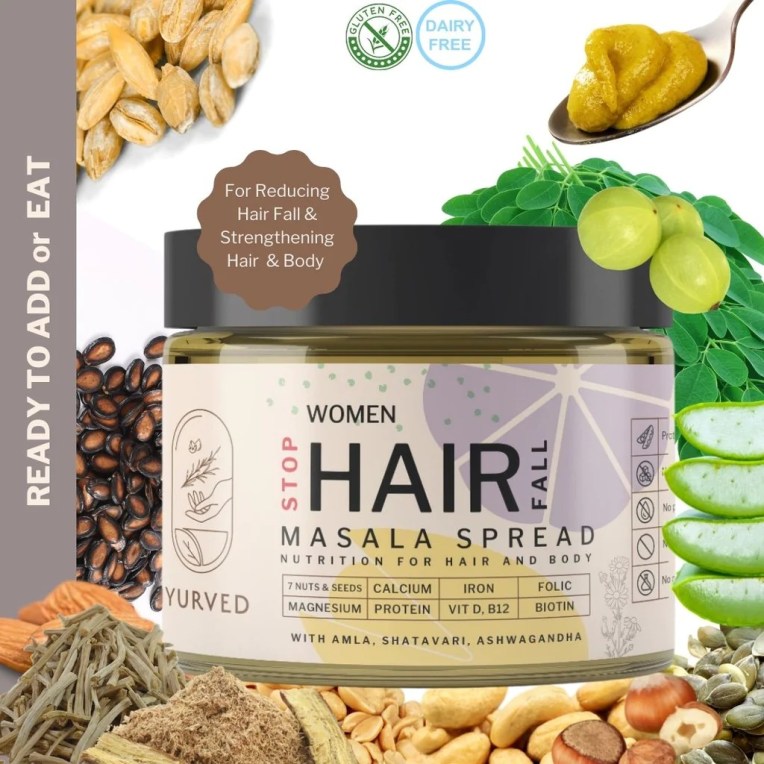
For Stopping Hair Fall & Strengthening Hair & Body, give Women Stop Hair Fall Masala Spread | 0% Preservatives | 0% Refined Sugar | 0% Palm oil | With SHATAVARI, ASHWAGANDHA, AMLA, MORINGA, ALOE VERA | ORDER |


CHECK MORE PRODUCTS FOR:

Immunity, Gut health, Digestion, Weight, Brain development, Speech delay, Epilepsy, Eye health, Hormones, Sleep, Hyperactivity, Bones and Overall growth

foods for breast milk

read more blogs