8 Effective Home Remedies for Dust Allergy

allergy with dust

Do you feel irritated with a very little particle of dust? Or, Do you often start to sneeze, cough or wheeze while cleaning the house or wearing new clothes? Do you often have itchy red eyes, runny nose, nose blockage etc? You’re right! You have allergy with dust.
Skin tests reveal that between 5 and 30 percent of the general population is sensitive to house dust mites. Although, household allergies affect people differently. Some people don’t react to dust mites at all, while others have itching, a runny nose, and sneezing. Here are some effective home remedies and foods that can help with dust allergy.

WHATSAPP for concerns like Speech Delay, Low Weight, Frequent Illness, Hyperactivity, Low Concentration, Weak Eyesight, Improper Sleep, Pigmentation, Pores, Face Marks, Fine Lines , Lactation etc.

A MOM’S OPINION ABOUT HOW IMMUNITY BOOSTER HELPED TO FIGHT AGAINST ALLEGIES

What are allergens?

Allergies are abnormal reactions from your immune system to things that are usually harmless to most people. Our immune system protects us from harmful organisms that cause illness. If you have an allergy with dust, that means your immune system mistakes a harmless substance as an invader. There are various substances that can cause different types of allergy or allergic reactions like some foods, dust, plants, pollens, or medicines and these substances are called allergens.

Also check, Asthma, 7 Foods that help

Reasons/causes of allergy with dust:

Pollen:

Pollen is made up of tiny pollen grains and is a fine, powdery substance. It is an inherent component of grasses, flowers, and trees. Different types of pollen may cause allergies in different persons.

Mould:

Mould is a type of fungus with spores that may float in the atmosphere. These mould spores can cause allergy with dust. 

Cockroaches:

Some people may get a dust allergy if they inhale cockroach droppings. These may combine with household dust and worsen the condition of allergy.

Animal hair, fur and feathers: 

Another reason for dust allergy is pets. Their skin flakes (called dander), saliva, or urine,especially when coupled with dust cause allergy with dust.

Also check, Remedies for dry cough in kids

Symptoms of dust allergy: 

Common symptoms of allergies are:

  • Sneezing and coughing
  • Wheezing
  • Itchy red eyes,
  • Tightness of the chest
  • Runny nose or Stuffed nose
  • Breathing difficulty
  • Shortness of Breath

Also check, Natural remedies for allergy in kids

Home remedies for dust allergy:

1. SALINE NASAL SOLUTION:

Nasal solution has been found to reduce the effects in both children and adults as it helps to clean mucus from the nose.

Also check, How to scale back nebulizer use in kids?

2. HEPA FILTERS:

Hepa filters trap the airborne particles such as dust, pollen & pet dander and efficiently reduce the allergens inside the home.

3. ACUPUNCTURE:

Acupuncture has shown positive results in both seasonal and perennial allergic rhinitis

4. HONEY:

Honey is one of the best naturally available home remedies for different types of allergy. It contains amino acids, vitamins and antioxidants which helps in healing. According to a theory, eating locally manufactured honey might reduce your allergic reaction over time to the pollen that the bees collect in your area to make their honey. But in some cases, when the honey is produced, it might get contaminated with bee pollen and pollen from other plants like buckwheat, tulips and sunflowers. In case you are allergic to pollen, you might also become allergic to honey.

Also, check Health Benefits of Honey

5. AIR CONDITIONERS AND HUMIDIFIERS:

Air conditioners and humidifiers can lower the growth of mildew and mold that cause allergies.

6. PEPPERMINT OIL:

Peppermint oil has anti-inflammatory properties that can lower the symptoms of bronchial asthma and allergic rhinitis.

7. EUCALYPTUS OIL: 

Eucalyptus oil has antimicrobial properties that acts as a wonderful home remedy for allergies.

8. STEAM INHALATION:

Inhaling steam can help to ease a stuffy nose and breathe comfortably.

Also check, Seasonal allergies in kids

FOODS FOR ALLERGY WITH DUST

Boosting immunity is the key solution for reducing the dust allergy.  Some of the immunity boosting foods are:

Giloy:

It is a shrub and an essential herb in ayurvedic medicines. Giloy is used to treat a wide range of health conditions. It contains important plant compounds like terpenoids, alkaloids, lignans, and steroids.Giloy lessens the signs and symptoms of allergic rhinitis, which is another name for hay fever. It lessens symptoms such as nasal blockage, sneezing, nasal discharge, and itching. Additionally, it raises the quantity of leukocytes (white blood cells) to help the body fight illness.

Tulsi: 

Tulsi leaves have been scientifically proven to have medicinal properties. It also has antibacterial, antiviral and antifungal effects, rich in vitamin c and zinc.It a traditional home medicine for a variety of respiratory ailments, including dust allergies. 

Amla:

Amla is a storehouse of antioxidants. It is one of the richest sources of vitamin C, which is known to boost immunity. It has antibacterial and astringent properties that boosts immunity.

Ashwagandha:

As an anti-oxidant, boosting immunity is one of the most popular benefits of Ashwagandha for kids. The root activates and increases the levels of enzymes and macrophages, a type of white blood cell that kills bad viruses and bacterias. It also promotes the development of antibodies, which is a major factor in improving the body’s response to a health-threatening infection.

Turmeric:

A compound found in turmeric, Curcumin, offers therapeutic relief and is a perfect immunity booster for kids. It has a very high antioxidant value to protect the body from invading infections. It is also rich in vitamin A, Thiamine (B1), Riboflavin (B2) and vitamin C.

Nuts:

The vitamin E found in nuts like almonds, cashews, peanuts and hazelnut help the immune system to fight against invading bacteria. They are a great source of antioxidants that keep the body healthy and disease free by neutralising free radicals and reducing inflammation.

Also check, Benefits of nuts and seeds during pregnancy

Seeds:

Seeds are an incredible source of nutrients. Sunflower seeds are rich in magnesium, vitamin E, antioxidants and good fats. Together they help to boost immunity. Pumpkin seeds are rich in Vitamin E which is necessary for immunity building and also packed with other bone-building nutrients like potassium, magnesium and vitamin K. Melon seeds are a good source of zinc. It helps to boost our immunity, helps in digestion, cell growth, and keeps your nervous system healthy.

Also check, Quick fix for weak digestion

Antioxidants:

Cocoa contains flavonoid, a naturally occurring compound found in plants which act as antioxidant and help in counteracting free radicals in the body. Also rich in zinc, iron, copper, and vitamins like A, B12 and K. Vitamin E is a potent antioxidant and has an ability to modulate host immune functions. Vitamin E is key for strong immunity and healthy skin and eyes. In recent years, vitamin E supplements have become popular as antioxidants.

Also check, 12 Immunity boosting foods for kids

Products:

It’s no SECRET that following an Ayurvedic lifestyle has numerous advantages. This unique collection of Ayurvedic spreads is an easy solution to feed daily nutrition for Immunity, Eye, Brain development, Bone strength and overall growth to kids without any fuss. To know more about kid’s ayurvedic foods –SHOP HERE.

India’s First Tasty Kids Nutrition fortified with Ayurvedic herbs.

For Dust Allergy or Seasonal allergies in Kids, give Immunity Boost Chocolate Spread | 0% preservatives | 0% Refined sugar | 0% Palm oil | With Amla, Giloy, Tulsi, Turmeric, Ashwagandha | ORDER |


CHECK MORE PRODUCTS FOR:

Immunity, Gut health, Digestion, Weight, Brain development, Speech delay, Epilepsy, Eye health, Hormones, Sleep, Hyperactivity, Bones and Overall growth

what is the down's syndrome

READ MORE BLOGS:

Alopecia Areata: 10 Remedies and Foods that help

hair loss

Having a long, healthy and good volume of hair is a pride for both girls and boys… Isn’t it? Hair loss is a common problem of all in one or the other stage of life. But what if your hair loss is in only one region of your head!! What if you have inflammation in that region!! Yes, you might be having ALOPECIA AREATA (AA). Approximately, 88% of people facing Alopecia Areata are below 40 years of age, including 24% of children. Often, it results in a few bald patches, which may be managed with simple home remedies and foods mentioned in this blog.

WHATSAPP for concerns like Speech Delay, Low Weight, Frequent Illness, Hyperactivity, Low Concentration, Weak Eyesight, Improper Sleep, Pigmentation, Pores, Face Marks, Fine Lines , Lactation etc.

WHAT IS THIS ALOPECIA AREATA?

Alopecia areata is an autoimmune disease that means a disease which affects a person’s own immune system. This results in the person’s hair coming out in clusters leaving a bald spot, and also resulting in inflammation. The hair may grow back in the spot later on but it will fall out eventually. For some people, hair may grow permanently afterwards. 

Alopecia areata is common in children and adults of all ages. People with 21-40 years of age are more likely to be affected with AA which is followed by the age group of 1-20 years old, 41-60 years and finally 61-80 years old. If there is any family history of Alopecia areata, their children are 10-51.3% likely to develop AA. Also, male children are more affected by family history than female children.

TYPES OF ALOPECIA AREATA:

TypesSymptoms
Alopecia areata totalisAll the hair on your head is lost
Alopecia areata universalisHair is lost from the whole body
Diffuse alopecia areataHair loss companied with sudden thinning in the hair
Ophiasis alopecia areataHair loss around the sides and back of the head in a band shape

Causes:

When a person is having an autoimmune disease, his own immune system affects his body negatively. In the case of Alopecia areata, it affects the hair. The person who has a family history of AA, asthma, Down’s syndrome, pernicious anaemia, seasonal allergy, thyroid disease or vitiligo may suffer from AA.

Symptoms:

Hair loss is the major symptom of AA. It includes:

  • Tiny bald patches may occur in the scalp or other body parts.
  • These patches may expand bigger and result in a big bald spot.
  • You may experience hair growing back in one spot and falling in another spot.
  • You may lose a lot of hair in a very short time especially in cold weather.
  • Red, brittle, and pitted fingernails and toenails.

Although bald spots are smooth without any rashes or redness, it might feel itching,tingling and burning before hair loss. 

Also check, REASON FOR HAIR FALL AFTER CHILDBIRTH: POSTPARTUM CHANGES

Home remedies for ALOPECIA AREATA:

For reducing hair loss, it is critical to establish a proper hair care routine in order to reduce breakage and keep the hair you do have full and healthy. Although, every remedy mentioned on the internet might not work for you. Therefore, it is recommended to try any remedy on a smaller patch to check its suitability on your scalp or skin.

1. OIL MASSAGE:

The benefits of hair massage for hair loss control are amazing. It increases blood circulation, reduces hair loss and promotes hair growth in bald spots. Moreover, it keeps you relaxed. Massage gently with lukewarm oil. Coconut oil is best suited but some medicated oil such as rosemary oil, and arnica oil may be beneficial.

Also, check 20 Best Foods for Healthy Hair

2. FENUGREEK:

Fenugreek do wonders to your hair. It helps in reducing the hair loss and growing new hair on the spots. Soak the fenugreek seeds in water overnight. Strain and apply the fenugreek water to your scalp. Let it rest for 1-2 hours and wash with shampoo. You can also make a paste, apply for about 30 mins and wash off. Repeat this procedure twice a week for better results.

3. AMLA:

For centuries, amla has been used as a cure for many hair issues. Amla, a rich source of vitamin C, can be used either in your diet or as an external application. Heat coconut oil with amla powder until it turns brownish-black. Once it is cooled, apply to your roots. Rest it for 2 hours and wash with shampoo. If this feels too sticky for you, then try mixing amla juice with lemon juice and apply it on your scalp. Massage it gently and leave it for about 2 hours. Wash off clean.

4.BHRINGRAJ:

Bhringraj is commonly known for its benefits on hair and for hair loss control and regrowth of hair. Make a paste of fresh Bhringraj leaves and apply it on the scalp. Leave it for 45 mins and then wash as usual. If you don’t have fresh leaves, then try the tablets or powders available in the market.

5.ESSENTIAL OILS:

Essential oils are one of the greatest tips for hair care. They have antifungal, antibacterial, antiseptic and antibiotic properties too. It helps hair growth and boost circulation. Rosemary oil, geranium oil and tea tree oil are a few to mention. You can mix a few drops of any of these oils with a carrier oil such as coconut or olive oil. Massage it on your scalp. Leave it for 10-15 minutes and wash thoroughly. DO NOT USE CONCENTRATED ESSENTIAL OILS.

6.ALOE VERA:

Aloe vera is an all-rounder. It reduces skin

inflammation, scaliness, itching, irritation and moisturises the skin too. Moreover, aloe vera helps in reducing. It prevents hair loss and liberates the hair follicles blocked by excessive oil secretion. Apply fresh Aloe Vera gel to the scalp. Rub a little. Rest for a good 20 minutes and wash off normally as you would.

7.ONION JUICE:

Although onions have a strong odour and can drive you insane, they will eliminate your tears when it comes to hair loss. It’s a good remedy for hair loss control as it increases the blood supply. If you use this on a regular basis you will notice shiny, thicker and longer hair. Make onion juice by grinding. Apply it evenly on the scalp. Massage gently. Leave it for 30 minutes. Wash normally.

8.EGG HAIR MASK:

Eggs are rich in Sulphur, protein, zinc and phosphorus. It is an excellent remedy for hair loss control. This is because it promotes hair growth, prevents split ends and strengthens the strands.  Mix an egg with a teaspoon of honey and olive oil. Apply it on the scalp and massage it well. Leave it for 20-30 minutes. Wash with cold water.

9. REGULAR WASHING AND HEALTHY DIET:

Regular washing of hair will help to keep the scalp and the hair clean and healthy. It is important to use chemical-free hair care products to reduce breakage and hair loss. A healthy diet and the consumption of plenty of water will help in nourishing the hair from inside and promote hair growth.

10. HIBISCUS:

This flower is rich in vitamin C, flavonoids, amino acids, mucilage fibre, moisture content and antioxidants. It helps prevent hair loss and stimulates regrowth from dormant follicles and also reduces the greying of hair. Another healthy hair tip for hair loss situations and dry hair is to add hibiscus petals to your hair oil & then massage your scalp using this oil.

FOODS FOR HAIR LOSS CONTROL AND REGROWTH OF HAIR IN BALD SPOTS:

Diet and nutrition plays a significant role in developing the strength of your hair. There are various foods, nutrients, herbs and essential oils for hair loss control and for hair growth that can help to prevent/cure hair loss and bald spots.

PROTEIN RICH FOODS: 

Hair is made up of 95% protein. Absorbable proteins must be a part of diet. Some good sources of proteins include legumes, soy, lentils, eggs, fish, beans and dairy products.   (Also check, Top nuts and seeds for protein)

VITAMIN B RICH FOODS:

Biotin, a vitamin associated with hair growth, is an essential one to be consumed. Natural sources of vitamin B include dark green leafy vegetables, almonds, eggs, milk, cheese, yoghurt, Salmon and legumes. (Also check, What are the reasons for hair loss in kids?)

IRON RICH FOODS:

Anaemia is one of the major reasons for hair loss. Iron helps in carrying oxygen to your cell. And as hair follicles are nourished by blood supply it is important to have iron rich foods. Good natural sources of iron include spinach, legumes, nuts and seeds, quinoa, dates, beetroot, broccoli, dark chocolate, fishes, ragi.

VITAMIN E RICH FOODS:

The antioxidant properties of vitamin E have been hailed for its skin and hair benefits. It helps in reducing hair loss to some extent. Also, vitamin E improves overall scalp, hair health and adds shine to the hair. This vitamin is easily found in nuts, sunflower seeds, soya oil, wheat germ, green leafy vegetables, olive oil, sunflower oil, avocado and kiwi.

VITAMIN D RICH FOODS:

Vitamin D stimulates the new and old hair follicles. Low levels of which can cause hair loss. Some foods rich in this vitamin include fishes, mushrooms, ghee, certain cereals, milk and egg yolk. (Why calcium and vitamin D are important?)

VITAMIN C RICH FOODS:

One of the roles of vitamin C in the body is to create a protein collagen which is an important part of hair structure. Moreover, it assists the absorption of iron. Vitamin C is abundantly found in citrus fruits, strawberries, raspberries, peppers, broccoli and kale.                     

(Also check, Which food is the house of vitamin C?)

ZINC RICH FOOD:

The deficiency of zinc is one of the reasons for hair loss. This is because zinc has its major part of play in hair growth and hair repair. Food high in zinc comprises pumpkin seeds, whole grains, milk products, poultry, beans, nuts, dark chocolate. (Also check, Foods that can help to get best skin and hair)

COLLAGEN: 

Collagen, as studies suggest, is one of the main reasons for hair loss and hair thinning. It is a protein which helps to build your connective tissues like bones, ligaments, cartilage and also improves skin, hair, nails, joints and digestion. It can be commonly found in fish, chicken, egg whites, citrus fruits, berries and garlic.

(Also check, Which foods can help with acne?)

MORINGA:

Moringa is loaded with nutrients such as Zinc, vitamin A, B, C and E and essential amino acids. It is rich in chlorophyll and antioxidants which helps to nourish your hair. It helps restore strength, promotes hair growth and also repairs damaged hair. (Is this really a superfood to prevent most of the ailments?)

PRODUCTS:

It’s no SECRET that following an Ayurvedic lifestyle has numerous advantages. This unique collection of Ayurvedic spreads is an easy solution to feed daily nutrition for Immunity, Eye, Brain development, Bone strength and overall growth to kids without any fuss. To know more about kid’s ayurvedic foods –SHOP HERE.

India’s First Tasty Kids Nutrition fortified with Ayurvedic herbs.

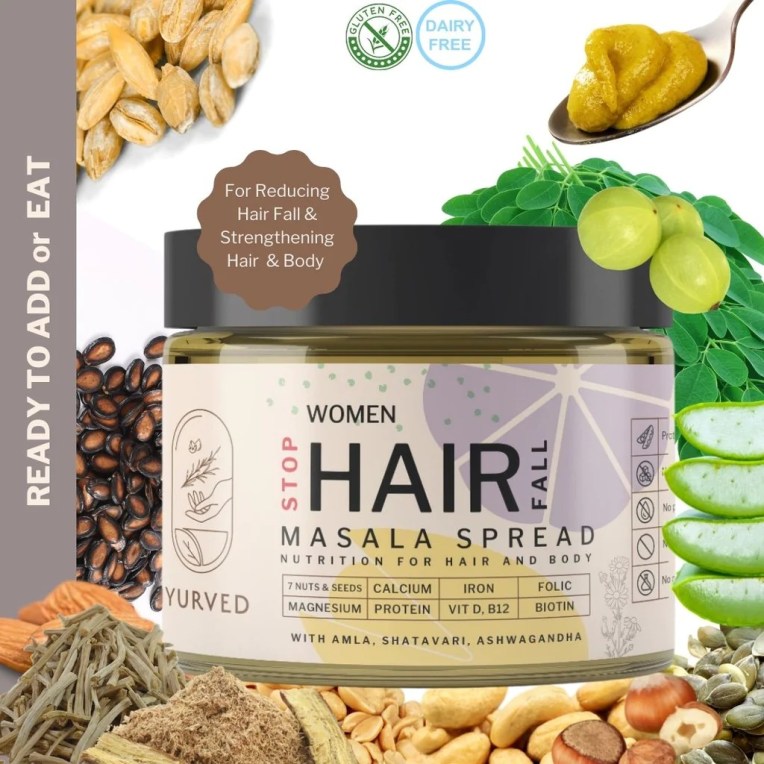
For Stopping Hair Fall & Strengthening Hair & Body, give Women Stop Hair Fall Masala Spread | 0% Preservatives | 0% Refined Sugar | 0% Palm oil | With SHATAVARI, ASHWAGANDHA, AMLA, MORINGA, ALOE VERA | ORDER |


CHECK MORE PRODUCTS FOR:

Immunity, Gut health, Digestion, Weight, Brain development, Speech delay, Epilepsy, Eye health, Hormones, Sleep, Hyperactivity, Bones and Overall growth

foods for breast milk

read more blogs

Motor Tics in Kids

muscle spasm

Eye blinking or eye jerking quickly, tongue sticking out, head jerk or twitches, muscle spasm, hopping and squating, shoulder shrugs…… Do you find any of these symptoms in your child?? This may be motor tics. Tics are muscle movements that are usually fast and repetitive. Tics are a bit common in childhood and affect about 10% of kids during their early school years (5 years). This may cause sudden and uncontrollable body sounds. Sometimes, kids with ADHD (Attention Deficit Hyperactivity Disorder) may also have these symptoms. Read more to know foods that can help with Motor tics.

WHATSAPP for concerns like Speech Delay, Low Weight, Frequent Illness, Hyperactivity, Low Concentration, Weak Eyesight, Improper Sleep, Pigmentation, Pores, Face Marks, Fine Lines , Lactation etc.

What are motor tics or muscle spasms?

Motor tics are unintentional muscle movements caused by spasm like contraction which usually involves muscles of the face, eyes, mouth, neck, head and even shoulders.

Tics may look like intentionally done, but they are not. Although a person or a child suppresses the tics for a short time, tics and sound repeat and the urge will become stronger.

How to know whether your child has muscle spasm?

Motor tics may be a normal or complex. If it’s normal, only one muscle or body part is involved which causes no harm. But, it may be painful or embarrassing at that moment.

The common symptoms of normal or simple motor tics include:

  • Eye blinking or eye jerking quickly
  • Tongue sticking out
  • Head jerk or twitches
  • Muscle spasm
  • Hopping and squatting
  • Shoulder shrugs

Whereas, a combination of different types of simple motor tics affects different muscle groups at a time, and is called complex motor tics. These are usually slower and it seems the person is doing movements intentionally.

The common symptoms of complex motor tics or muscle spasms include:

  • Pouting of face
  • Repeatedly touching people or things
  • Revolving movement of hands

Similar to motor tics, vocal tics also may occur either simple or complex. 

Simple vocal tics include,

  • Noisy breathing
  • Hissing and barking
  • Snorting
  • Smelling
  • Clearing the throat.

Complex vocal tics include,

  • Words
  • Phrases
  • Sentences
ADHD and muscle spasms:

ADHD is a disorder which is very complex and it involves different effects and symptoms. It does not directly cause the motor tics but children with ADHD can sometimes get co-occurrence of motor tics.

ADHD: Multiple disorders

Children who have ADHD can have multiple disorders at the same time. Researchers found that  about 50-70% of the children with ADHD have motor tics.

There are some disorders involving muscle spasm or muscle cramps which occur in association with ADHD:

  1. Tourette syndrome (TS): People with TS sometimes experience ADHD symptoms. This could be near 90%. Some of the studies also show that, for children with TS, the tics tend to reduce in their teenage years.
  2. Obsessive-compulsive disorder (OCD):  Researchers have found that people whose OCD symptoms include aggressive compulsions and symmetry behaviours most commonly have tics.
  3. Autism spectrum conditions. Some of the symptoms associated with autism are body, face, and voice tics. Most of the children with ADHD have autism.

What can you do about motor tics (also with ADHD)?

  1. Improving sleep life: When in fatigue, tics may get worse. Getting proper sleep may improve the condition. This may be difficult for ADHD kids as sleep issues are very common with them.
  2. Reduce stress and anxiety: Anxiety and stress may worsen the condition of tics. In this case, tics may act as a result of stress and anxiety. Regularly doing meditation, yoga and physical activity may improve the situation.
  3. Educate the circle: It’s always good to inform the teachers, caretakers, peers and coaches about the condition your kid is suffering through. This will create a supportive environment for the kid.
Foods to avoid: 
Refined sugar:

Excessive sugar impairs cognitive skills as well as self control. Moreover, sugar damages the protein in our body, resulting in ageing of organs, which further compromises immunity, growth and functioning. Greatest source of sugar in the average kid’s diet are sugary snacks and beverages like cookies, cakes, candies, fruit juice, soda, and sports drinks. Everything that the child picks up to eat today has strains of added sugar in some form or the other.

Preservatives:

Most of packaged food companies are adding artificial preservatives to delay spoilage and contamination in foods.  Artificial preservatives such as nitrates, benzoates, sulfites, sorbates, parabens, formaldehyde, BHT, BHA and several others can cause serious health hazards such as hypersensitivity, allergy, asthma, hyperactivity, neurological damage and muscle spasms.

Refined oil:

The high temperature involved in the refining process removes all the natural and beneficial substances from the oil, which is not good for the digestive as well as respiratory health and ultimately affects your immunity.

Foods to manage motor and vocal tics in children:
1. BRAHMI:

Brahmi is a brain superfood that is thought to sharpen the brain by protecting cells and increasing chemicals involved in learning and memory. It can improve mental performance by influencing neurotransmission through acetylcholine and gamma-aminobutyric acid (GABA). Brahmi improves memory, reduces anxiety, helps to improve motor tics, and promotes attention by restoring brain receptor function. (Drinks good for brain health)

2. ASHWAGANDHA:

This herb functions as an adaptogen. Ashwagandha has been shown to reduce anxiety and stress, which leads to better brain performance. Furthermore, it raises acetylcholine levels, which aid in memory, mental focus, and intelligence. Ashwagandha also improves nerve cell communication and stimulates the body’s ability to heal any nervous system damage. It is also helpful for the treatment of motor tics and headache without any adverse side effects.

3. SHANKHAPUSHPI:

In order to improve brain functioning, shankhapushpi is an old remedy. The powerful antioxidants and flavonoids present in it improve the memory capacity, focus, concentration, calmness, alertness of an individual. Since it is a brain tonic and stimulator, people taking shankhapushpi have improved memory, reasoning, problem-solving, and other cognitive abilities.

4. NUTS

All the nuts like almonds, walnuts, cashew, peanuts and hazelnuts are rich in vitamin E and help in boosting memory. They are also antioxidants which protect against cell damage. Walnuts are rich in omega-3 fatty acids and are a valuable substance for brain function, memory and thinking abilities. This fatty acid also encourages cognitive functions. (best nuts for protein)

5. SEEDS

Apart from nuts, seeds like flex, chia, melon, sesame and pumpkins also contain powerful antioxidants like vitamin E that protect the brain from free radical damage. Sunflower seeds impact overall mood and mental processing powers and therefore it is considered a brain boosting snack. Pumpkin seeds are high in magnesium, copper, and much higher in zinc than other seeds, which help in increasing concentration and memory. One of the easiest to feed brain boosting foods for kids.

6. OMEGA-3 FATTY ACIDS

Multiple studies have shown the link between low omega 3 fatty acids and speech delay, poor focus and concentration. These healthy fats are crucial for brain development and help to manage speech disorder and delay in kids. It can also improve speech quality. Include fish like salmon, flaxseeds, walnuts, soybeans and tofu for adequate supply of omega -3 fatty acids.  (10 reasons to give kids with omega 3 foods)

7. VITAMIN E

Vitamin E acts as antioxidants and kills free radicals which can damage our nerves resulting in speech problems. Including more fruits, vegetables, nuts, sunflower seeds and pumpkin seeds in the child’s diet will help.

8.MAGNESIUM, MANGANESE & ZINC:

Magnesium is abundant in nuts such as almonds, peanuts, cashews, and pumpkin seeds. They are also antioxidants which protect against cell damage. Manganese is an important nutrient for seizure patients because it plays an important role in cerebral functions. This mineral is abundant in nuts, whole grains, and legumes. Furthermore, a person with muscle spasm requires zinc for proper muscle repair. It is critical to include meat, eggs, nuts, and legumes in your child’s diet.

Products:

It’s no SECRET that following an Ayurvedic lifestyle has numerous advantages. This unique collection of Ayurvedic spreads is an easy solution to feed daily nutrition for Immunity, Eye, Brain development, Bone strength and overall growth to kids without any fuss. To know more about kid’s ayurvedic foods –SHOP HERE.

India’s First Tasty Kids Nutrition fortified with Ayurvedic herbs.

For kids with Motor Tics, give Kids & Teens Brain Booster Savoury Spread | 0% preservatives | 0% refined sugar | 0% palm oil | Fortified with SHANKHAPUSHPI, ASHWAGANDHA, BRAHMI | Contains OMEGA 3, PROTEIN | ORDER |


CHECK MORE PRODUCTS FOR:

Immunity, Gut health, Digestion, Weight, Brain development, Speech delay, Epilepsy, Eye health, Hormones, Sleep, Hyperactivity, Bones and Overall growth

what is the down's syndrome

READ MORE BLOGS:

Bloating: Foods and Tips that help

bloating of stomach

Are you feeling your tummy got bigger today? Did you start thinking it might be because you ate too much last night, or you got too much gas? If so, yes! You may have bloating of stomach. There are many reasons behind bloating of stomach. It may be because of eating too much or too less, too much sugar or salt in the food, drinking too less water or from constipation. Continue reading to know tips and foods to reduce bloating.

WHATSAPP for concerns like Speech Delay, Low Weight, Frequent Illness, Hyperactivity, Low Concentration, Weak Eyesight, Improper Sleep, Pigmentation, Pores, Face Marks, Fine Lines , Lactation etc.

What is actually bloating of stomach?

Stomach bloating is a feeling of pressure, fullness, or tightness in the stomach. It is the feeling of fullness of the stomach with or without actual change in stomach circumference. In fact, bloating of stomach may be associated with swelling in the abdomen area that is visible. It may result in lighter discomfort to strong pain in the belly. The most evident reason for bloating is constipation. Apart from that, indigestion and hormonal imbalance may also result in bloating of stomach.

Causes of bloating of stomach:

1. Eating gassy foods:

Some of the legumes, millets and cereals are rich in oligosaccharides such as raffinose and stachyose. These oligosaccharides are sometimes not properly digested in stomach and small intestine due to high levels of insoluble fibre and they pass to the large intestine where they are fermented by gut bacteria to produce gas. Because of this, the person feels bloated after eating such foods.

Also, check Home remedies to solve allergy in kids

2. FODMAP:

FODMAPs refer to a group of carbohydrates that are not digested easily in some people. They may result in fluid build-up and gas trouble. FODMAPs include fructose present in honey, lactose in dairy products, beans and lentils, gluten-containing foods and also some foods such as apples, pears and cherries.

3. Eating too fast:

If you are a person with the habit of gulping down food too fast, you are more likely to have bloating frequently. When you engulf the food quickly, you swallow more air which may pass to your intestines and cause bloating.

4. Consuming fizzy drinks:

When you consume more fizzy drinks loaded with carbon dioxide gas, it may fill in your belly. Some of the gas is released through burping. The remaining gas may fill in tummy and pass to the intestines and even result in anal gas.

5. Drinking too little water:

When you consume fibre-rich foods and don’t drink enough water, it may tighten the stools and result in constipation. Due to constipation, you feel your belly is bloated and often feel pain in your stomach.

6. Eating junk foods:

Junk foods or fast foods are loaded with sodium, sugar and fat. They may be too easy to digest, but these processed foods cause an imbalance in your gut microflora. These microbes are responsible for the absorption of the digested nutrients in your body. So, any imbalance in the gut microbes might cause irritation and bloating of stomach.

Also check,

7. Not moving enough:

Having a big and hearty meal is so satisfying right!! Yes. There’s no harm in having a big meal often. But if you are a person who goes to bed right after your meal, then you may suffer from indigestion and gastric problems ultimately leading to stomach bloating. Not giving importance to physical activity is the key problem here.

How long does it take bloating to leave?

It depends on the reason behind your bloating of stomach. In the majority of cases, it goes away in one night or maximum two days. In case of severe constipation, it may extend upto 4-5 days.

How to prevent or relieve bloating?

1.Eat probiotic-rich foods:

Probiotics refer to the live microorganisms when consumed in the right amount, resulting in health benefits to the body. These microorganisms are present in fermented foods such as yoghurt, fermented vegetables, sauerkraut etc. These microorganisms usually skip the digestion process and straight away move to the gut. In the gut, they help to maintain a good balance of healthy microbes that benefit the body in digestion.

Also, check 7 proven Gut healthy foods

2.Hydration:

It’s very important to consume 3-4 litres of water daily. When we consume fibre-rich foods, water helps to smoothen them and swell, helping in smooth bowel movements. Thus water helps in relieving constipation.

3.Prefer whole foods over processed ones:

When we consume complex carbohydrates rich in fibre, they help to maintain a good balance of healthy bacteria in the gut. Thus by avoiding simple sugars, fizzy drinks and sodium-loaded foods and consuming whole foods such as whole-grain cereals, millets and pulses, fruits and vegetables, the gastric problem can be reduced.

Also, check Harmful health effects of Junk foods

4.Eat enough and move more:

It is important to listen to your stomach while eating. Eat only as required to fill your stomach. Don’t overload it. And having a small walk after your meal also helps in digesting the food. You also feel lighter. Involve in some form of physical activity daily.

5.Prefer a number of small meals a day rather than 2-3 bigger meals:

When you starve yourself for a long time, you indulge in more food than you require which ultimately leads to bloating and indigestion. Hence, it’s a smart move to have small meals every 2-3 hours because you don’t feel hungry all the time if you do so.

6.Avoid dairy if you are allergic:

Some people are lactose intolerant. That means, they cannot digest lactose in their food as they lack one type of enzyme ‘lactase’ which is important to digest lactose. So, it’s advisable to avoid dairy products if you feel bloated after consuming any dairy product.

Also, check Lactose Intolerance in Kids

7.Cook your veggies:

It’s healthy to eat a bowl of salad made of raw veggies, but some people may not digest the fibrous raw vegetables. So, it is important to cook your vegetables to reduce the bloating as the fibre breaks down while cooking.

8.Have an early dinner:

Your digestive system works very hard after you consume food. The digestive system slows down at night because of the low activity level. Hence it is advisable to have an early dinner or have at least 3 hour gap before you go to bed to make sure your food is digested properly.

Foods that help in reducing bloating of stomach:

PARTIALLY HYDROLYZED GUAR GUM: 

Guar gum is a fibre made from guar bean or Indian cluster bean. It is used as a laxative that normalises the moisture content of the stool, absorbing excess liquid in diarrhoea, and softening the stool in constipation. Undoubtedly, it is one of the best foods for helping in bloating.

PHGG is a water-soluble dietary fibre and is used to regulate gut function. According to the study conducted by NIH, intake of PHGG improves human stool form by regulating intestinal microbiota. It has also been useful in treating Irritable bowel syndrome (IBS) symptoms in both adults and kids.

Benefits of Guar gum:

  • Treating diarrhoea/ constipation and bloating
  • Lowering cholesterol
  • Manages high blood pressure
  • Control diabetes
  • Weight loss
  • Enhance Mineral absorption
Fructooligosaccharides (FOS):

Fructooligosaccharides (FOS) are composed of short fructose chains. They are a type of carbohydrate called oligosaccharides. FOS occurs naturally in many plants. They are prebiotic fibres that support the growth of healthy bacteria in the digestive tract. FOS is also a good source of soluble, dietary fibre and has been shown to reduce, or eliminate constipation and relieve bloating.

CITRIC ACID:

Citric acid is the weak organic acid found in the greatest amount in citrus fruits. We all have seen citric acid appear on the label of many products but don’t know exactly what citric acid is for our health. However, the primary reason for including this in any packaged foods is for its tangy flavour. But apart from this citric acid is associated with many health benefits also:

  • Citric acid helps to convert food into energy.
  • It enhances calcium, phosphorus and Magnesium absorption through the gut.
  • This also prevents calcium crystals or kidney stones from forming.

Also, check 11 Proven Foods for Proper Digestion

ORANGE EXTRACT:

Oranges are the food to boost immunity. They are not only nutritious and rich in Vitamin-C but also loved by kids. Just one orange can meet 100% vitamin C requirements for the kid’s daily nutrition.  The pith (white after between peel and fruit) of orange has 30% fibre of the fruit and this particular fibre (called pectin) is good for the gut which builds immunity, reduces bloating and supports digestion.

PAPAYA:

The papaya fruit contains two enzymes, papain and chymopapain. They can help with digestion, reduce bloating, inflammation and also improve gut health. Papaya is also high in fibre and water content, both of which help to prevent constipation and promote regularity and a healthy digestive tract. Also, it is a good source of folate, vitamin A, magnesium, copper, B vitamins, alpha and beta-carotene, lutein and zeaxanthin, vitamin E, calcium, potassium, vitamin K, and lycopene, and pantothenic acid.

LEMON:

Lemons are rich in Vitamin C and have a potential to reduce gut inflammation and boost the immune system. Lemons are high in a fibre called pectin, which is a prebiotic that assists good gut health by feeding healthy gut bacteria.


PRODUCTS:

Fix your GUT with these Quick, Easy and Tasty PREBIOTIC Gut Drinks! This flavourful range of prebiotic gut friendly drinks helps with  Digestion, Constipation, Brain development, Allergies, Immunity, Hormonal balance, Acidity and Bloating and even more! Grab yours. NOW!

India’s First Tasty Kids Nutrition fortified with Ayurvedic herbs.

For Bloating , Immunity, Constipation, Vomit, Brain Development, Allergies | Family PREBIOTIC GUT DRINK | Made with Guar Beans | Prebiotic Fiber | Plant Sweetener | 0% preservative | 0% Artificial Colour | 100% Natural | No refined sugar | ORDER |


CHECK MORE PRODUCTS FOR:

Immunity, Gut health, Digestion, Weight, Brain development, Speech delay, Epilepsy, Eye health, Hormones, Sleep, Hyperactivity, Bones and Overall growth


Read more blogs

Hearing Aids and Speech Development

hearing impairments

Hearing loss is the most frequent sensory deficiency in people today. According to WHO estimates, roughly 7% of persons in India have Significant Auditory Impairment. If left untreated, this disorder can lead to all sorts of unpleasant social, emotional, and physiological issues, such as social withdrawal, feelings of loneliness, sadness, anxiety, and even cognitive decline. Hearing impairments/loss can impair cognitive abilities because the brain has to work harder to hear; however, a new study reveals that using hearing aids might reduce this effect, even boosting speaking, concentration and memory. Therefore, continue reading to learn how hearing aids and proper nutrition may help children improve their hearing. (Types of Hearing Impairments)

WHATSAPP for concerns like Speech Delay, Low Weight, Frequent Illness, Hyperactivity, Low Concentration, Weak Eyesight, Improper Sleep, Pigmentation, Pores, Face Marks, Fine Lines , Lactation etc.

What is a Hearing Aid?

A hearing aid is a small electronic device worn in or behind the ear to improve hearing. It amplifies some sounds so that someone with hearing loss may listen, talk, and fully engage in daily activities. 
A microphone, amplifier, and speaker are the three essential components of a hearing aid. The sound waves are converted to electrical impulses and sent to an amplifier via a microphone in the hearing aid. The amplifier boosts the signal’s strength before sending it to the ear through a speaker.

How does a hearing aid help in hearing IMPAIRMENTS and speech development?

Hearing aids are most beneficial for those who suffer hearing impairments/loss caused by damage to the tiny sensory cells in the inner ear known as hair cells. Sensorineural hearing loss is the technical term for this type of hearing loss. Disease, ageing, loud exposure, and certain medications can also cause harm.
Sound waves entering the ear are amplified by a hearing aid. The remaining hair cells detect the higher vibrations and process them into neural impulses and send them to the brain. More the damage to the child’s hair cells, the greater their hearing loss will be, and greater hearing aid amplification will be necessary to compensate.

The amount of amplification a hearing aid can produce, however, has practical limitations. Furthermore, there is no conversion of huge vibrations into cerebral impulses in the case of severe ear injury. Hearing aids would not be useful in this case.

Different Types of hearing aids:

Types of Hearing AidImageDescription
In-The-Ear (ITE) Hearing aid


These hearing aids are used to treat mild to severe hearing impairments/loss and fit entirely inside the outer ear. The electronic components are housed in a durable plastic casing. However, some ITE aids may have extra functions, such as a telecoil, which improves sound quality during phone conversations. Young children seldom utilise ITE aids since the casings must be replaced frequently as the ear grows.
Behind-The-Ear (BTE) Hearing aid


BTE hearing aids are made up of a hard plastic casing that is worn behind the ear and a plastic earmold that fits within the outer ear. The electrical components are kept hidden behind the ear in a casing. Sound goes from the hearing aid to the ear through the earmold. These hearing devices are useful for mild to substantial hearing loss by people of all ages.
Canal Aid


Canal aids come in two forms and fit into the ear canal. The in-the-canal (ITC) hearing aid is customised to a person’s ear canal size and shape. Hearing aids that are completely-in-canal (CIC) are practically invisible in the ear canal. For mild to moderately severe hearing loss, both forms are employed.
They are typically not advised for young children.
Types of Hearing Aids

Also, check Difficulties in Reading, Writing and Learning: 7 foods that help

Who can benefit from hearing aids?

Hearing aids can help anyone who has hearing impairments/loss. However, several factors influence the type of hearing aid that a person can use:

  • The outer ear’s shape (deformed ears may not accommodate behind-the-ear hearing aids)
  • The length or depth of the ear canal (too shallow ears may not accommodate in-the-ear hearing aids)
  • The severity and type of hearing loss
  • Individual’s hand dexterity in removing and inserting hearing aids
  • The quantity of wax that has accumulated in the ear (excessive amounts of wax or moisture may prevent the use of in-the-ear hearing aids)
  • Certain hearing aid types may not be suitable for ears that require draining.

Also, check Stammering in Kids: Foods that help

Things to keep in mind while wearing a Hearing Aid:

Hearing aids should be gradually worn once they have been fitted to the individual’s ears. Because hearing aids do not restore natural hearing, it may take some time to adjust to the various noises relayed by the device.

Here are some recommendations to follow while wearing hearing aids:

  • Firstly, Give yourself some time to adjust to the hearing aid and the sound it generates.
  • Begin in peaceful situations and progressively progress to louder environments.
  • Experiment with where and when the hearing aid works best for you.
  • Also, keep a record of any questions or concerns you have and bring them to your doctor.

Also, check Gut and Brain Connection: How does it help in Speech delay?

Foods that can help to improve hearing impairment:
1. Magnesium

When the inner ear is subjected to loud noises, magnesium can aid sustain nerve activity and protect the hair cells. Magnesium can also enhance blood flow, but a deficiency of it might result in oxygen starvation. Eat more magnesium-rich foods like dark chocolate, pumpkin seeds, flax seeds, nuts (especially Brazil nuts, cashews, and almonds), whole grains, avocados, salmon, legumes, kale, spinach, and bananas to help keep your ears healthy and protect against hearing loss.

2. POTASSIUM

Hearing impairments/loss is thought to be caused by a decrease in fluid levels in the inner ear, however, having adequate potassium can assist the body manage fluid levels. Cucumbers, mushrooms, sweet potatoes, potatoes, eggs, bananas, apricots, oranges, peas, avocados, spinach, coconut, and watermelon are all potassium-rich foods that you should include in your diet.

3. FOLATE

Circulation is important for the health of your ears, and folate can assist improve circulation. Getting enough folate in your diet can also help prevent hearing loss by keeping the hair cells in the inner ear healthy. Eat folate-rich foods particularly sprouts, kale, spinach, broccoli, peas, kidney beans, chickpeas,  whole grains, lemons, melons, bananas, eggs, peanuts, and sunflower seeds to increase your folate consumption.

4. ZINC

Zinc is thought to aid cell development and can also improve the immune system, which can help prevent ear infections (Effective home remedies for Ear infection in kids). Dark chocolate, oatmeal, yoghurt, beans, lentils, peanuts, cashews, mushrooms, kale, spinach, garlic, and pumpkin seeds are all zinc-rich foods that can assist your immune system and capacity to heal.

Also, check Seizures Disorder: Foods that help

5. OMEGA-3

Omega-3 fatty acids are often ignored, yet having enough of them in your diet might help maintain your ears healthy as you age. Walnuts, flax seeds, chia seeds,  sprouts, and spinach are all rich in omega-3 fatty acids, which can help postpone or prevent age-related hearing loss. (Brain Boosting foods for kids)

Hearing impairments/loss can also have a variety of consequences for your kid, so get medical care as soon as you see any indications of hearing loss. In addition to the medical assistance and support, good brain nourishment is also essential..

Products:

It’s no SECRET that following an Ayurvedic lifestyle has numerous advantages. This unique collection of Ayurvedic spreads is an easy solution to feed daily nutrition for Immunity, Eye, Brain development, Bone strength and overall growth to kids without any fuss. To know more about kid’s ayurvedic foods –SHOP HERE.

hearing impairments

India’s First Tasty Kids Nutrition fortified with Ayurvedic herbs.

For kids with Hearing Impairment, give Kids & Teens Brain Booster Savoury Spread | 0% preservatives | 0% refined sugar | 0% palm oil | Fortified with SHANKHAPUSHPI, ASHWAGANDHA, BRAHMI | Contains OMEGA 3, CALCIUM, PROTEIN | ORDER |


CHECK MORE PRODUCTS FOR:

Immunity, Gut health, Digestion, Weight, Brain development, Speech delay, Epilepsy, Eye health, Hormones, Sleep, Hyperactivity, Bones and Overall growth

what is the down's syndrome

Read more blogs:

Speech Difficulties in Kids with Down’s Syndrome

what is the down's syndrome

1 out of 830 children are born with Down syndrome which means approximately 23,000 – 29,000 children are affected with Down syndrome every year in India. Isn’t it a lot!! Numbers show India has the highest number of children suffering from Down syndrome. The survival rate of those who are affected with Down syndrome is only 44%.  Even though it is common, many people don’t even know what is the Down’s syndrome. (Child with developmental delay: Signs and Remedies)

Research shows that development in children with Down syndrome is similar to normal children but slower. Children having Down syndrome also typically have delays in speech and language learning. Some speech sounds are difficult for people with Down syndrome to produce, and others are difficult to understand. Despite these challenges, children with Down syndrome are excellent communicators who just need some encouragement, proper nutrition and training to do so effectively. This Syndrome is not curable but we can improve their life by taking extra care of them. Check how!!

WHATSAPP for concerns like Speech Delay, Low Weight, Frequent Illness, Hyperactivity, Low Concentration, Weak Eyesight, Improper Sleep, Pigmentation, Pores, Face Marks, Fine Lines , Lactation etc.

What is the Down’s syndrome?

All human beings have 46 chromosomes ordered in 23 pairs. These 46 chromosomes are the combination of 23 chromosomes from parents respectively. And if a person has an extra chromosome then that condition is called Down syndrome.

Down’s syndrome is a genetic disorder generally associated with speech delay, physical growth delays, characteristic facial feature and mild to moderate level intellectual disability. Infants, toddlers and children with Down syndrome have structural and functional differences in their mouth and throat areas that makes it more difficult for them to make precise movement which leads to speech difficulty. They also have hearing loss which also affects Speech delay. (Baby’s milestones: 6 Foods that help)

Down’s syndrome and speech delay:

It is observed that speech delay is a common symptom in children with Down syndrome. They have a specific impairment in the phonological loop which holds verbal and auditory information, it temporarily stores verbal information for rehearsal, and this is now thought to be a major cause of their speech and language difficulties.

Some of these distinctions may have an influence on speech and language in children with Down syndrome.

  • Low facial muscle tone: The midface of children is small and the nose, mouth and jaw are also smaller. This impacts the airway and this means there is less room for speech in the face and mouth. 
  • Larger tongue size: It may be more difficult to generate sounds since they have a larger tongue than their mouth size.
  • Ear infections: Due to the presence of fluid in the ears, frequent ear infections can impair hearing. (Ear infections in kids)
  • Slower learning abilities: Slower learning abilities might cause developmental milestones, particularly speech milestones, to be delayed. (Difficulties in Learning, Reading and Writing: 7 Foods that help)

In general, children begin to speak between the ages of 10 and 18 months, while children with Down’s syndrome may not begin to speak until they are between the ages of 24 and 36 months.

Tips to improve speech disorder/ delay
  • Spend a lot of time communicating with your baby. Sing a song or rhyme and encourage imitation of sound and gesture.
  • Talk slowly and clearly. Use simple and short sentences.
  • Read stories to your child daily. Encourage them to talk to you about the plot and characters, ask them how they think a character could behave, let them ask questions whenever they feel like they’re simply learning how to express themselves.
  • Don’t miss any opportunity and use everyday situations to create communication. Keep on telling the name of different objects around the house.
  • Explain what you are doing as you are cooking, dish washing or cleaning or engage them by saying let’s do this or that.
  • If you are not watching the television, turn it off. The excess background noise can cause delays in the formation of words
  • Let the child lead the conversation.
  • Ask a lot of daily questions and give time to your child to answer questions.
  • Give lots of praise and positive reinforcement while also correcting, instead of criticizing the child for not saying the word properly.
  • Encourage you baby to use straw for drinking or just to blow air through it. This helps the child to develop the oral muscles used for speech.

Food helps to improve speech delay In down syndrome children

Without the brain, there would be no language. The human brain has a few areas that are specific to language processing and production. Adding foods that support brain development can help to improve language development in kids with Down’s syndrome.

1. NUTS

All the nuts like almonds, walnuts, cashew, peanuts and hazelnuts are rich in vitamin E and help in boosting memory. They are also antioxidants which protect against cell damage. Walnuts are rich in omega 3 fatty acids and are a valuable substance for brain function, memory and thinking abilities. This fatty acid also encourages cognitive functions. (best nuts for protein)

2. Seeds

Apart from nuts, seeds like flex, chia, melon, sesame and pumpkins also contain powerful antioxidants like vitamin E that protect the brain from free radical damage. Sunflower seeds impact overall mood and mental processing powers and therefore it is considered a brain boosting snack. Pumpkin seeds are high in magnesium, copper, and much higher in zinc than other seeds, which help in increasing concentration and memory. One of the easiest to feed brain boosting foods for kids.

3. Omega-3 fatty acids

Multiple studies have shown the link between low omega 3 fatty acids and speech delay, poor focus and concentration. These healthy fats are crucial for brain development and help to manage speech disorder and delay in kids. It can also improve speech quality. Include fish like salmon, flaxseeds, walnuts, soybeans and tofu for adequate supply of omega -3 fatty acids.  (10 reasons to give kids with omega 3 foods)

4. Vitamin E

Vitamin E acts as antioxidants and kills free radicals which can damage our nerves resulting in speech problems. Including more fruits, vegetables, nuts, sunflower seeds and pumpkin seeds in the child’s diet will help. 

5. Ashwagandha

This herb is an adaptogen. Ashwagandha is known to reduce anxiety and stress for better brain performance. Moreover, it increases acetylcholine levels which support better memory, mental focus and intelligence. Ashwagandha also improves communication between nerve cells and stimulates the body’s capacity to heal any nervous system damage.

6. Shankhpushpi

This herb works as a memory tonic. It is a traditional remedy for increasing the functioning of the brain. The powerful antioxidants and flavonoids present in it improve the memory capacity, focus, concentration, calmness, alertness of an individual. Since it is a brain tonic and stimulator, people taking shankhapushpi have improved memory, reasoning, problem-solving, and other cognitive abilities.

7. Brahmi

Brahmi is a superfood for the brain and is believed to sharpen the brain by protecting cells and increasing chemicals associated with learning and memory. It can boost mental performance by altering neurotransmission via acetyl choline and gamma-aminobutyric acid (GABA). Brahmi boosts memory span, lowers anxiety, aids in the correction of speech problems, and promotes attention by restoring the function of brain receptors.

Products:

It’s no SECRET that following an Ayurvedic lifestyle has numerous advantages. This unique collection of Ayurvedic spreads is an easy solution to feed daily nutrition for Immunity, Eye, Brain development, Bone strength and overall growth to kids without any fuss. To know more about kid’s ayurvedic foods –SHOP HERE.

what is the down's syndrome

India’s First Tasty Kids Nutrition fortified with Ayurvedic herbs.

For kids with Down syndrome having speech delay and weak muscle tone, give Kids & Teens Brain Booster Savoury Spread | 0% preservatives | 0% refined sugar | 0% palm oil | Fortified with SHANKHAPUSHPI, ASHWAGANDHA, BRAHMI | Contains OMEGA 3, CALCIUM, PROTEIN | ORDER |


CHECK MORE PRODUCTS FOR:

Immunity, Gut health, Digestion, Weight, Brain development, Speech delay, Epilepsy, Eye health, Hormones, Sleep, Hyperactivity, Bones and Overall growth

what is the down's syndrome

Read more blogs:

Growth Spurts in Kids: When do they happen?

growth spurt means

In the first several months, your newborn infant will grow quickly, and you might think he or she has grown overnight!!! Sometimes you will notice sudden changes in their appetite, sleep patterns, and even their mood. This can indicate a growth spurt. Growth spurt means short periods of time during which your child’s height and weight rapidly increase. They are a normal part of your child’s development and occur at different stages of their childhood until they reach physical maturity. Continue reading to learn what growth spurt means, their signs and how to deal with them.

WHATSAPP for concerns like Speech Delay, Low Weight, Frequent Illness, Hyperactivity, Low Concentration, Weak Eyesight, Improper Sleep, Pigmentation, Pores, Face Marks, Fine Lines , Lactation etc.

What does growth spurt means ?

Growth spurt means rapid physical changes that occur as your child grows up, such as increases in height and weight. Baby’s growth spurt normally lasts only a few days. In this duration, they will need to breastfeed more frequently and for longer periods of time to keep up with their physical development. The baby may be fussier than usual, and his or her sleep patterns may be disrupted. Every day, your baby grows and adds weight, but a baby growth spurt is usually fast and sudden.

When do babies have growth spurt? 

Every individual child may go through a growth spurt at a different age. When your baby is born, the paediatrician will give you a chart to keep track of his or her growth stages. This is based on a WHO chart that records the height, weight, and head circumference of babies according to their age.

According to the average data, your baby will go through a growth spurt throughout the following stages of their first year:

  • 1 – 3 weeks
  • 6 – 8 weeks
  • 3 months
  • 6 months
  • 9 months

Between the ages of 8 and 15 years, a child’s second growth spurt takes place. A growth spurt could last from two to three days to a week. Babies’ growth spurts are usually shorter, lasting up to three days, whereas teenage growth spurts can last up to a week. Some toddlers grow at a consistent rate throughout their toddler years, while others gain a few inches in a matter of months.

SIGNS AND SYMPTOMS OF GROWTH SPURTS:

The signs and symptoms described below may indicate that your child is going to go through growth spurts.

1. Outgrowing their clothes and shoes quickly:

Clothing that no longer fits your child is a classic sign that they are going through one of their growth stages. As their legs get longer, toddlers can quickly outgrow their pants. Some toddlers grow at a consistent rate throughout their toddler years, while others gain a few inches in a matter of months.

2. New ability:

Toddlers’ brain development is one of the numerous characteristics of their growth spurts. You will notice your child making rapid progress in areas like language and motor skills.

3. Appetite increase:

Your toddler’s calorie intake will increase as their body matures. Because toddlers are usually quite active, seeing your child’s hunger increase is common, but it could also indicate that your child is going through a growth spurt.

4. Cravings:

Toddlers frequently have a favourite food. Growth spurts, on the other hand, can lead your child to crave foods that contain the vitamins and minerals he or she requires.

5. Mood swings occur:

Your child may get fatigued and irritable as a result of bodily changes. Hormonal fluctuations can also affect their mood.

6. Growing pains are inevitable:

When children grow, they frequently experience mild pains and stiffness. Because their limbs are painful from growing pains, your child may be cranky, weary, or fussy.

7.Sleepiness:

Growing up can be exhausting!! Even if your child was formerly a champion sleeper, they may now be waking up at all hours of the night, restless, and hungry. Your kid may appear to be more exhausted than normal. As their bodies release growth hormone while they sleep, make sure they get the rest they require.

8. CRANKIness:

All toddlers can be clumsy, but limbs growing rapidly creates an additional coordination challenge.

CauseS of growth spurt: 

Growth spurts are caused by your child’s genetic profile or the genes they receive from their parents. The genes of your child will decide how tall they grow and how quickly they achieve their maximum height. Environmental conditions can influence your child’s growth, including:

  • Diet and nutrition. 
  • Exposure to negative substances in the water or atmosphere (pollution or lead).
  • Abnormal fetal health or pregnancy complications.

How to deal with growth spurt?

During your child’s growth spurt, you can help them by doing the following:

  • Providing them with more meals to satisfy their hunger.
  • Encourage good sleeping habits and regular bedtimes.
  • Pay attention to the baby’s overall health.
  • Patience with their fluctuating emotions.

Also check, Food for enough nutrition

Foods required during the growth spurts in kids:

The child’s body needs a sufficient amount of vitamins and minerals to grow properly in the duration of the growth spurt. A nutritious diet plan must provide all the essential nutrients like carbohydrates, fats, proteins, vitamins, minerals and water in the required amounts. Requirements of essential nutrients vary with age, gender, physiological status and physical activity.

These are some foods that you should add to their diet for the complete nutrition of kids

CARBOHYDRATES:

Carbohydrates are also known as energy giving foods. It provides glucose, which is converted to energy and further used in body functioning and physical activities which helps to reduce tiredness during the growth spurt. Foods rich in carbohydrates are an important part of a healthy diet.

PROTEIN:

Protein is the body’s building block and repair agent. It also helps them to build a healthy and strong body during the growth spurt. It’s also integral in forming enzymes and hormones in the body. (What are some easy sources of protein for kids?)

IRON:

It is an important dietary mineral that is essential for the growth and development of kids both physical and mental growth. Iron helps form haemoglobin that is found in the blood cells of the body. (Foods for Iron deficiency)

CALCIUM:

One of the most important minerals in our body is CALCIUM. Calcium consumption during a growth spurt has a good impact on bone. Bones are 70% calcium and it is only calcium that gives bones their hardness for protection and support. Bones also serve as the calcium bank of the body.

VITAMINS:

Vitamin plays an important role during the growth spurts as it helps the body grow and work the way it should. There are 13 essential Vitamins — Vitamins A, C, D, E, K, and Vitamin Bs. Some help in eyesight and energy production, while others support healthy nerves and cells and in fighting infection. (Importance of different vitamins for kids)

HEALTHY FATS:

During the period of growth spurts, physical and brain development is at its peak point. Healthy fats are crucial to brain and overall physical development and can help stabilise mood. Also help with healthy metabolism, blood clotting and letting the body absorb vitamins.

FIBRE:

Fibre is a non-digestible carbohydrate. It is responsible for keeping our digestion healthy and regular. Lack of fibre rich food in diet may cause constipation, which creates a nutrient-deficient disease. In growth spurt nutrient requirement is more from the body. (Fibre-rich foods for constipation)

Your adorable newborn will be a kid before you realise it, racing about and making you chase them. So take advantage of this newborn stage, and comfort and assist them during any unpleasant growth spurt days with a little extra love and care.


PRODUCTS

It’s no SECRET that following an Ayurvedic lifestyle has numerous advantages. This unique collection of Ayurvedic spreads is an easy solution to feed daily nutrition for Immunity, Eye, Brain development, Bone strength and overall growth to kids without any fuss. To know more about kid’s ayurvedic foods –SHOP HERE.

India’s First Tasty Kids Nutrition fortified with Ayurvedic herbs.

If your child is a picky eater or does not take enough nutrition for the day, you can give Daily Nutrition Chocolate Spread and Daily nutrition Veggies and Dal powder | Made with Ayurvedic herbs | 0% preservative | 0% Palm oil | ORDER |


CHECK MORE PRODUCTS FOR:

Immunity, Gut health, Digestion, Weight, Brain development, Speech delay, Epilepsy, Eye health, Hormones, Sleep, Hyperactivity, Bones and Overall growth

what is the down's syndrome

read more blogs:

Nutrient Deficiency : 10 Signs of Protein Deficiency in Kids

deficiency nutrient Iyurved

A great philosopher once quoted “Life is the Mode of Action of Protein”. Couldn’t agree more, can I? To elaborate more, protein is known as the building block of your body. Protein is essential in almost everything, including hair, skin, muscles, energy, hormones, body tissues, and enzymes. While protein is an important nutrient for your body, it is possible that you are protein-deficient. This nutrient deficiency occurs when your protein intake is insufficient to meet your body’s needs. This deficiency can affect almost all vital body functions and cause a variety of health issues. This deficiency is more common in people or children who have an unbalanced diet structure. So next time, if your body shows any signs and symptoms of protein – Do not let it go unattended.

Listing below the signs that you need to look out to find out whether your child’s body is protein deficient or not. 

WHATSAPP for concerns like Speech Delay, Low Weight, Frequent Illness, Hyperactivity, Low Concentration, Weak Eyesight, Improper Sleep, Pigmentation, Pores, Face Marks, Fine Lines , Lactation etc.

SIGNS OF PROTEIN DEFICIENCY IN KIDS:

1. Appetite:

There are two aspects here when appetite is considered. If your child has a milder nutrient (protein) deficiency then the appetite might increase. That is, when your body does not get enough amounts of protein, it attempts to restore the protein by increasing the appetite and encouraging you to find something to eat. (Here, majorly kids tend to crave junk foods more) Whereas, on the other hand, if your child has severe protein deficiency, then the appetite may seem to be poor.

2. Weak Bones:

Along with muscles, bones are also affected by low protein intake. Protein benefits the bones with strength and density. Therefore, deficiency of protein may increase the risk of bone fractures in kids as it weakens the bones.

3. Feeling Sluggish:

Not consuming enough protein can affect the muscles that are accountable for movement and posture. Moreover, it slows down the metabolism of the body. In addition to this, protein deficiency is also linked to anaemia which is the primary cause of sluggish feeling.

4. Low Immunity:

Lack of protein in your body may hamper you child’s immunity. Amino acids (proteins) in the blood assists the body’s immune system to produce antibodies that activate the cells to fight off against different viruses and bacteria. Also, studies have also shown that protein can alter the levels of diseases fighting good bacteria in the gut which is also responsible in building the immunity.

5. Slow wound healing:

Our skin is majorly made up of collagen. Collagen is responsible for holding the body together. It plays a major role in providing strength and structure. It is mostly present in bones, connective tissues, tendons, skin, muscles and ligaments. Therefore, protein is of crucial importance when it comes to wound healing. If you feel that your child is taking long enough to heal the wounds, check on the protein levels.

6. Skin, Hair and Nail:

Flaky, dry, split skin, redness, depigmentation, hair thinning, hair loss, brittle nails and fading of hair colour are all signs of protein nutrient deficiency.  Skin, hair and nails are majorly made up of proteins. Protein is known to give skin tissues its texture, durability, rigidity and structure. Moreover, it helps in keeping the skin hydrated and firm. It is an important part of hair and nails too. They are responsible for increasing hair thickness, quality and scalp coverage. Moreover, they help in strengthening nails thus preventing brittleness. (Healthy hair and skin foods)

7. Delayed growth:

Protein is vital for overall body growth and proper body functioning in kids especially during their growing phases. Therefore, it is of crucial importance to consume healthy proteins to ensure proper growth. Studies have shown that kids having low protein intake show impaired growth.

8. Lack of concentration:

In simple words, the brain uses a chemical to communicate information between cells. Most of these chemicals are made up of amino acids i.e., proteins. That means, when the body becomes deficient in proteins it would change how your brain works. It affects your mood, behaviour and concentration too.

9. Lack of muscle strength:

The simple logic behind this is, when your body lacks protein, it tends to draw it from the muscles (largest storage of protein) in order to preserve important body functions. This results in muscle wasting. Over a period of time, your child may feel a lack of muscle strength or find it harder to balance themselves.

10. Edema (Swollen/Puffy Skin):

This is a symptom of severe protein deficiency which causes swelling majorly on feet, ankle and legs. Acute protein deficiency may trap excess fluid in the tissues which results in swelling.  

HOW MUCH PROTEIN DO KIDS REQUIRE?

Protein requirements in kids (or be it adults) depends on multiple factors such as age, weight, height, muscle mass, physical activities, genes. Generally speaking, the recommended daily allowance (RDA) of most people must be around 0.8 grams of protein per kg per day.

HOW TO MAKE SURE YOUR CHILD IS GETTING ENOUGH PROTEIN?

Firstly, educate yourself with the minimum daily requirements of protein for your child. Be aware of the signs and symptoms of protein nutrient deficiency which are mentioned above. Look for easy, quick and delicious ways to provide protein to your kids – Click here for recipes.  And even after this, if you’re not sure where to start, you can either talk to your pediatrician or you can speak here for free to a Nutritional Expert on board for general nutrition guidance.

Foods that are rich source of protein

  1. Easy source of Protein for Kids – Check here
  2. Best Nuts and Seeds for Protein – Check here
  3. 5 Seeds that are high in Protein – Check here

PRODUCTS

It’s no SECRET that following an Ayurvedic lifestyle has numerous advantages. This unique collection of Ayurvedic spreads is an easy solution to feed daily nutrition for Immunity, Eye, Brain development, Bone strength and overall growth to kids without any fuss. To know more about kid’s ayurvedic foods – SHOP HERE.

India’s First Tasty Kids Nutrition fortified with Ayurvedic herbs.

If your child is a picky eater or does not take enough protein for the day, you can give Daily Nutrition Chocolate Spread and Daily nutrition Veggies and Dal powder | Made with Ayurvedic herbs | 0% preservative | 0% Palm oil | ORDER |


CHECK MORE PRODUCTS FOR:

Immunity, Gut health, Digestion, Weight, Brain development, Speech delay, Epilepsy, Eye health, Hormones, Sleep, Hyperactivity, Bones and Overall growth

what is the down's syndrome

read more blogs:

10 Foods and Home Remedies for UTI in Kids

cure UTI at home

Time goes so quickly — your little pleasure is becoming older. I’m sure you’ve had a lot of fun with your baby on this amazing adventure. Every milestone and connection with your child is memorable, and every illness is a reason for worry. Ill health is the biggest hurdle in a child’s life journey. Children’s immune systems are sensitive, making them susceptible to a variety of health issues, one of which is urinary tract infection (UTI). This article highlights foods and remedies to cure UTI at home. (7 Foods to boost immunity in kids)

Urinary TRACT infection (UTI) in kids

An infection of the urinary system is known as a urinary tract infection (UTI). Bacteria are the most common cause, however, fungus and other parasites can also play a role. Infection in the urinary system develops when bacteria travels via the urine or enters the circulation from the skin surrounding the genitals or rectum.

The kidneys produce urine and transport it to the uterus. The ureters transport urine to the bladder and store it until the urethra allows it to exit the body. Cystitis refers to an infection of the bladder, pyelonephritis refers to an infection of the kidney(s), and urethritis refers to an infection of the urethra. (5 Home remedies and foods to cure Bedwetting in kids)

Cure UTI at home
Urinary tract infection (UTI)
Types of urinary tract infection (UTI) in kids:

There are two types of urinary tract infections:

  • Lower urinary tract infection (UTI): An infection in the bladder.
  • Upper urinary tract infection (UTI): A kidney infection (one kidney, or both).

Causes of urinary tract infection (UTI):

UTIs are more common in females, especially when toilet training begins. Girls are more vulnerable since their urethras are shorter and closer to the anus. This makes it easier and faster for germs to enter the urethra.

  • When wiping from back to front, the stool comes into touch with the urethra, especially in girls.
  • Bubble baths are a risk for UTI since germs may easily spread through them.
  • Another cause of a UTI is wearing tight-fitting clothing.
  • The dirty diapers can also spread faeces into the urethra causing UTI. 

Due to issues with bladder emptying, children are sometimes more susceptible to UTIs. Some of these factors include:

  • Constipation can cause swelling in a section of the large intestine, putting pressure on the bladder and preventing it from emptying.
  • Dysfunctional elimination syndrome is a disorder in which a youngster refuses to empty his or her bladder despite having a strong desire to do so. If bacteria are present, they are ejected out of the urinary system during urination, and failing to do so encourages germs to thrive.
  • Vesicoureteral reflux (VUR) is a congenital defect in which urine travels backwards from the bladder to the ureter and kidneys. This is caused by a problem with the valves in the ureters.

Symptoms of UTI in kids:

The symptoms of a UTI vary depending on the severity of the infection and the age of your child. Infants and young children may not show any signs or symptoms. Symptoms in younger children might be general. Fever, nausea, vomiting, diarrhea, irritability, and other symptoms may occur.

Depending on which part of the urinary system is affected, additional symptoms may appear. The following are examples of possible symptoms:

  • Urine with a hazy appearance and a terrible odour
  • Blood in the urine
  • Consistent irritation or fussiness
  • Crying when urinating owing to pressure or discomfort in the lower pelvis or lower back, below the navel
  • Frequent urination
  • Diarrhea

10 Foods and home remedies for UTI in kids

Here’s a list of foods and remedies to treat UTI at home in kids:

1. Hydration:

Encourage your youngster to drink as much water as he or she can. Urinating often will aid in the faster removal of toxins. If your kid is under the age of six months, breast milk should be given instead of water. (What is the right time to introduce water for the baby?)

2. Fruit juices:

Cranberry, blueberry, and pineapple juice are the finest alternatives for babies over the age of six months. These fruits are suggested because they prevent dangerous germs from growing and multiplying in the urinary system. Also, dilute it before giving because some fruit juices might make the urine more acidic. (Healthy and creamy recipe of smoothies and milkshakes)

3. Probiotics:

Good bacteria are essential for preventing the proliferation of harmful pathogens. Probiotics aid in the treatment and prevention of urinary tract infections (UTIs) by restoring the body’s natural flora and increasing bacterial resistance. (What are probiotic foods?)

4. Vitamin C rich foods:

Vitamin C maintains bladder health by acidifying the urine. As a result, after consulting with a doctor, administering Vitamin C-rich foods or Vitamin C pills to children is an effective strategy to cure UTI.

5. Cucumber:

Cucumber is not only tasty finger food, but it also helps to cure UTI at home. It is a diuretic and contains alkaline-forming minerals that inhibit germs in the urinary system. As a result, frequent urine aids in the elimination of microorganisms. Cucumbers also have anti-inflammatory qualities, which can aid with UTI inflammation and discomfort.

6. Coconut water:

A urinary tract infection can be improved by drinking coconut water for a few days. Because coconut water cools and calms the inflammation produced by the unfavourable bacteria. 

7. Pineapple:

Bromelain, a protein-degrading enzyme found in pineapples, helps to reduce inflammation. It becomes an effective technique of treating UTI when combined with Trypsin, another enzyme. As a result, offering your kid pineapple strips as finger food is an effective and simple strategy to cure UTI at home.

8. Garlic:

Garlic’s therapeutic properties are ascribed to the presence of allicin, a sulfur-containing compound. It has potent antibacterial properties against a wide range of microorganisms that cause UTIs. Garlic may be eaten whole and raw, although supplementary amounts are often marketed as extracts and taken as capsules.

9. Place a warm towel on the lower abdomen:

Wrap a hand towel over a pot of boiling water. The heated cloth should next be placed on your baby’s lower belly. It’s a good idea to do it several times during the day. This will help him/her feel better. Before placing the towel on your baby’s abdomen, make sure it’s at the right temperature.

10. Put on loose-fitting clothes:

Wearing loose-fitting garments and cotton underwear will enable air to move through and keep the child’s private regions dry. Because bacteria cannot multiply in dry areas, this will treat and prevent UTI in the future.

Herbs that help to cure UTI at home in kids:
1. Turmeric:

When germs invade the bladder, it causes irritation and inflammation. A urinary tract infection can be painful and uncomfortable. Since Turmeric is an antioxidant and anti-inflammatory agent, it can be used to relieve inflammation in the bladder.

2. Ashwagandha:

Ashwagandha is a potent diuretic that helps in treating urinary tract infections (UTI). (Health benefit of ashwagandha for kids and teenagers)

3. Mint:

Teas made from peppermint and other wild mint species are also used as a natural therapy for UTIs. In vitro studies have revealed that mint leaves have antibacterial properties against a variety of UTI-causing bacteria such as E. coli.

Urinary tract infection is not a serious health risk for children. However, if it continues for an extended period of time, it might harm your child’s kidneys and cause serious health problems. So, try the above-mentioned home remedies to cure UTI in your child, and if they don’t work, get medical treatment as soon as possible.

PRODUCTS:

It’s no SECRET that following an Ayurvedic lifestyle has numerous advantages. This unique collection of Ayurvedic spreads is an easy solution to feed daily nutrition for Immunity, Eye, Brain development, Bone strength and overall growth to kids without any fuss. To know more about kid’s ayurvedic foods – SHOP HERE.

India’s First Tasty Kids Nutrition fortified with Ayurvedic herbs.

For Constipation, Vomit, Brain Development, Allergies, Infections | Family PREBIOTIC GUT DRINK | Made with Guar Beans | Prebiotic Fiber | Plant Sweetener | 0% preservative | 0% Artificial Colour | 100% Natural | No refined sugar | ORDER |

Available in 2 Flavours: LEMON and ORANGE


For Weak Digestion and to boost appetite and Immunity | Give Digest Veggies and Dal powder | Rich in Probiotics and Prebiotics | Made with 100% veggies, greens, sprouted dal | 0% preservative | 0% Artificial Colour | 100% Natural | No refined sugar | ORDER |

(shipping in India and Singapore only)

CHECK MORE PRODUCTS FOR:

Immunity, Gut health, Digestion, Weight, Brain development, Speech delay, Epilepsy, Eye health, Hormones, Sleep, Hyperactivity, Bones and Overall growth


PARENT REVIEWS: LET’S HEAR FROM SPURTHI RAMESH, BENGALURU

Some parents have been kind enough to share their journey with us. Let’s hear them to closely understand the benefits of Ayurvedic spreads by Iyurved.

Check here to know how Spurthi helped her child gain healthy weight.

CHECK MORE PARENT REVIEWS HERE.

To get your doubts or queries answered by Nutrition expert, whatsapp us.

Read more blogs: