Health Benefit of Massage for Babies

Massaging the baby every day is a kind of old aged ritual in India. We have always heard from our elders that massaging newborns with oil is important for their overall growth and development. This is a practice which has been followed from ages. Massaging is a great way to relax babies. It is not just a simple way to nurture a baby but also the best time for a mother to develop a connection with the baby. In this whole process massage oil plays an important role. The oil you have chosen has to be gentle and with some super healthy properties. Then only your baby will get the benefit of massage, such as nourished healthy skin and strong bones and muscles.

Benefit of massage for newborns

Connection

After breastfeeding, massage plays a great role to promote a lovely bond between mother and child. A delicate and calming massage helps a mother to convey her emotions to baby. (How to boost up breast milk production?)

Skin

A gentle baby massage helps to retain the moisture of the skin. It provides the required nourishment to babyโ€™s skin and promotes healthy, soft and supple skin in babies. (How to prevent dry skin issue in kids?)

Sleep

Massaging helps to promote better sleep patterns in babies. A proper soft massage improves blood circulation and relaxes the baby. If the baby is getting irritable, he/she can get a better sound sleep after massage. (Why rest and sleep is important for babies?)

Growth and development

Massage helps the baby skin to get stimulated and nourished. It promotes all round growth and development of the baby by improving blood circulation, nervous system and body functions. (Growth and development of infants)

Strengthen bones and muscles

Babies used to stretch their body. After coming out of the womb they get space. Their bodies grow a little bit every day. A good Ayurveda massage oil ensures to develop strong bones in babies that strengthens muscles too. (Which foods can help to build strong bones and muscles in kids?)

Digestion

Massaging the infant helps in easing the digestion. It prevents gas and stomach torment issues in babies. It actually helps in relieving colic in babies too. (Some foods and recipes to introduce solids to babies)

How to do a baby massage?

Set the mood

Start connecting with the baby by singing a lullaby. Dim the lights and make the room warm. You can turn on some soft calming music too while massaging. Keep talking to the baby. It will make a lovely bond and understanding between you and baby.

Surface

The surface on which you are placing the baby for massage has to be comfortable. It should be flat. This can be your bed or floor. (Never leave the baby alone or unattended). Put a towel or two and place the baby carefully over it.

Undressing baby

Undress the baby and remove the diaper. Left the baby naked for some time. Let the body get direct air. Babies often get diaper rash or heat rash. This airtime is beneficial for their skin and especially for bums.

Gentle touch

Newbornโ€™s skin is very soft. You cannot rub it. Give a soft handed gentle massage. It should be as smoothing as your babyโ€™s skin. The process should be calming and relaxing for your baby. You can use firm strokes for toddlers but for infants strokes should be soft and gentle.

Hygiene

Use a clean towel or clothes for the baby every time you give a massage. Wash your hand properly before picking up the baby for massage. If you have a midwife (Dai), do insist that she clean up herself thoroughly before handling the baby as she visits several houses and can easily carry germs that may cause infection.

What to avoid?

  • Avoid Massaging face of the baby. He/she is too small and the possibility of dripping oil into eyes or mouth is non-avoidable.
  • Babyโ€™s soft spot on the head still needs time to close. So avoid massaging on the head.
  • Never use oils for baby massage with artificial fragrance and paraben. Avoid harsh Ingredients.
  • 5-10 minutes massage would be enough for infants. Give a soft and gentle massage to your little one.
  • If the baby is crying, falling asleep stops the massage.
  • Hold the baby carefully after massage. Massage oil makes the grip slippery.

Best oil for baby massage

Coconut oil

As coconut oil contains lauric acid and other essential fatty acids too, it possesses antimicrobial, antifungal and antiviral properties. It helps to nourish the baby’s skin and at the same time protect it from any kind of skin infections too. It improves the moisture and prevents skin dryness. Babyโ€™s skin is quite sensitive. Rashes caused by diapers and heat can also be treated with the help of coconut oil. Since coconut oil has soothing and hydrating properties, it reduces the inflammation thus giving relief from itching and irritation. It is one of the best oils which can provide maximum benefit of massage to babies. (Benefits of coconut oil)

Mustard oil

Mustard oil has been used by mothers to massage babies from ages. It has antifungal and antibacterial properties that makes it the best choice for baby massage. Babyโ€™s skin is very sensitive and is more prone to skin infections. Mustard oil protects it from any kind of fungal infections. It has a strong and pungent smell which helps to keep insects and mosquitoes away from babies. Mustard oil is very popular in cold regions because it is very effective to keep the body warm by retaining heat. Benefit of massage from mustard oil are very high during winters.

Olive oil

Olive oil contains Vitamin E and Vitamin K. It is also loaded with antioxidants which can help to prevent skin inflammation. It can be used to massage the baby in any season. Olive oil acts as a great moisturizer and also improves skin tone. As it is loaded with healthy fats, oleic acids and squalene, it has a regenerative effect on skin tissues. Olive oil effectively treats diaper rash. Take two tbsp. of olive oil and 1 tbsp. of water, mix well and give a gentle massage to the baby’s bum.  

Almond oil

It is important to choose the best oil for your babyโ€™s skin. Benefit of massage doubles if you choose best oil. Almond oil is among one of the top choices by parents for using it to massage their babies. It is enriched with vitamin A, vitamin E, fatty acids and with some minerals too. All these qualities make it a desirable choice for taking it for a baby massage. There are two types of almond oil- sweet and bitter. Sweet almond oil is absolutely safe to use as it is edible. No harm if the baby puts his/her hands in mouth. (How almond can help in growth and development of kids?)


Product

We are happy to introduce our range of nutritious & tasty products for kids!!
We know that preparing and feeding healthy foods everyday is a huge task. Even more tough when kids are picky eaters. Kids prefer certain foods and formats. It is not easy to feed kids bitter Ayurvedic herbs, variety of vegetables, fruits, nuts and seeds everyday.
Mixed with Ayurvedic herbs, this unique product is an easy solution to feed daily nutrition for Immunity, Brain development, Bone strength and overall-growth to kids without any fuss.


India’s First Tasty Kids Nutrition fortified with Ayurvedic herbs.

For developing strong immunity and to protect kids from cough, cold and infections, give Kids & Teens Immunity Boost Chocolate Spread | 0% preservatives | 0% refined sugar | 0% Palm oil | Fortified with AMLA, GILOY, TULSI | ORDER |

Check more products for: Immunity, Brain development, Weight, Eyesight, Sleep (hyperactivity), Hormone (acne) and Overall growth

(shipping in India and Singapore only)

Read more blogs

8 Amazing Health Benefits of Ragi: A super food

health benefits of Ragi

Do you wonder why ragi is good for health? Ragi, an ultimate superfood is also known as finger millet or nachni. In many parts of South India, ragi is a common staple food item.

Since ancient times, Ragi has been overshadowed by other cereal crops such as rice and wheat in India’s food and nutrition landscape despite being a highly prized healthy grain in ancient agricultural systems dating back over 2000 years. Fortunately, Ragi has made a huge comeback in the last three to four decades because of the extensive research and the UN FAO’s push to include millets in the daily diet to combat malnutrition and a variety of other prevalent diseases. 

Since Ragi is high in protein content, calcium, iron and amino acids, it is a โ€œSuper foodโ€. It is the most commonly used millet for making porridges for babies and infants. Letโ€™s take a closer look at the health benefits of Ragi.

WHATSAPP for concerns like Speech Delay, Low Weight, Frequent Illness, Hyperactivity, Low Concentration, Weak Eyesight, Improper Sleep, Pigmentation, Pores, Face Marks, Fine Lines , Lactation etc.

Health benefits Of Ragi:

Do you know why ragi is good for health? Read more to know why,

1. Great source of protein and fiber: 

100 grams of Whole Ragi Flour gives 7.29 grams of protein and 16.56 grams of fiber. That is why, it serves as an excellent source of protein for vegetarians. Due to its high fiber content, it prevents overeating and keeps you full for a longer time, which aids in weight loss. The insoluble fiber present in Ragi helps in easy movement of foods in the stomach and adds water into the stool, hence aiding easy digestion and relieving constipation.

Also check, Foods for constipation in kids

2. Calcium rich – promotes healthy bones and teeth:

When compared to other grains, ragi flour is one of the greatest non-dairy calcium sources. Calcium is essential for building strong bones and teeth, as well as for the prevention of a bone-weakening condition called osteoporosis. The sprouting process can increase the calcium content in Ragi by 20 percent. In addition, sprouting reduces the anti-nutritional factors and helps in better absorption of calcium. Hence, nothing beats Ragi when it comes to promoting bone growth in children and adults.

Also check, Benefits of calcium in kids

3. Improves Red blood cells production – PreventS Anemia:

Naturally rich in iron, ragi benefits those with low hemoglobin levels. Also,the vitamin B1 in it helps in the synthesis of red blood cells and generates ATP, which is used by our bodies for energy. Sprouted ragi benefits more as it has significant levels of vitamin C, which improves iron absorption.

Also check, Foods rich in iron

4. Adds great benefit for diabetes:

It is the major benefit of ragi for health. Its higher fibre content lessens the cravings for food. When compared to wheat flour, ragi flour produces a far lower spike in sugar levels. Moreover, ragi is high in magnesium, which helps to improve insulin sensitivity by reducing insulin resistance. When our magnesium levels are too low, the pancreas does not produce enough insulin to keep our blood sugar under control.

5. gluten-free:

Ragi is a must-have for anyone on a gluten-free diet or suffering from celiac disease. For chapatis, dosas and some sweets, ragi can readily replace wheat because it is gluten-free.

Also check, A guide to a Gluten free diet for kids

6. Rich in Antioxidants:

Other health benefits of ragi include its antioxidant property. Ragi is rich in antioxidants which prevents oxidation and fights against infections. Also, being a  rich source of amino acids, it aids the body’s natural ability to relax.You can efficiently combat depression, headaches and insomnia, as well as anxiety and stress, by consuming ragi.

Also check, Why do we need antioxidants

7. great pick for the little ones and new moms:

The health benefits of ragi flour makes it a great choice for infants and new moms. As well as aiding with their digestion, it also strengthens their bones and promotes their overall growth. Ragi is great for stimulating milk production and balancing hormonal processes in pregnant women and young moms due to its high iron and calcium content.

8. Promotes healthy skin:

Ragi is a miracle worker when it comes to keeping youthful skin. As a result of the essential amino acids Methionine and Lysine and vitamins such as Vitamin B3, the skin tissues are less susceptible to wrinkles and aging.

Nutritional information for 100 grams of Ragi flour:

100 grams of Ragi flour gives 385 calories. Below is the nutritional information for 100 grams of ragi flour. 

Health Benefits Of Ragi

Can ragi be given to your babies?

Because of the benefits of ragi for health, it is the best weaning food for babies after the age of six months. To be clear, it should not be your babyโ€™s first food. Steamed and mashed veggies such as potatoes, apples, etc. should be the first thing on your menu to get started. You can make Ragi malt at home and it is ideal for your child.

How to get the benefits of ragi malt for your baby at home?

The benefits of ragi malt has created interest for a lot of parents in learning how to make ragi malt at home. You can prepare ragi malt for babies in one of two ways. 

  • Traditionally, ragi grains are milked and dried before being ground into a thin powder. This method is time-consuming and tedious.
  • The alternative option is to powder the whole ragi. It is always a good idea to sprout the ragi and prepare a malt. Iron, calcium, vitamins, and minerals are all more abundant in sprouted ragi malt. Soaking and sprouting the ragi grains breaks down the complex proteins into simpler amino acids and lowers the fat level. It’s easier for babies to digest this way. Soaking and Sprouting- Health benefits
How much is too much for your baby?

Always start your kid on a smaller bit of new food and increase the amount over three days. It’s safe to feed your infant ragi, as long as the baby hasn’t experienced any adverse reactions, such as loose stools or gastrointestinal discomfort. Do not compel the infant to eat the entire bowl; let him make his own decisions.

Ragi Recipes: Best way to get the benefits of ragi flour 

Here are some of the tasty and healthy recipes for your baby:

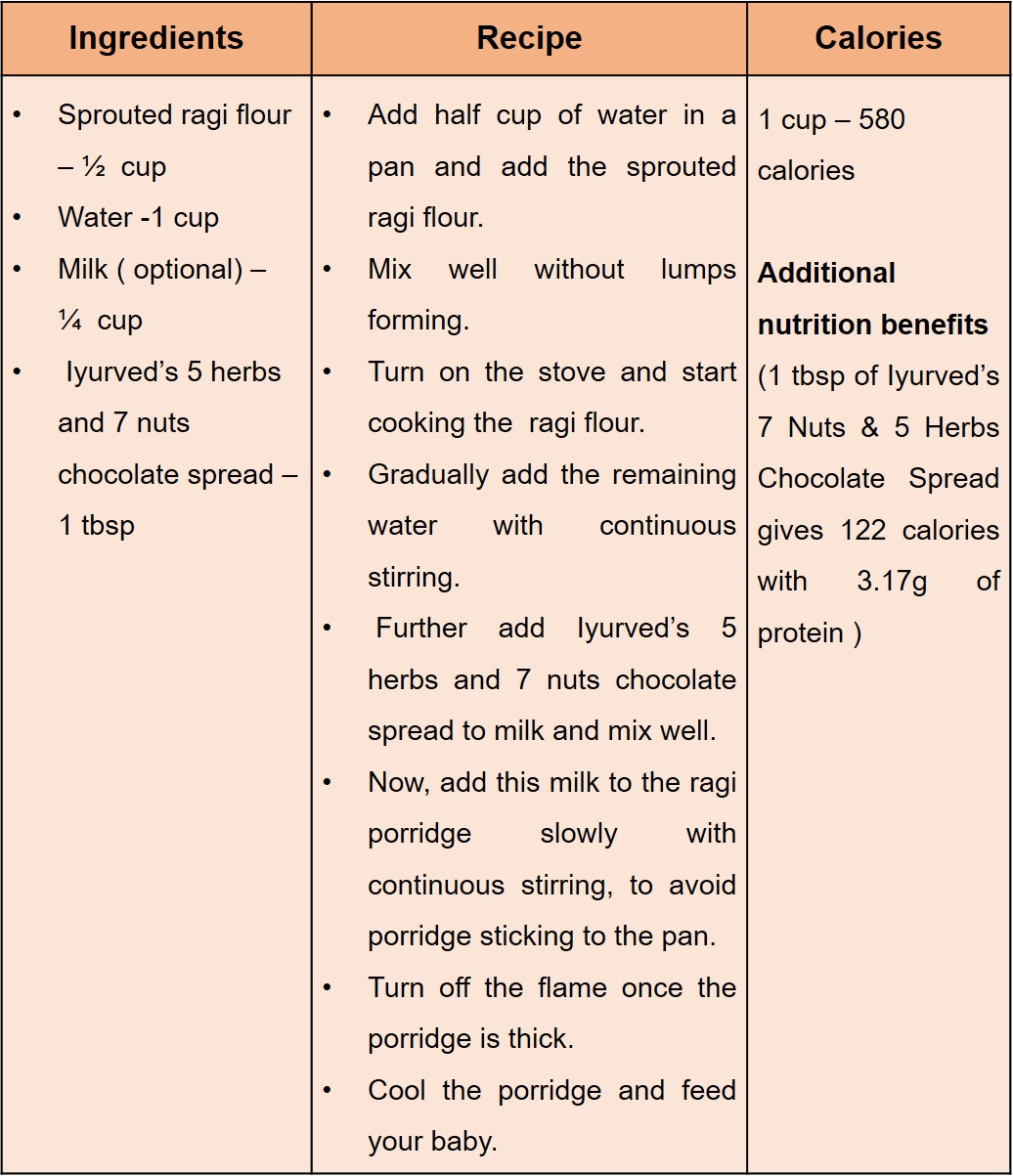
  • RAGI PORRIDGE RECIPE: 
ragi porridge recipe
health benefits of Ragi
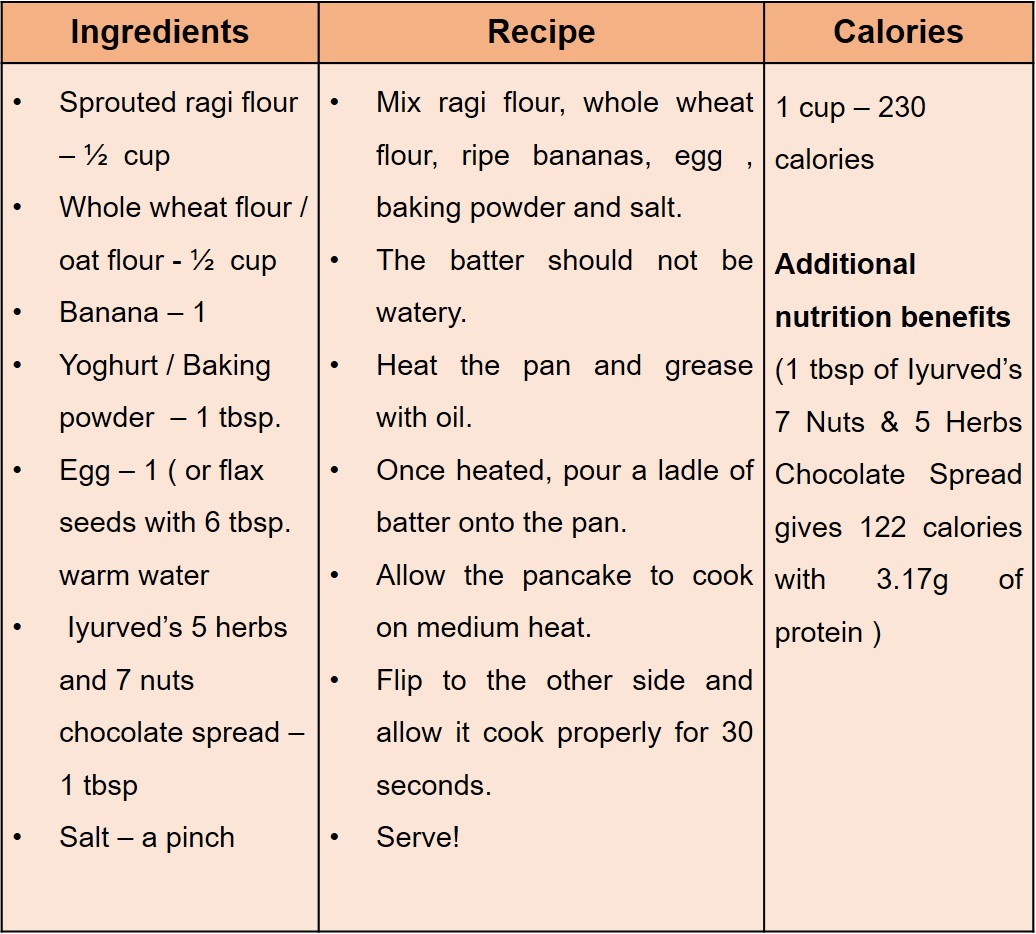
  • RAGI BANANA PANCAKE RECIPE:
Ragi Banana Pancake Recipe
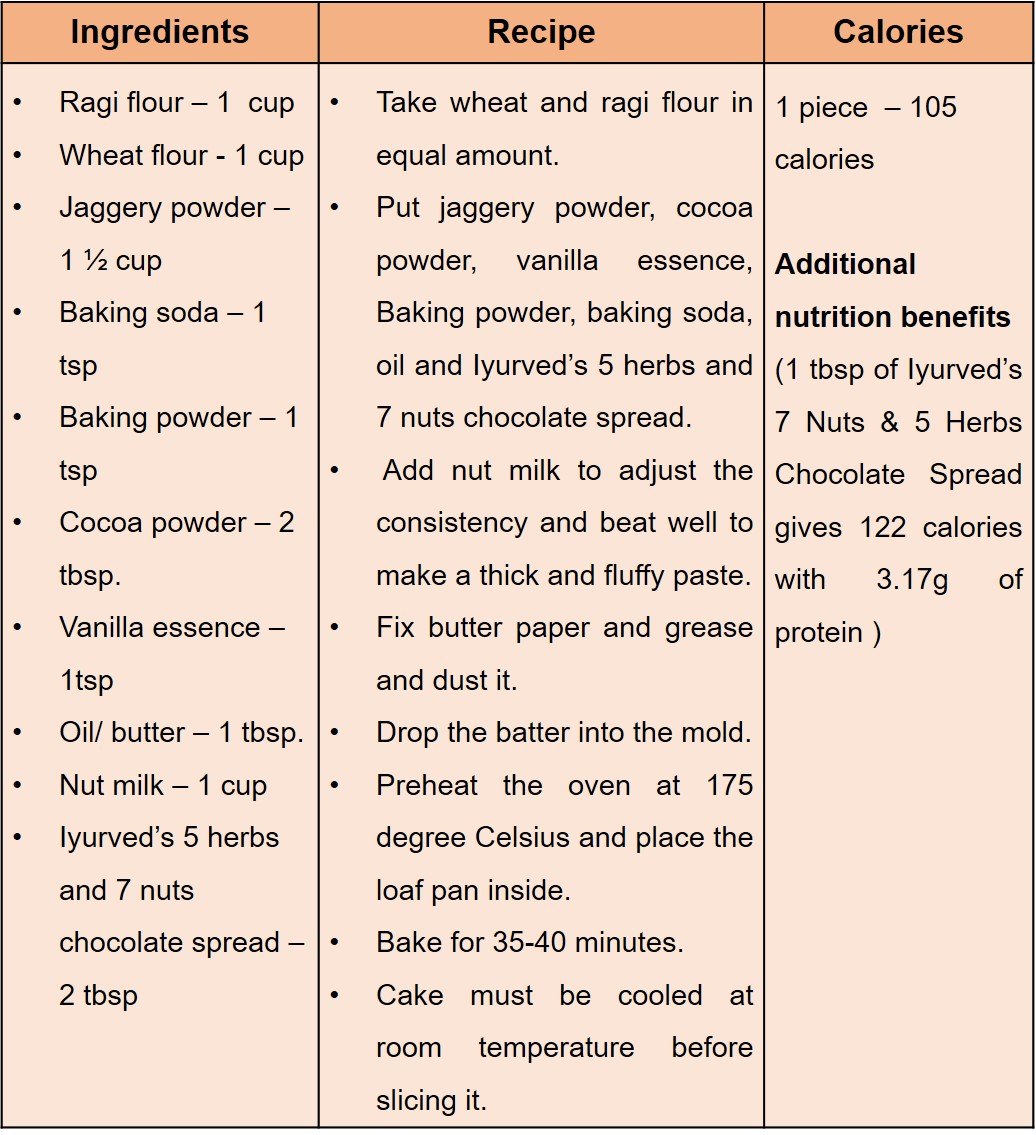
  • RECIPE OF CAKE WITH RAGI FLOUR:
cake with Ragi flour

There are several health benefits of ragi flour, and it can be consumed by people of any age. Because it has all of the key elements including fibers, proteins, iron and calcium and is gluten-free. It is suitable for those who have specific cereal or gluten allergies to consume.

As with any other food, ragi should be consumed in moderation to avoid any negative effects on the body.


PRODUCTS:

Itโ€™s no SECRET that following an Ayurvedic lifestyle has numerous advantages. This unique collection of Ayurvedic spreads is an easy solution to feed daily nutrition for Immunity, Eye, Brain development, Bone strength and overall growth to kids without any fuss. To know more about kidโ€™s ayurvedic foods โ€“ SHOP HERE.

Ayurvedic spread by Iyurved

India’s First Tasty Kids Nutrition fortified with Ayurvedic herbs.

If your child is a picky eater or does not take enough nutrition for the day, you can give Daily Nutrition Chocolate Spread | Made with clinically proven ‘5 Ayurvedic Herbs and 7 Nuts’ | ORDER | 0% preservative | 0% Palm oil |


CHECK MORE PRODUCTS FOR:

Immunity, Gut health, Digestion, Weight, Brain development, Speech delay, Epilepsy, Eye health, Hormones, Sleep, Hyperactivity, Bones and Overall growth

what is the down's syndrome

Read more blogs:

7 healthy Benefits of carrot for kids

Carrot is one of the most loved vegetables among kids. We all know that carrots are good for the eyes, but the health benefits of carrot are many . Carrot is a root vegetable, usually orange in color however, carrots in purple, red, yellow, white and black do exist. carrots are rich in vitamins, minerals, fiber and antioxidants. Generally carrots are narrow and cone shaped. One can eat it raw or they can be boiled, steamed and cooked. Carrot has a crunchy texture and a sweet flavor which makes it a gifted vegetable.

WHATSAPP for concerns like Speech Delay, Low Weight, Frequent Illness, Hyperactivity, Low Concentration, Weak Eyesight, Improper Sleep, Pigmentation, Pores, Face Marks, Fine Lines , Lactation etc.

The following is the nutritional profile for one cup chopped raw carrot.

NutrientsAmount% daily value*
Calorie41 
Protein1.2 gram2%
Total Carbohydrate12 gram4%
  Dietary fiber3.6gram 
  Sugar6.1 gram 
Fat0.3 gram0%
Sodium88 mg4%
Potassium410 mg9%
Calcium42.24 mg3%
Iron0.38 mg2%
   

* The % Daily Value (DV) tells you how much a nutrient in a serving of food contributes to a daily diet. 2,000 calories a day is used for general nutrition advice

Vitamins

Vitamin A: Carrots are rich in beta carotene, which your body converts into vitamin A. This nutrient promotes good vision and is important for growth. One cup of raw carrot provides 430% of daily value for vitamin A.

Also check, How to retain Vitamin A in food?

Vitamin K: Carrot is an outstanding source of vitamin K. this vitamin plays an important role in building strong bones and is also required for blood to clot. One cup of raw carrot provides 21% of daily value for vitamin K.

Vitamin C: Carrot provides Vitamin C also, which supports your immune system and helps your body to absorb iron. One cup of raw carrot provides 13% of daily value for vitamin c.

B vitamins: Vitamin B-6 helps assemble amino acids into proteins, while thiamine supports nerve and brain function. One cup serving of raw chopped carrots provides 9% of the daily value for vitamin B-6 and 6% each of the daily values for thiamine, niacin and folate.

Plant compounds in carrots: Carrots are a great source of many plant compounds, especially carotenoids, such as beta carotene and lutein.

Why carrot is good for health?

Do you wonder why carrot is good for health. Following are the benefits of carrot for skin and body for kids and adults also

Boost immunity:

These root vegetables absorb lots of nutrients from the soil like phosphorus, sulfur, magnesium (how does this mineral help with stress?), calcium along with being rich in fiber, vitamins, and antioxidants that together protect against diseases and illness and make them best immunity food for kids. The antioxidants, apart from helping the body against free radical damage, guard the body against harmful bacteria, viruses and inflammation.

Also check, Tips and foods for immunity building

Eye health:

One of the most important benefits of carrot is for eye health. Carrot is a rich source of vitamin A, which plays a crucial role in vision by maintaining a clear cornea, which is the outer covering of your eye. Rhodopsin, a protein present in eyes that helps to see in low light, is a component of vitamin A. Carrots are a rich source of beta carotene and lutein, which are antioxidants that can help prevent eye damage caused by free radicals.

Also check, How to improve weak eyesight?

Good for digestive health:

Carrots are high in fiber and help in maintaining good digestive health. Fiber makes your stool bulky which helps it pass smoothly through the digestive tract and prevents conditions like constipation.

Also check, Tips and foods for constipation

Weight loss:

The primary step to lose weight is proper digestion. If you are on diet you should include foods that are high in fiber and carrot is one of them. Eating more fibers gives you the feeling of fullness i.e., they release the satiety hormones. It also helps in digestion. This makes us eat less naturally, hence promoting weight loss.

Also check, Natural ways to reduce weight

Promote skin and hairs health:

There are many benefits of carrot for maintaining healthy skin and hair. Vitamin A in carrots promotes firm, elastic and healthy skin. Beta carotene that gives carrots their orange color will also brighten your skin and make it glow. It also helps in nourishing dry skin because they are packed with potassium.ย  It helps repair skin tissues while also protecting skin from harmful radiation. Carrots provide your hair with vital vitamins, making your hairs stronger, thicker and shinier than ever before.

Also check,How to get glowing skin and healthy hairs?

Deworming:

Carrots are a great source of vitamin A and beta-carotene. This orange vegetable can help to deworm your kid and in other stomach disorders too. Beta-carotene has the ability to destroy the eggs of intestinal worms. Eating it raw after washing properly can be the best home remedy for deworming kids. Carrot scrapes the mucus which is home for these parasites and helps to push away these worms out of the intestine.

Also check,Why deworming in kids is necessary?

Carrot as first baby food:

Carrots are good baby solid food to start due to its smooth texture, sweet taste and nutritional values. It is a good source of vitamin A which is important for eye health, vitamin B6 which can provide the best skin, hairs and helps in better liver functioning. Carrot is also rich in fiber thus, helps to prevent constipation in babies. Finely chop or grate carrot and boil it. Retain the water to make puree or to mash it.

Also check, Foods and recipes for 6 months old baby


PRODUCTS

It’s no SECRET that following an Ayurvedic lifestyle has numerous advantages. This unique collection of Ayurvedic spreads is an easy solution to feed daily nutrition for Immunity, Eye, Brain development, Bone strength and overall growth to kids without any fuss. To know more about kid’s ayurvedic foods –SHOP HERE.

Indiaโ€™s First Tasty Kids Nutrition fortified with Ayurvedic herbs

For Better vision and to strengthen eye muscles, give Kids and Teens Eye health Chocolate Spread| Made with 100% veggies, greens, sprouted dal, Gingko Biloba, Lutein, Zeaxanthin | 0% preservative | 0% Artificial Colour | 100% Natural | No refined sugar | ORDER |


CHECK MORE PRODUCTS FOR:

Immunity, Gut health, Digestion, Weight, Brain development, Speech delay, Epilepsy, Eye health, Hormones, Sleep, Hyperactivity, Bones and Overall growth

what is the down's syndrome

Read more blogs:

เคชเค‚เคšเคพเคฎเฅƒเคค เค•เฅ‡ เคธเฅเคตเคพเคธเฅเคฅเฅเคฏ เคฒเคพเคญ

Benefits of Panchamrit

เคชเค‚เคšเคพเคฎเฅƒเคค เค•เฅเคฏเคพ เคนเฅˆ ?

เคชเค‚เคšเคพเคฎเฅƒเคค เคเค• เคธเค‚เคธเฅเค•เฅƒเคค เคถเคฌเฅเคฆ เคนเฅˆ เคœเฅ‹ เคฆเฅ‹ เคถเคฌเฅเคฆเฅ‹เค‚- เคชเค‚เคš (เค…เคฐเฅเคฅเคพเคคเฅ เคชเคพเค‚เคš) เค”เคฐ เค…เคฎเฅƒเคค (เคเค• เคฆเคฟเคตเฅเคฏ เคชเฅ‡เคฏ เคœเฅ‹ เค…เคฎเคฐเคคเฅเคต เคชเฅเคฐเคฆเคพเคฏเค• เคฎเคพเคจเคพ เคœเคพเคคเคพ เคนเฅˆ) เค•เฅ‡ เคธเค‚เคฏเฅ‹เคœเคจ เคธเฅ‡ เคฌเคจเคพ เคนเฅˆเฅค  เคชเค‚เคšเคพเคฎเฅƒเคค เค•เฅ‡ เคธเฅเคตเคพเคธเฅเคฅเฅเคฏ เคฒเคพเคญ เคฌเคนเฅเคค เคนเฅˆเค‚ เค”เคฐ เค‡เคธเคฎเฅ‡เค‚ เคฎเฅเค–เฅเคฏ เคฐเฅ‚เคช เคธเฅ‡ เคฏเฅ‡ เคชเคพเค‚เคš เคคเคคเฅเคต เคถเคพเคฎเคฟเคฒ เคนเฅˆเค‚ – เคฆเฅ‚เคง, เคฆเคนเฅ€, เคถเคนเคฆ, เคฎเคฟเคถเฅเคฐเฅ€ เค”เคฐ เค˜เฅ€เฅค เค•เฅเค› เค•เฅเคทเฅ‡เคคเฅเคฐเฅ‹เค‚ เคฎเฅ‡เค‚, เค‡เคธเฅ‡ เคšเคฐเคฃเคพเคฎเฅƒเคค (เคฆเฅ‡เคตเคคเคพเค“เค‚ เค•เฅ‡ เคšเคฐเคฃเฅ‹เค‚ เคธเฅ‡ เคชเฅเคฐเคพเคชเฅเคค เค…เคฎเฅƒเคค) เค•เฅ‡ เคฐเฅ‚เคช เคฎเฅ‡เค‚ เคญเฅ€ เคœเคพเคจเคพ เคœเคพเคคเคพ เคนเฅˆเฅค

เคงเคพเคฐเฅเคฎเคฟเค• เคฎเคนเคคเฅเคต:

เคนเคฟเค‚เคฆเฅ‚ เคงเคฐเฅเคฎ เคฎเฅ‡เค‚, เค‡เคธเฅ‡ เคฌเคนเฅเคค เคชเคตเคฟเคคเฅเคฐ เคฎเคพเคจเคพ เคœเคพเคคเคพ เคนเฅˆ เค”เคฐ เคชเฅ‚เคœเคพ เค•เฅ‡ เคฆเฅŒเคฐเคพเคจ เคญเค—เคตเคพเคจ เค•เฅ‹ เคชเฅเคฐเคธเคพเคฆ เค•เฅ‡ เคฐเฅ‚เคช เคฎเฅ‡เค‚ เคชเฅเคฐเคฏเฅ‹เค— เค•เคฟเคฏเคพ เคœเคพเคคเคพ เคนเฅˆเฅค เค”เคฐ เค…เคญเคฟเคทเฅ‡เค• (เคฆเคฟเคตเฅเคฏ  เคงเคพเคฐเฅเคฎเคฟเค• เคธเฅเคจเคพเคจ) เค•เฅ‡ เคฒเคฟเค เคญเฅ€ เค‰เคชเคฏเฅ‹เค— เค•เคฟเคฏเคพ เคœเคพเคคเคพ เคนเฅˆเฅค เค…เค‚เคค เคฎเฅ‡เค‚, เคชเฅ‚เคœเคพ เค•เฅ‡ เคฌเคพเคฆ, เค‡เคธเฅ‡ เคญเค•เฅเคคเฅ‹เค‚ เค•เฅ‹ เคชเฅเคฐเคธเคพเคฆ เค•เฅ‡ เคฐเฅ‚เคช เคฎเฅ‡เค‚ เคตเคฟเคคเคฐเคฟเคค เค•เคฟเคฏเคพ เคœเคพเคคเคพ เคนเฅˆเฅค เคนเคฟเค‚เคฆเฅ‚ เคฐเฅ€เคคเคฟ-เคฐเคฟเคตเคพเคœเฅ‹เค‚ เคฎเฅ‡เค‚ “เคชเค‚เคšเคพเคฎเฅƒเคค” เค•เคพ เค‰เคชเคฏเฅ‹เค— เคฎเคพเคจเคต เคœเคพเคคเคฟ เค•เฅ‡ เค‡เคคเคฟเคนเคพเคธ เคฎเฅ‡เค‚ เคธเคฌเคธเฅ‡ เคชเฅเคฐเคพเคจเคพ เคธเคนเคœเฅ€เคตเฅ€ เคญเฅ‹เคœเคจ (เคชเฅเคฐเฅ€-เคฌเคพเคฏเฅ‹เคŸเคฟเค• เค”เคฐ เคชเฅเคฐเฅ‹-เคฌเคพเคฏเฅ‹เคŸเคฟเค• เคฆเฅ‹เคจเฅ‹เค‚ เค•เคพ เคธเค‚เคฏเฅ‹เคœเคจ) เคฎเคพเคจเคพ เคœเคพเคคเคพ เคนเฅˆเฅค เคฏเคน เคชเคพเค‚เคš เค…เคตเคฏเคตเฅ‹เค‚ เค•เคพ เคฎเคฟเคถเฅเคฐเคฃ เคนเฅˆ –  เค—เคพเคฏ เค•เคพ เค•เคšเฅเคšเคพ เคฆเฅ‚เคง, เคฆเคนเฅ€, เคถเคนเคฆ, เคฎเคฟเคถเฅเคฐเฅ€, เค”เคฐ เค˜เฅ€เฅค เค”เคฐ เค†เคช เค‡เคธเคฎเฅ‡เค‚ เค‡เคฒเคพเคฏเคšเฅ€ เค”เคฐ เคคเฅเคฒเคธเฅ€ เคญเฅ€ เคฎเคฟเคฒเคพ เคธเค•เคคเฅ‡ เคนเฅˆเค‚เฅค

เคฎเคนเคพเคญเคพเคฐเคค เค•เฅ‡ เค…เคจเฅเคธเคพเคฐ, เคฏเคน เคธเคฎเฅเคฆเฅเคฐ เคฎเค‚เคฅเคจ เคฏเคพ เค•เฅเคทเฅ€เคฐ เคธเคพเค—เคฐ เคฎเค‚เคฅเคจ (เคฆเฅ‚เคง เค•เฅ‡ เคธเคพเค—เคฐ เค•เคพ เคฎเค‚เคฅเคจ) เค•เฅ‡ เคฆเฅŒเคฐเคพเคจ เค‰เคญเคฐเฅ‡ เคฎเฅ‚เคฒเฅเคฏเคตเคพเคจ เคคเคคเฅเคตเฅ‹เค‚ เคฎเฅ‡เค‚ เคธเฅ‡ เคเค• เคฅเคพเฅค เค‡เคธเคฒเคฟเค, เคชเฅเคฐเคคเฅเคฏเฅ‡เค• เคธเคพเคฎเค—เฅเคฐเฅ€ เค•เคพ เคเค• เคชเฅเคฐเคคเฅ€เค•เคพเคคเฅเคฎเค• เค…เคฐเฅเคฅ เคนเฅ‹เคคเคพ เคนเฅˆเฅค เค‰เคฆเคพเคนเคฐเคฃ เค•เฅ‡ เคฒเคฟเค, เคฆเฅ‚เคง เคชเคตเคฟเคคเฅเคฐเคคเคพ เค•เคพ เคชเฅเคฐเคคเฅ€เค• เคนเฅˆ, เคถเคนเคฆ เคฎเคงเฅเคฐ เคญเคพเคทเคฃ เค”เคฐ เคเค•เคคเคพ เค•เคพ เคชเฅเคฐเคคเฅ€เค• เคนเฅˆ (เคšเฅ‚เค‚เค•เคฟ เคถเคนเคฆ เค•เฅ‡ เค‰เคคเฅเคชเคพเคฆเคจ เคฎเฅ‡เค‚ เคชเฅ‚เคฐเฅเคฃ เคธเคฎเคฐเฅเคชเคฃ เค”เคฐ เคธเคนเคฏเฅ‹เค— เค•เฅ€ เค†เคตเคถเฅเคฏเค•เคคเคพ เคนเฅ‹เคคเฅ€ เคนเฅˆ), เคšเฅ€เคจเฅ€ เคฎเคฟเค เคพเคธ เค”เคฐ เค†เคจเค‚เคฆ เค•เคพ เคชเฅเคฐเคคเคฟเคจเคฟเคงเคฟเคคเฅเคต เค•เคฐเคคเฅ€ เคนเฅˆ, เคฆเคนเฅ€ เคธเคฎเฅƒเคฆเฅเคงเคฟ เค•เคพ เคชเฅเคฐเคคเฅ€เค• เคนเฅˆ เค”เคฐ เค˜เฅ€ เคถเค•เฅเคคเคฟ เค”เคฐ เคœเฅ€เคค เค•เคพ เคชเฅเคฐเคคเคฟเคจเคฟเคงเคฟเคคเฅเคต เค•เคฐเคคเคพ เคนเฅˆเฅค เคธเค‚เค•เฅเคทเฅ‡เคช เคฎเฅ‡เค‚, เคชเค‚เคšเคพเคฎเฅƒเคค เคนเคฎเคพเคฐเฅ‡ เคคเคจ เค”เคฐ เคฎเคจ เคฆเฅ‹เคจเฅ‹เค‚ เค•เฅ‹ เค•เคˆ เคคเคฐเคน เคธเฅ‡ เคฒเคพเคญ เคชเคนเฅเค‚เคšเคพเคคเคพ เคนเฅˆเฅค

เคชเค‚เคšเคพเคฎเฅƒเคค เค•เฅ‡ เคธเฅเคตเคพเคธเฅเคฅเฅเคฏ เคฒเคพเคญ:

  • เคชเฅเคฐเคพเค•เฅƒเคคเคฟเค• เคคเฅเคตเคšเคพ เค•เฅ€ เคธเคซเคพเคˆ เค”เคฐ เค•เฅ‹เคถเคฟเค•เคพเค“เค‚ เค•เฅ‹ เคชเฅ‹เคทเคฃ เคฆเฅ‡เคจเฅ‡ เคฎเฅ‡เค‚ เคฎเคฆเคฆ เค•เคฐเค•เฅ‡ เคชเฅเคฐเคพเค•เฅƒเคคเคฟเค• เคšเคฎเค• เค•เฅ‹ เคฌเคขเคผเคพเคตเคพ เคฆเฅ‡เคคเคพ เคนเฅˆเฅค
  • เคธเฅเคฎเฅƒเคคเคฟ, เค†เคคเฅเคฎเคถเค•เฅเคคเคฟ, เคฐเคšเคจเคพเคคเฅเคฎเค• เค•เฅเคทเคฎเคคเคพ เค”เคฐ เคฎเคธเฅเคคเคฟเคทเฅเค• เค•เฅ‡ เคตเคฟเค•เคพเคธ เค•เฅ‹ เคฌเคขเคผเคพเคคเคพ เคนเฅˆเฅค 
  • เค—เคฐเฅเคญเคพเคตเคธเฅเคฅเคพ เค•เฅ‡ เคฆเฅŒเคฐเคพเคจ เคฎเคพเค‚ เค”เคฐ เคญเฅเคฐเฅ‚เคฃ เค•เฅ‡ เคธเฅเคตเคพเคธเฅเคฅเฅเคฏ เค•เฅ‹ เคฌเคขเคผเคพเคคเคพ เคนเฅˆ
  • เคฌเคพเคฒเฅ‹เค‚ เค•เฅ‹ เคธเฅเคตเคธเฅเคฅ เคฐเค–เคคเคพ เคนเฅˆ
  • เคชเคพเคšเคจ เคฎเฅ‡เค‚ เคธเฅเคงเคพเคฐ เค•เคฐเคคเคพ เคนเฅˆ
  • เคนเคกเฅเคกเคฟเคฏเฅ‹เค‚ เค•เฅ‹ เคฎเคœเคฌเฅ‚เคค เค•เคฐเคคเคพ เคนเฅˆ เค”เคฐ
  • เคชเฅเคฐเคคเคฟเคฐเฅ‹เคงเค• เคคเคคเฅเคต เคฌเคจเคพเคคเคพ เคนเฅˆเฅค 

เคชเฅเคฐเคคเฅเคฏเฅ‡เค• เคธเค‚เค˜เคŸเค• เค•เคพ เคฎเคนเคคเฅเคต:

เคฆเฅ‚เคง:

เค•เคšเฅเคšเฅ‡ เค—เคพเคฏ เค•เฅ‡ เคฆเฅ‚เคง เคฎเฅ‡เค‚ เค…เคคเฅเคฏเคงเคฟเค• เค•เฅเคถเคฒ เคเค‚เคŸเฅ€เค‘เค•เฅเคธเคฟเคกเฅ‡เค‚เคŸ-เคตเคฟเคŸเคพเคฎเคฟเคจ เค•เฅ‡ เค”เคฐ เคฌเฅ€เคŸเคพ เค•เฅˆเคฐเฅ‹เคŸเฅ€เคจ เคนเฅ‹เคคเฅ‡ เคนเฅˆเค‚ เคœเฅ‹ เคถเคฐเฅ€เคฐ เคฎเฅ‡เค‚ เคฎเฅเค•เฅเคค เค•เคฃเฅ‹เค‚ (เคตเฅ‡ เค•เฅเคฏเคพ เคนเฅˆเค‚? What are free radicals?) เค•เคพ เคฎเฅเค•เคพเคฌเคฒเคพ เค•เคฐเคคเฅ‡ เคนเฅˆเค‚เฅค เค‡เคธเคฒเคฟเค, เคฏเคน เคฎเคพเค เค•เฅ‡ เคฆเฅ‚เคง เค•เฅ‡ เคฌเคพเคฆ เค…เค—เคฒเฅ€ เคธเคฌเคธเฅ‡ เค…เคšเฅเค›เฅ€ เคšเฅ€เคœ เคนเฅˆเฅค เค‡เคธเค•เฅ‡ เค…เคฒเคพเคตเคพ, เค—เคพเคฏ เค•เคพ เคฆเฅ‚เคง เค•เฅˆเคฒเฅเคถเคฟเคฏเคฎ, เคชเฅเคฐเฅ‹เคŸเฅ€เคจ, เคตเคฟเคŸเคพเคฎเคฟเคจ เคฌเฅ€12 เค”เคฐ เคตเคฟเคŸเคพเคฎเคฟเคจ เคกเฅ€ เค•เคพ เคญเฅ€ เคธเคฎเฅƒเคฆเฅเคง เคธเฅเคฐเฅ‹เคค เคนเฅˆเฅค

เคฆเคนเฅ€:

เคฆเคนเฅ€ เคฌเฅˆเค•เฅเคŸเฅ€เคฐเคฟเคฏเคพ (เคชเฅเคฐเฅ‹-เคฌเคพเคฏเฅ‹เคŸเคฟเค•) เค•เฅ‡ เคธเคพเคฅ-เคธเคพเคฅ เคฌเฅˆเค•เฅเคŸเฅ€เคฐเคฟเคฏเคพ เค•เฅ‡ เคฒเคฟเค เคญเฅ‹เคœเคจ (เคชเฅเคฐเฅ€-เคฌเคพเคฏเฅ‹เคŸเคฟเค•) เคชเฅเคฐเคฆเคพเคจ เค•เคฐเคคเคพ เคนเฅˆเฅค เค‡เคธเค•เคพ เคถเคฐเฅ€เคฐ เคชเคฐ เค เค‚เคกเคพ เคชเฅเคฐเคญเคพเคต เคชเคกเคผเคคเคพ เคนเฅˆเฅค เค‡เคธเคฎเฅ‡เค‚ เคฎเฅŒเคœเฅ‚เคฆ เค…เคฎเฅ€เคจเฅ‹ เคเคธเคฟเคก เค”เคฐ เคเค‚เคœเคพเค‡เคฎ เคชเคพเคšเคจ เคฎเฅ‡เค‚ เคฎเคฆเคฆ เค•เคฐเคคเฅ‡ เคนเฅˆเค‚เฅค เคฏเคน เคชเฅเคฐเฅ‹เคŸเฅ€เคจ เค”เคฐ เค•เฅˆเคฒเฅเคถเคฟเคฏเคฎ เคญเฅ€ เคชเฅเคฐเคฆเคพเคจ เค•เคฐเคคเคพ เคนเฅˆเฅค

เค˜เฅ€:

เค˜เฅ€ เคฎเฅ‡เค‚ เคเค‚เคŸเฅ€เค‘เค•เฅเคธเคฟเคกเฅ‡เค‚เคŸ – เคตเคฟเคŸเคพเคฎเคฟเคจ เค•เฅ‡ เค”เคฐ เคฌเฅ€เคŸเคพ-เค•เฅˆเคฐเฅ‹เคŸเฅ€เคจ เคนเฅ‹เคคเคพ เคนเฅˆ เคœเฅ‹ เคถเคฐเฅ€เคฐ เคฎเฅ‡เค‚ เคฎเฅเค•เฅเคค เค•เคฃเฅ‹เค‚ เค•เคพ เคฎเฅเค•เคพเคฌเคฒเคพ เค•เคฐเคคเคพ เคนเฅˆเฅค เคฏเคน เคธเคฌเคธเฅ‡ เค•เคผเฅ€เคฎเคคเฅ€ เคญเฅ‹เคœเคจ เคนเฅˆ เคœเคฟเคธเคฎเฅ‡เค‚ เค‰เคชเคšเคพเคฐ เค—เฅเคฃ เคนเฅ‹เคคเฅ‡ เคนเฅˆเค‚เฅค

เคถเคนเคฆ:

เคถเคนเคฆ เคญเฅ‹เคœเคจ เค•เฅ‹ เคคเฅ‹เคกเคผเคจเฅ‡ เค•เฅ‡ เคฒเคฟเค เค†เคตเคถเฅเคฏเค• เคเค‚เคœเคพเค‡เคฎเฅ‹เค‚ เค•เฅ‹ เคตเคนเคจ เค•เคฐเคคเคพ เคนเฅˆ เค”เคฐ เคถเคฐเฅ€เคฐ เคฎเฅ‡เค‚ เค–เคจเคฟเคœเฅ‹เค‚ เค”เคฐ เคตเคฟเคŸเคพเคฎเคฟเคจเฅ‹เค‚ เค•เฅ‡ เค…เคตเคถเฅ‹เคทเคฃ เคฎเฅ‡เค‚ เคธเคนเคพเคฏเคคเคพ เค•เคฐเคคเคพ เคนเฅˆเฅค เค‡เคธเคฎเฅ‡เค‚ เคเค‚เคŸเฅ€-เค‘เค•เฅเคธเฅ€เคกเฅ‡เค‚เคŸ, เคเค‚เคŸเฅ€-เคฌเฅˆเค•เฅเคŸเฅ€เคฐเคฟเคฏเคฒ เค”เคฐ เคเค‚เคŸเฅ€-เคฎเคพเค‡เค•เฅเคฐเฅ‹เคฌเคฟเคฏเคฒ เค—เฅเคฃ เคนเฅ‹เคคเฅ‡ เคนเฅˆเค‚ เคœเฅ‹ เคชเคพเคšเคจ เคฎเฅ‡เค‚ เคฎเคฆเคฆ เค•เคฐเคคเฅ‡ เคนเฅˆเค‚, เคธเค‚เค•เฅเคฐเคฎเคฃ  เคฌเคšเคพเคต เคฎเฅ‡เค‚ เคฎเคฆเคฆ เค•เคฐเคคเฅ‡ เคนเฅˆเค‚, เคฐเค‚เค— เคธเคพเคซ เค•เคฐเคคเฅ‡ เคนเฅˆเค‚ เค”เคฐ เคคเฅเคตเคšเคพ เค•เฅ‹ เคšเคฟเค•เคจเคพ เคฌเคจเคพเคคเฅ‡ เคนเฅˆเค‚

เคฎเคฟเคถเฅเคฐเฅ€:

เคฏเคน เคŠเคฐเฅเคœเคพ เคชเฅเคฐเคฆเคพเคจ เค•เคฐเคคเคพ เคนเฅˆ, เคชเฅเคฐเคคเคฟเคฐเค•เฅเคทเคพ เค•เฅ‹ เค‰เคšเฅเคš เคฐเค–เคจเฅ‡ เคฎเฅ‡เค‚ เคฎเคฆเคฆ เค•เคฐเคคเคพ เคนเฅˆ เค”เคฐ เคชเคพเคšเคจ เคฎเฅ‡เค‚ เคธเคนเคพเคฏเคคเคพ เค•เคฐเคคเคพ เคนเฅˆเฅค เคฏเคน เค…เคจเฅเคฏ เค…เคตเคฏเคตเฅ‹เค‚ เค•เฅ‹ เคญเฅ€ เคฌเคขเคผเคพเคคเคพ เคนเฅˆเฅค

เคคเฅเคฒเคธเฅ€ เค”เคฐ เค‡เคฒเคพเคฏเคšเฅ€:

เคคเฅเคฒเคธเฅ€ เคเค• เค”เคทเคงเฅ€เคฏ เคคเคคเฅเคต เคนเฅˆ เคœเฅ‹ เคถเคฐเฅ€เคฐ เคฎเฅ‡เค‚ เคเคธเคฟเคก เค•เฅ‹ เคธเค‚เคคเฅเคฒเคฟเคค เค•เคฐเค•เฅ‡ เคชเคพเคšเคจ เคฎเฅ‡เค‚ เคธเคนเคพเคฏเคคเคพ เค•เคฐเคคเคพ เคนเฅˆเฅค เคฏเคน เคเค• เค…เคฎเฅƒเคค เคนเฅˆ เคœเฅ‹ เคฒเฅ€เคตเคฐ เค•เฅ‹ เคกเคฟเคŸเฅ‰เค•เฅเคธเฅ€เคซเคพเคˆ เค•เคฐเคจเฅ‡ เคฎเฅ‡เค‚ เคฎเคฆเคฆ เค•เคฐเคคเคพ เคนเฅˆ เค”เคฐ เค†เคฏเคฐเคจ เค•เคพ เคเค• เคชเฅเคฐเคฎเฅเค– เคธเฅเคฐเฅ‹เคค เคญเฅ€ เคนเฅˆเฅค เค‡เคฒเคพเคฏเคšเฅ€ เคถเค•เฅเคคเคฟเคถเคพเคฒเฅ€ เคเค‚เคŸเฅ€เค‘เค•เฅเคธเฅ€เคกเฅ‡เค‚เคŸ เค•เฅ‡ เคธเคพเคฅ เคฌเคนเฅเค†เคฏเคพเคฎเฅ€  เคนเฅˆเฅค

เคธเคพเคฎเค—เฅเคฐเฅ€ เคฎเฅ‡เค‚ เค•เฅเค› เค•เฅเคทเฅ‡เคคเฅเคฐเฅ€เคฏ เคญเคฟเคจเฅเคจเคคเคพเคเค เคนเฅ‹ เคธเค•เคคเฅ€ เคนเฅˆเค‚เฅค เค‰เคฆเคพเคนเคฐเคฃ เค•เฅ‡ เคฒเคฟเค, เค…เคงเคฟเค•เคพเค‚เคถ เคฆเค•เฅเคทเคฟเคฃ เคญเคพเคฐเคคเฅ€เคฏ เคชเค‚เคšเคพเคฎเฅƒเคค เคฎเฅ‡เค‚ เค•เคšเฅเคšเฅ‡ เค•เฅ‡เคฒเฅ‡ เคฎเคฟเคฒเคพเคคเฅ‡ เคนเฅˆเค‚เฅค เค•เคšเฅเคšเคพ เค•เฅ‡เคฒเคพ เค†เค‚เคค (เคชเฅเคฐเฅ€-เคฌเคพเคฏเฅ‹เคŸเคฟเค•) เค•เฅ‡ เคฒเคฟเค เค…เคšเฅเค›เฅ‡ เคฌเฅˆเค•เฅเคŸเฅ€เคฐเคฟเคฏเคพ เค•เคพ เคเค• เคฌเคกเคผเคพ เคธเฅเคฐเฅ‹เคค เคนเฅˆเฅค

เคธเค‚เค•เฅเคทเฅ‡เคช เคฎเฅ‡เค‚, เคฏเคน เคธเคฐเคฒ เคฎเฅ€เค เคพ เคฎเคฟเคถเฅเคฐเคฃ เคจ เค•เฅ‡เคตเคฒ เค…เคคเคฟ เคธเฅเคตเคพเคฆเคฟเคทเฅเคŸ เคนเฅˆ, เคฌเคฒเฅเค•เคฟ เคนเคฎเคพเคฐเฅ‡ เคถเคฐเฅ€เคฐ เค•เฅ‹ เคธเคญเฅ€ เคชเฅเคฐเค•เคพเคฐ เค•เฅ‡ เคคเคฒเฅ‡ เคนเฅเค เคญเฅ‹เคœเคจ เค”เคฐ เคฎเคฟเค เคพเค‡เคฏเฅ‹เค‚ เค•เคพ เค…เคงเคฟเค• เคฎเคพเคคเฅเคฐเคพ เคฎเฅ‡เค‚ เคธเฅ‡เคตเคจ เค•เคฐเคจเฅ‡ เค•เฅ‡ เคฒเคฟเค เคญเฅ€ เคคเฅˆเคฏเคพเคฐ เค•เคฐเคคเคพ เคนเฅˆเฅค เคญเคพเคฐเฅ€, เคคเฅˆเคฒเฅ€เคฏ เค”เคฐ เคฎเฅ€เค เคพ เคญเฅ‹เคœเคจ เค–เคพเคจเฅ‡ เค”เคฐ เค…เคงเคฟเค• เค–เคพเคจเฅ‡ เคธเฅ‡ เคฎเฅเค•เฅเคค เคฎเฅ‚เคฒเค• เค•เฅเคทเคคเคฟ เค”เคฐ เคชเคฐเฅ‡เคถเคพเคจ เคชเคพเคšเคจ เค•เฅ‹ เคชเฅเคฐเฅ€-เคฌเคพเคฏเฅ‹เคŸเคฟเค•, เคชเฅเคฐเฅ‹-เคฌเคพเคฏเฅ‹เคŸเคฟเค•, เคเค‚เคŸเฅ€เค‘เค•เฅเคธเคฟเคกเฅ‡เค‚เคŸ เค”เคฐ เคเค‚เคœเคพเค‡เคฎ เค•เฅ‡ เคธเฅ‡เคตเคจ เคธเฅ‡ เค•เคพเค‰เค‚เคŸเคฐ เค•เคฟเคฏเคพ เคœเคพเคคเคพ เคนเฅˆเฅค เคฏเคน เค‡เคธ เคฌเคพเคค เค•เคพ เคเค• เค†เคฆเคฐเฅเคถ เค‰เคฆเคพเคนเคฐเคฃ เคนเฅˆ เค•เคฟ เค•เฅˆเคธเฅ‡ เคนเคฎเคพเคฐเฅ‡ เคชเคพเคฐเค‚เคชเคฐเคฟเค• เค–เคพเคฆเฅเคฏ เคชเคฆเคพเคฐเฅเคฅ เคนเคฎเฅ‡เค‚ เค…เคงเคฟเค•เคคเคฎ เคธเฅเคตเคพเคธเฅเคฅเฅเคฏ เคฒเคพเคญ เคชเฅเคฐเคฆเคพเคจ เค•เคฐเคจเฅ‡ เค•เฅ‡ เคฒเคฟเค เคตเคฟเคœเฅเคžเคพเคจ เคฆเฅเคตเคพเคฐเคพ เคธเคฎเคฐเฅเคฅเคฟเคค เคนเฅˆเค‚เฅค

เค†เคœ เคนเคฎ เคฏเฅ‡ เคฆเคพเคตเคพ เคคเฅ‹ เคจเคนเฅ€เค‚ เค•เคฐ เคธเค•เคคเฅ‡ เค•เคฟ เคชเค‚เคšเคพเคฎเฅƒเคค  เค…เคฎเคฐเคคเฅเคต เคชเฅเคฐเคฆเคพเคจ เค•เคฐเคคเคพ เคนเฅˆ เคชเคฐ เค‡เคธเคฎเฅ‡เค‚ เคชเฅเคฐเคฏเฅเค•เฅเคค เคชเคพเค‚เคšเฅ‹ เคชเคฆเคพเคฐเฅเคฅ เคถเคฐเฅ€เคฐ เค•เฅ‡ เคฒเคฟเค เค…เคคเฅเคฏเค‚เคค เคฒเคพเคญเค•เคพเคฐเฅ€ เคนเฅˆเค‚เฅค

เคชเค‚เคšเคพเคฎเฅƒเคค เคฌเคจเคพเคจเฅ‡ เค•เฅ€ เคตเคฟเคงเคฟ:

health benefits of Panchamrit
panchamrit ingredients

 เคธเคพเคฎเค—เฅเคฐเฅ€:

  • เค•เคšเฅเคšเคพ เคฆเฅ‚เคง (เค—เคพเคฏ เค•เคพ เคฆเฅ‚เคง เค…เคงเคฟเค• เค‰เคคเฅเคคเคฎ  เคนเฅ‹เคคเคพ เคนเฅˆ)
  • เคฆเคนเฅ€
  • เคถเคนเคฆ
  • เคฎเคฟเคถเฅเคฐเฅ€ (เคฐเฅ‰เค• เคถเฅเค—เคฐ)
  • เค˜เฅ€

(เคฌเคฟเคฒเฅ‹เคจเคพ เคตเคฟเคงเคฟ เคธเฅ‡ เคฌเคจเคพเคฏเคพ เค—เคฏเคพ เค˜เฅ€ เค‰เคคเฅเคคเคฎ เคนเฅˆ)

เค‡เคธเค•เฅ‡ เค…เคคเคฟเคฐเคฟเค•เฅเคค เค‡เคฒเคพเคฏเคšเฅ€ เค”เคฐ เคคเฅเคฒเคธเฅ€ เฅค

(เคธเคพเคฎเค—เฅเคฐเฅ€ เค•เฅ‹ เค—เคฐเฅเคฎ เคนเฅ‹เคจเคพ เคœเคผเคฐเฅ‚เคฐเฅ€ เคจเคนเฅ€เค‚ เคนเฅˆ เคฌเคธ เค•เคฎเคฐเฅ‡ เค•เคพ เคคเคพเคชเคฎเคพเคจ เคนเฅ‹  เคฏเคพ เค•เฅ‚เคฒเคฐ เค•เคพเฅค )เค‡เคจ เคธเคฌเค•เฅ‹ เค†เคชเคธ เคฎเฅ‡เค‚ เคชเฅ‚เคฐเฅ€ เคคเคฐเคน เคฎเคฟเคฒเคพ เคฒเฅ‡เค‚ เค”เคฐ เคธเฅ‡เคตเคจ   เค•เคฐเฅ‡เค‚!

เคชเค‚เคšเคพเคฎเฅƒเคค เค†เคช เคธเคฌเค•เฅ‡ เคฒเคฟเคฏเฅ‡ เคถเฅเคญ เคนเฅ‹ เค”เคฐ เค‰เคคเฅเคคเคฎ เคซเคฒ เคชเฅเคฐเคฆเคพเคจ เค•เคฐเฅ‡เฅค

เค‡เคธ เคฌเฅเคฒเฅ‰เค— เค•เฅ‹ เค…เค‚เค—เฅเคฐเฅ‡เคœเฅ€ เคฎเฅ‡เค‚ เคชเคขเคผเคจเฅ‡ เค•เฅ‡ เคฒเคฟเค เคฏเคนเคพเค‚ เค•เฅเคฒเคฟเค• เค•เคฐเฅ‡เค‚เฅค


เค‰เคคเฅเคชเคพเคฆ/เคชเฅเคฐเฅ‹เคกเค•เฅเคŸเฅเคธ:

เคนเคฎเฅ‡เค‚ เคฌเคšเฅเคšเฅ‹เค‚ เค•เฅ‡ เคฒเคฟเค เคชเฅŒเคทเฅเคŸเคฟเค• เค”เคฐ เคธเฅเคตเคพเคฆเคฟเคทเฅเคŸ เค‰เคคเฅเคชเคพเคฆเฅ‹เค‚ เค•เฅ€ เค…เคชเคจเฅ€ เคถเฅเคฐเฅƒเค‚เค–เคฒเคพ เคชเฅ‡เคถ เค•เคฐเคคเฅ‡ เคนเฅเค เค–เฅเคถเฅ€ เคนเฅ‹ เคฐเคนเฅ€ เคนเฅˆ !!

เคนเคฎ เคœเคพเคจเคคเฅ‡ เคนเฅˆเค‚ เค•เคฟ เคชเฅเคฐเคคเคฟเคฆเคฟเคจ เคธเฅเคตเคธเฅเคฅ เคญเฅ‹เคœเคจ เคคเฅˆเคฏเคพเคฐ เค•เคฐเคจเคพ เค”เคฐ เค–เคฟเคฒเคพเคจเคพ เคเค• เคฌเคนเฅเคค เคฌเคกเคผเคพ เค•เคพเคฎ เคนเฅˆ, เค”เคฐ เคญเฅ€ เค•เค เคฟเคจ เคนเฅˆ เคœเคฌ เคฌเคšเฅเคšเฅ‡ เค…เคชเคจเฅ‡ เคฆเฅเคตเคพเคฐเคพ เคšเคฏเคจเคฟเคค เคญเฅ‹เคœเคจ เค–เคพเคจเฅ‡ เคตเคพเคฒเฅ‡ เคนเฅ‹เคคเฅ‡ เคนเฅˆเค‚เฅค เคฌเคšเฅเคšเฅ‡ เค•เฅเค› เค–เคพเคฆเฅเคฏ เคชเคฆเคพเคฐเฅเคฅ เค”เคฐ เคชเฅเคฐเคพเคฐเฅ‚เคช เค•เฅ‹ เคชเคธเค‚เคฆ เค•เคฐเคคเฅ‡ เคนเฅˆเค‚เฅค เคฌเคšเฅเคšเฅ‹เค‚ เค•เฅ‹ เคนเคฐ เคฐเฅ‹เคœ เค•เคกเคผเคตเฅ€ เค†เคฏเฅเคฐเฅเคตเฅ‡เคฆเคฟเค• เคœเคกเคผเฅ€ เคฌเฅ‚เคŸเคฟเคฏเคพเค‚, เคคเคฐเคน-เคคเคฐเคน เค•เฅ€ เคธเคฌเฅเคœเคฟเคฏเคพเค‚, เคซเคฒ, เคฎเฅ‡เคตเคพ เค”เคฐ เคฌเฅ€เคœ เค–เคฟเคฒเคพเคจเคพ เค†เคธเคพเคจ เคจเคนเฅ€เค‚ เคนเฅ‹เคคเคพเฅค

เค†เคฏเฅเคฐเฅเคตเฅ‡เคฆเคฟเค• เคœเคกเคผเฅ€ เคฌเฅ‚เคŸเคฟเคฏเฅ‹เค‚ เค•เฅ‡ เคธเคพเคฅ เคฎเคฟเคถเฅเคฐเคฟเคค, เคฏเคน เค…เคจเฅ‚เค เคพ เค‰เคคเฅเคชเคพเคฆ เคฌเคฟเคจเคพ เค•เคฟเคธเฅ€ เคเค‚เคเคŸ เค•เฅ‡ เคฌเคšเฅเคšเฅ‹เค‚ เค•เฅ‹ เคชเฅเคฐเคคเคฟเคฐเค•เฅเคทเคพ(เค‡เคฎเฅเคฏเฅเคจเคฟเคŸเฅ€), เคฎเคธเฅเคคเคฟเคทเฅเค• เค•เฅ‡ เคตเคฟเค•เคพเคธ (เคฌเฅเคฐเฅ‡เคจ เคกเฅ‡เคตเคฒเคชเคฎเฅ‡เค‚เคŸ) , เคนเคกเฅเคกเคฟเคฏเฅ‹เค‚ เค•เฅ€ เคฎเคœเคฌเฅ‚เคคเฅ€(เคฌเฅ‹เคจ เคธเฅเคŸเฅเคฐเฅ‡เค‚เคฅ) เค”เคฐ เคธเคฎเค—เฅเคฐ เคตเคฟเค•เคพเคธ (เค“เคตเคฐเฅ‰เคฒ เค—เฅเคฐเฅ‹เคฅ) เค•เฅ‡ เคฒเคฟเค เคฆเฅˆเคจเคฟเค• เคชเฅ‹เคทเคฃ (เคกเฅ‡เคฒเฅ€ เคจเฅเคฏเฅ‚เคŸเฅเคฐเคฟเคถเคจ) เคชเฅเคฐเคฆเคพเคจ เค•เคฐเคจเฅ‡ เค•เคพ เคเค• เค†เคธเคพเคจ เค‰เคชเคพเคฏ เคนเฅˆเฅค


Iyurved Daily Nutrition

เค†เคฏเฅเคฐเฅเคตเฅ‡เคฆเคฟเค• เคœเคกเคผเฅ€ เคฌเฅ‚เคŸเคฟเคฏเฅ‹เค‚ เค•เฅ‡ เคธเคพเคฅ เคญเคพเคฐเคค เค•เคพ เคชเคนเคฒเคพ เคธเฅเคตเคพเคฆเคฟเคทเฅเคŸ เค•เคฟเคกเฅเคธ เคจเฅเคฏเฅ‚เคŸเฅเคฐเคฟเคถเคจเฅค

เคฏเคฆเคฟ เค†เคชเค•เคพ เคฌเคšเฅเคšเคพ เค•เฅเค› เคšเคฏเคจเคฟเคค เค†เคนเคพเคฐ เค–เคพเคจเฅ‡ เคตเคพเคฒเคพ เคนเฅˆ เคฏเคพ เคฆเคฟเคจ เคญเคฐ เค•เฅ‡ เคฒเคฟเค เคชเคฐเฅเคฏเคพเคชเฅเคค เคชเฅ‹เคทเคฃ เคจเคนเฅ€เค‚ เคฒเฅ‡เคคเคพ เคนเฅˆ, เคคเฅ‹ เค†เคช ‘5 เค†เคฏเฅเคฐเฅเคตเฅ‡เคฆเคฟเค• เคœเคกเคผเฅ€-เคฌเฅ‚เคŸเคฟเคฏเคพเค เค”เคฐ 7 เคฎเฅ‡เคตเฅ‡’ เคธเฅ‡ เคฌเคจเคพ เคจเคฎเค•เฅ€เคจ เคธเฅเคชเฅเคฐเฅ‡เคก เค‡เคธเฅเคคเฅ‡เคฎเคพเคฒ เค•เคฐเฅ‡เค‚  | เคฏเคนเคพเค เค†เคฐเฅเคกเคฐ เค•เคฐเฅ‡เค‚ |  0% เคชเฅเคฐเฅ‡เคœเคผเคฐเฅเคตเฅ‡เคŸเคฟเคตเฅเคธ | 0% เคชเคฐเคฟเคทเฅเค•เฅƒเคค เคšเฅ€เคจเฅ€ | 0% เคคเคพเคกเคผ เค•เคพ เคคเฅ‡เคฒ |

เคฌเคšเฅเคšเฅ‹เค‚ เค•เฅ‡ เคฒเคฟเค เค…เคจเฅเคฏ เค‰เคคเฅเคชเคพเคฆเฅ‹เค‚ เค•เฅ€ เคœเคพเคเคš เค•เคฐเฅ‡เค‚: เคฆเฅˆเคจเคฟเค• เคชเฅ‹เคทเคฃ, เคฎเคธเฅเคคเคฟเคทเฅเค• เคตเคฟเค•เคพเคธ, เคจเฅ€เค‚เคฆ, เคนเคพเคฐเฅเคฎเฅ‹เคจ เค”เคฐ เคจเฅ‡เคคเฅเคฐ เคธเฅเคตเคพเคธเฅเคฅเฅเคฏเฅค

(เคถเคฟเคชเคฟเค‚เค— เค•เฅ‡เคตเคฒ เคญเคพเคฐเคค เค”เคฐ เคธเคฟเค‚เค—เคพเคชเฅเคฐ เคฎเฅ‡เค‚ )


เค›เฅ‹เคŸเฅ‡ เคฌเคšเฅเคšเฅ‹เค‚ เค”เคฐ เค•เคฟเคถเฅ‹เคฐเฅ‹เค‚ เค•เฅ‡ เคฎเคพเคคเคพ-เคชเคฟเคคเคพ เค•เฅ‡ เคฒเคฟเค เคฌเคšเฅเคšเฅ‹เค‚ เค•เฅ‡ เคชเฅ‹เคทเคฃ เค”เคฐ เคธเฅเค•เคฟเคจเค•เฅ‡เคฏเคฐ เคธเคฎเฅเคฆเคพเคฏ เคฎเฅ‡เค‚ เคถเคพเคฎเคฟเคฒ เคนเฅ‹เค‚เฅค

เคชเฅ‹เคทเคฃ เคตเคฟเคถเฅ‡เคทเคœเฅเคž เคฆเฅเคตเคพเคฐเคพ เค…เคจเฅเคถเค‚เคธเคฟเคค เค–เคพเคฆเฅเคฏ เคชเคฆเคพเคฐเฅเคฅ เค”เคฐ เค‰เคชเคšเคพเคฐเฅค


เค”เคฐ เคฌเฅเคฒเฅ‰เค— เคชเคขเคผเฅ‡เค‚:

Breakfast Ideas that are healthy For Kids

Your morning sets up the success of your day. If your child starts their day with healthy and nutritious breakfast you will see a difference in their health and academic performance. Studies show that kids who eat breakfast do better in school, have better concentration, perform better in sports and remain energetic throughout the day. Breakfast is the most important meal of the day out of all the meals as it refuels your body after a long night of sleep. A healthy breakfast is very important for your kidโ€™s growth and weight management

WHATSAPP for concerns like Speech Delay, Low Weight, Frequent Illness, Hyperactivity, Low Concentration, Weak Eyesight, Improper Sleep, Pigmentation, Pores, Face Marks, Fine Lines , Lactation etc.

Benefits of breakfast

  • Eating breakfast boosts your metabolism.
  • Improves concentration and attention
  • Keeps you feeling fuller for long and reduces the risk of starving, hence control weight.
  • Studies have shown that people who eat breakfast consume more vitamins, minerals and fiber throughout the day.
  • Keeps you energetic throughout the day.
  • If you skip your breakfast, obviously you are going to eat much in the next meal, this will increase the chances of being overweight.
  • If you donโ€™t eat breakfast you may be in a bad mood throughout the day.
  • Doing Breakfast keeps the blood sugar level stable during the day.

A healthy breakfast should be packed with protein, fiber and carbohydrates that will give you energy to kick start your day and keep you full for a longer time. Below are some breakfast ideas that are healthy and nutritious too. Recipes that you can daily offer your child so that they can jump start their day.

breakfast ideas that are healthy

Try these breakfast ideas that are healthy and easy to make with your family and friends

Let’s make every dish tasty and nutritious by ‘hidden’ nutrition of veggies, herbs and nuts.

Quinoa Peas Meal

Ingredients:

  • ยฝ cup quinoa boiled in equal water
  • 2 tbsp oil
  • 1 small onion chopped.
  • ยฝ cup peas.
  • 1 pod garlic and ginger chopped.
  • 1 tsp cumin seeds.
  • 2 tbsp Iyurvedโ€™s 3 herbs and 7 nuts savoury spread (order here)
  • Lemon juice fresh
  • Green chilli chopped (optional)
  • Salt
  • Chopped handful coriander

Heat oil in a pan. Put cumin ginger garlic and onion. Sautรฉ for a minute. Add peas, salt and chilies. Cook for 3 min. Add boiled quinoa (no water at all)and Iyurved’s savoury spread. Cook for 5 min. Add lots of lemon juice to taste spicy, salty and sour. All flavors! Garnish with coriander. Serve!

Paneer Paratha with hidden radish

Ingredients:

  • 4 small radish
  • 2 cups Jowar/ sorghum or whole-wheat flour (or as much required to make super soft dough)
  • Salt (as per taste)
  • 4 tbsp Iyurvedโ€™s 3 herbs and 7 Nuts savoury spread (order here)
  • Paneer or firm tofu (mixed with spices of choice)

Keep the dough very soft. Take a ball of dough Scramble Paneer or firm tofu. Add spices of choice and salt stuff mixture in the fattened ball of dough, roll the ball into a thin paratha/tortilla, cook on both sides and apply little ghee

Sprouted Mung Bean (Moong Dal) Cheela/ Pancake

Ingredients:

  • 1 cup mung bean/ moong dal
  • Salt
  • 1 tsp Ajwain/ Carom seeds
  • 3 tbsp Iyurvedโ€™s 3 herbs and 7 nuts savoury spread (order here)
  • 1 pod ginger
  • 1 tsp cumin seeds

Wash and soak for 30 min to remove impurities (Why soak?). Add fresh 2 cups of water and leave to soak further for 4-5 hours. Grind the paste with ginger pod. (Added health benefits of fermenting?) Leave the mixture covered with a lid to ferment for a few hours or make immediately. Add salt, herb and nut spread, cumin and carom seeds when ready to cook. Heat iron or non-stick pan. Grease lightly. Spread one big spoon of mixture and spread circular till thin. Cook covered with a lid. Flip to cook on the other side. Serve with any sauce or plain! (Added health benefits of using iron pan?)

Millet Upma

Ingredients:

  • Ghee (clarified butter) or oil
  • 1 tbsp mustard seeds
  • Curry leaves
  • Crushed roasted Peanuts
  • Medium size chopped onion (or more veggies)
  • 1 tbsp grated ginger
  • 1 cup little millet or semolina
  • 3 tbsp Iyurvedโ€™s 3 herbs and 7 nuts savoury spread (order here)
  • 2 cups water

After the veggies are cooked and turn brown, add Iyurvedโ€™s 5 herbs and 7 nuts savoury spread (order here). Roast again. Add millet or semolina. Add water. Cover and cook for 8-10 minutes till soft and water is absorbed. Garnish with coriander. Serve hot!

Millet Halwa


  • 1.5 cups Ragi (finger millet)
  • 2 tbsp Ghee (clarified butter)
  • 3 tbsp Iyurvedโ€™s 3 herbs and 7 nuts savoury spread (order here)
  • ยฝ cup jaggery
  • Water
  • ยฝ tsp Cardamom powder

Roast Ragi/ millet once aromatic add Ghee and Iyurved Spread Keep Roasting till change in colour (keep low flame) Take water and jaggery and melt once mixture thickens slightly, add mixture. Keep mixing. Add more water if the paste becomes too hard to mix. Soon the mixture will be cooked well and will leave edges. Add Cardamom powder. Serve garnished with nuts and cardamom powder.

Beetroot Wrap

  • 1cup Ragi flour (optional)
  • 1 cup chickpea flour or mung bean paste (soak mung bean for 4 hours, blend with water to make thick batter)
  • 1 beetroot grated/ purรฉed (uncooked)
  • 200mg Tofu (mashed)
  • 3 tbsp Sesame Seeds
  • Water (as required)
  • Salt (as per taste)
  • 2 tbsp grated ginger
  • 1 tsp Ajwain/ Carom seeds
  • 2tbsp Iyurvedโ€™s 3 herbs and 7 nuts savoury spread (order here)
  • Coriander leaves (chopped)

 Mix all these ingredients together to make it better. Spread 1 serving spoon batter on a non-stick pan. Apply some oil. Flip the other side. Taste best with coconut chutney.

(What happen when you eat beetroot daily?)

Whole Grain Pizza cups

Stuffing:

  • Sprouts of any kind (pea sprout, alfaalfa etc)
  • Cheddar cheese or vegan or any
  • chopped onions
  • chopped tomato
  • basil, pine nut, sesame spread (blend basil, garlic, pine nuts and sesame seeds, nut milk in a thick smooth paste form) or use Iyurvedโ€™s 5 herbs and 7 nuts savoury spread (order here)

Dough:

  • Equal part Ragi flour or amaranth flour or Rye flour or Sorghum flour (any two)
  • Put salt and oregano
  • Add 2 tbsp psyllium husk (optional but good)
  • 1 boiled sweet potato (optional)
  • 1 tsp yeast (optional)
  • 5 tbsp Iyurvedโ€™s 3 herbs and 7 nuts savoury spread (order here)
  • water or yogurt to knead into sticky dough
  • 1 tbsp nutritional yeast (optional but good)
  • Mix all this together into a sticky dough and leave to rise for 2 hours covered lightly with a cotton cloth and loose lid.

Preheat 5 minutes, Bake for 15 minutes at 200 Celsius.

Apple and Banana Muffins

  •  Eggs or 2 tbsp chia or flax seeds powder soaked in 6 tbsp warm water till it becomes lumpy
  • 2 mashed banana
  • 1 tbsp butter or Iyurvedโ€™s 3 herbs and 7 nuts savoury spread (order here)
  • 1.5 cup whole-wheat flour or almond flour
  • ยพ tsp baking soda
  • Pinch of salt
  • 1 small apple cut in small chunks
  • Honey (optional)
  • Choco chips (optional)

Preheat the oven at 175 Celsius for 5 min.Mix eggs/ chia or flax paste, banana, and butter or Iyurvedโ€™s 5 herbs and 7 nuts savoury spread (order here) in a bowl. Add flour, baking soda, apple chunks, salt to the bowl and Mix well. Feel free to add chocolate chips to the mixture. Taste the mixture for sweetness or else add honey. Divide batter into muffin pan or moulds. Bake for 16 to 18 minutes or until golden brown and the toothpick/ knife inserted into the center comes out clean. Cool on the wire rack and eat! Feel free to add chocolate chips to the mixture. Add melted dark chocolate or Iyurvedโ€™s 5 herbs and 7 nuts Choco spread (order here) on top (optional) (Benefits of eating banana and apple)


PRODUCTS:

Itโ€™s no SECRET that following an Ayurvedic lifestyle has numerous advantages. This unique collection of Kids Ayurvedic Brain Booster is an easy solution to feed daily nutrition for Brain development to kids without any fuss. Made with Proven Ingredients. No Preservatives or Artificial Colour or Flavour. No Side Effects. Trusted by 20000+ Parents and Practitioners. To know more about kidโ€™s ayurvedic foods โ€“ SHOP HERE.

what is the down's syndrome

India’s First Tasty Kids Nutrition fortified with Ayurvedic herbs.

For Focus, Concentration, Memory,Kids & Teens Brain Booster Savoury Spread | 0% preservatives | 0% refined sugar | 0% palm oil | Fortified with SHANKHAPUSHPI, ASHWAGANDHA, BRAHMI | Contains OMEGA 3, CALCIUM, PROTEIN | ORDER |


CHECK MORE PRODUCTS FOR:

Immunity, Gut health, Digestion, Weight, Brain development, Speech delay, Epilepsy, Eye health, Hormones, Sleep, Hyperactivity, Bones and Overall growth

what is the down's syndrome

Read more blogs:

Dals: Amazing benefits of 9 different Lentils

Lentils are small lens shaped seeds and belong to the legume family. It is a yearly crop and many different types of lentils are found in India and Canada. Lentils hindi name is Dal. There are numerous health benefits from lentils and they come in a variety of colors and shapes.

What are the health benefits FROM Lentils

Due to numerous health benefits from lentils, an Indian thali (plate) is never complete without Dal (Lentils hindi name) and it is extremely popular in north as well as south India. You can prepare a variety of dishes with different kinds of lentils and all are amazingly delicious. One can either cook to consume lentils directly, or sprout them (why sprout?) or make them into a batter for wraps (recipe for lentil wrap or lentil soup). There are several health benefits from lentils for kids that make them a must-have in your childโ€™s daily diet.

The following nutrition information is provided by the USDA (United States deptt. of agriculture):

For 1 cup (198g) of cooked lentils with no added salt: 

NutrientAmount
Calories230 kcal
Fat0.8g
Sodium4mg
Carbohydrates40g
Fiber15.6g
Sugar3.6g
Protein18g
Nutrition in Dal by Iyurved
Health benefits:

Rich in proteins: Amongst various health benefits of different kinds of lentils, the most important benefit is that it is rich in protein. Protein helps in building muscles & supports generation and regeneration of cells in the body. For kids, protein is a vital nutrient and should be included in their each and every meal. Each 1 cup serving of lentils provides a healthy 18 grams of protein, so it is a boon for vegetarian families and they can depend on lentils for their 90% of daily recommended intake of protein. (Why proteins are important for your kids?)

Aids digestion: Lentils are especially rich in prebiotic fiber which promotes digestive function and fuels the beneficial gut bacteria which are so important for our health. A fiber rich diet helps with a number of health benefits. (What is the role of prebiotics for good health?)

Reduces chronic diseases: Lentils have the highest total phenolic content in comparison to other common legumes which helps in reducing chronic diseases like diabetes, obesity, cancer and heart disease. (How to control the weight of the child?)

Supports heart health: Lentils are rich in fiber, folate and potassium making them a great choice for the heart and for managing blood pressure and cholesterol. They are also high in iron and vitamin B1 which helps maintain a steady heartbeat.

How many types of lentils are there?

Lentils come in different colours and slightly different shapes.

Green Moong:  

Whether you eat them whole, with the skin on, without the skin or split, they are extremely beneficial in providing your body with proteins. Green moong sprouts are a wonderful source of protein, is high in dietary fiber and also a good source of manganese, potassium, folate, magnesium, copper, zinc, and vitamin B.

Yellow moong dal:

In addition to proteins, yellow moong dal is rich in iron and potassium and very easy to digest. It can be easily given to babies as their first solid meal in the form of khichadi combined with rice. (What foods can be given to babies who are starting solids?) In addition to this, moong dal benefits weight loss and is consumed as part of a detox diet.

Arhar or toor dal:

Arhar dal is packed with all the healthy nutrients and is widely used in North as well as south Indian cuisines. It contains nutrients like iron, folic acid, magnesium, calcium, Vitamin B and potassium making it vital for your childโ€™s proper growth and development. (Nutrition tips for toddlers?)

Urad dal:

Urad dal is usually called black dal when whole and white when it is skinned and split. It is great in taste and in nutritional content. Urad dal is one of the best options to improve your digestion. It is a great source of protein and also helps lower your cholesterol levels. Your kids will love urad dal because it has a nice gooey feel and is extremely tasty. Mouth-watering dishes like daal makhni, sambar vada, dahi vada and many more dishes are prepared with it.

Masoor dal:

Masoor dal is available in black and orange color. Both are really delicious and rich. This dal is very versatile and can be cooked in different ways. Besides protein, It is one of the best sources of fiber, iron, amino acids, potassium and vitamin B1 for your little one. For adults, masoor dal can be very useful in reducing your cholesterol levels and ensuring that your sugar stays in check. (How can iron deficiency hamper your child’s growth and development?)

Lobia or Black-eyed pea:

Lobia is known to have originated from West Africa, but it is widely cultivated in Asia and the US. It is loaded with fiber which helps in keeping your child feeling fuller and also improves digestion considerably. In addition to this, it has high protein content making it an essential part of your childโ€™s diet.

Matar Dal:

Matar dal is also one of the most versatile and easy to cook dals available in India. You can use the yellow variety or the green. You can cook it as an evening snack by simply roasting and seasoning it. Matar dal provides protein and fiber and hence you should definitely include it in your childโ€™s diet. It is also rich in several minerals like manganese, folates, copper and potassium and contains essential vitamins such as vitamin B1 and B5. (Why vitamins are important for kids?)

Chick pea/ Bengal gram/ Chana dal:

This dal comes in two forms: a smaller one with a dark skin, which is called kala chana and the larger white one which is known as kabuli chana. You can cook it in different ways and it can be sprouted to add to a salad. It has anti-inflammatory qualities, is high on folate, molybdenum, manganese, copper, fiber, protein, iron and zinc. You can give Kabuli chana to your kids in the form of hummus or a more popular form in India is to cook it as a gravy (chhole) and serve with poori. (Pumpkin hummus recipe)

KULTHI DAL/ Horse Gram:

Horse Gram is one of the best sources of calcium in comparison to other lentils and hence it is good to develop more strength in your lower body. It is also high in protein, low in fat, and in lipid and sodium content, and is good for those who have diabetes or suffer from obesity. In addition to this, it is high in carbohydrates making it very beneficial for kids. (Why is balanced diet important for kids?)

When can we start giving lentils to kids?

Due to so many benefits of different kinds of lentils, giving lentils to babies and growing children is very important to promote proper growth and development in kids. Lentils can be safely given to a baby when he/she is 6 or 8 months old or when he/she starts taking foods other than milk. At that time, you can give lentils in a very watery/liquid form. Sometimes lentils are gaseous, so you have to watch. To minimize the gas problem, you can add some veggies and make a puree. The fiber in lentil helps the child in smooth and regular bowel movements. Gradually, you can increase the lentil intake in kids, as a growing child needs a lot more protein and other minerals and fibers. (Nutrition for kids)


Recipe for Chana Dal Hummus with hidden herbs:

Letโ€™s try to make every healthy food recipe for a child more tasty and nutritious with (hidden) veggies, herbs and nuts.

Recipe for Chana dal hummus by Iyurved
Healthy hummus recipe
Recipe for chana dal hummus

Check the Recipe made with Ayurvedic spread by Iyurved- DAILY NUTRITION spread.

Check more healthy recipes loved by kids.


PRODUCTS:

We are happy to introduce our range of nutritious & tasty products for kids!!
We know that preparing and feeding healthy foods everyday is a huge task. Even more tough when kids are picky eaters. Kids prefer certain foods and formats. It is not easy to feed kids bitter Ayurvedic herbs, variety of vegetables, fruits, nuts and seeds everyday.
Mixed with Ayurvedic herbs, this unique Ayurvedic chocolate spread is an easy solution to feed daily nutrition for Immunity, Brain development, Bone strength and overall-growth to kids without any fuss.


Kids & Teens Bain Booster Chocolate Spread
Ayurvedic Chocolate Spread

India’s First Tasty Kids Nutrition fortified with Ayurvedic herbs.

Kids & Teens Brain Booster Chocolate Spread | 0% preservatives | 0% refined sugar | 0% palm oil | SHANKHAPUSHPI, ASHWAGANDHA, BRAHMI | Contains OMEGA 3, PROTEIN | ORDER |

Check more products for: Immunity, Sleep (for hyperactive kids), Brain, Weight, Daily Nutrition, Overall growth, Hormones (Acne)

(shipping in India and Singapore only)


Join Facebook group for FREE CONSULTATION

Foods and Remedies by a Nutrition Expert

Read more blogs:

Health Benefits of Ashwagandha for Kids and Teenagers

what are the benefits of ashwagandha

Withania somnifera or Indian ginseng, winter cherry or Ashwagandha is an Indian Ayurvedic herb that has been used for medicinal purposes over centuries. The Sanskrit word ashwa means horse and gandha means aroma which technically represents a fragrant root that is mainly used in various Ayurvedic products. The sense behind this name is that when consumed it can provide the strength and power of horses. The ashwagandha plant is a minor shrub that also bears fruits. Its root is not only used for medicinal purposes, but also used in dietary and natural Ayurvedic practices. It is commonly manufactured as ashwagandha powder or capsules and is available in general stores that sell Ayurvedic medicine. What are the benefits of Ashwagandha? Some important health benefits of ashwagandha include treatment of anxiety, stress-related issues, and skin (How to prevent skin dryness?) diseases such as leukoderma, memory functions, gastric ailments, arthritis, and insomnia.ย 

 HEALTH BENEFITS OF Ashwagandha FOR KIDS AND TEENAGERS:

Reduces Stress & Anxiety:

Ashwagandha is an adaptogen herb. Adaptogens are herbal supplements that work to counteract the effects of stress in the body. Stress causes very real physical changes in the body, including harming the neurological, endocrine, and immune systems. Adaptogens have stimulant properties that help counteract those harmful effects. Amongst many benefits of Ashwagandha, the most important is that, it can be a natural way to enable our kids’ bodies to handle and tolerate stress (which foods can help to manage stress?) way better. Studies have shown that Ashwagandha is an excellent stress reliever. This can be immensely helpful for our children and teenagers. 

Promotes Better Sleep and Relaxation:

This herb can help children to improve sleep (Some foods can help to get better sleep) and thus health benefits of Ashwagandha include not only reducing stress but also improving overall well-being. In todayโ€™s world, children live in a world of electronic devices. Their exposure to gadgets and their electro-magnetic frequencies (EMF) starts from birth or even earlier on. One of the many negative consequences is improper sleep. While reducing their screen time and exposure to EMF itself can significantly improve sleep, some children may need more support to achieve a good night’s sleep. Research suggests that ashwagandha root contains sleep-inducing compounds. If you have existing sleep or anxiety related medication in your prescriptions, it is best not to combine ashwagandha products with it. In case you want to try ashwagandha you should see your pharmacist or doctor and learn about the combinations first.

Improves Brain Power:

Health benefits of Ashwagandha also include raising the level of acetylcholine, the most important neurotransmitter associated with boosting brain power (How to boost your kids brain power?). Studies suggest that impaired cognitive function including inability to learn are associated with decreased levels of acetylcholine. Research on children with ADHD indicates Ashwagandha raises acetylcholine by inhibiting the activity of the enzyme that breaks down acetylcholine. Furthermore, Ashwagandha root also contains choline, a substance necessary for the formation of acetylcholine.

Boosts Immunity:

Improving our childrenโ€™s immune system (How foods help in strengthening immunity?) is something all parents want to achieve especially during this pandemic. As an anti-oxidant and immunomodulator, boosting immunity is one of the most popular benefits of Ashwagandha for kids. The root activates and increases the levels of enzymes and macrophages, a type of white blood cell of the immune system that engulfs and digests substances that do not have the type of proteins specific to healthy body cells. It also promotes the development of antibodies, which is a major factor in improving the body’s response to a health-threatening infection.

Increases muscle mass & strength:

One of the other benefits of Ashwagandha is that it is a safe and natural way to support a kid’s muscle strength to avoid injuries (How to fix growing leg pain in kids?) . In an 8-week randomized human clinical trial involving 40 healthy adult college students, Ashwagandha improved muscular strength and increased endurance, speed, and coordination better than placebo. The dosage used in this trial was 500 mg/day of Ashwagandha root extract.

Reduces depression:

Although it hasnโ€™t been thoroughly studied, a few studies suggest ashwagandha may help alleviate depression. In one controlled 60-day study in 64 stressed adults, those who took 600 mg of high-concentration ashwagandha extract per day reported a 79% reduction in severe depression, while the placebo group reported a 10% increase. However, only one of the participants in this study had a history of depression. For this reason, the relevance of the results is unclear.

Might reduce blood sugar levels:

Studies suggest that ashwagandha helps to lower blood sugar levels. One test-tube study found that it increased insulin secretion and improved insulin sensitivity in muscle cells. Also, several human studies have suggested that it can reduce blood sugar levels in both healthy people and those with diabetes. Additionally, in a 4-week study in people with schizophrenia, those treated with ashwagandha had an average reduction in fasting blood sugar levels of 13.5 mg/dL, compared with 4.5 mg/dL in those who received a placebo. 

May reduce Inflammation:

Benefits of Ashwagandha also include reducing inflammation. Several animal studies have shown that ashwagandha helps decrease inflammation. Studies in humans have found that it increases the activity of natural killer cells, which are immune cells that fight infection and help you stay healthy. It has also been shown to decrease markers of inflammation, such as C-reactive protein (CRP). This marker is linked to an increased risk of heart disease. In one controlled study, the group who took 250 mg of standardized ashwagandha extract daily had a 36% decrease in CRP, on average, compared with a 6% decrease in the placebo group.

Improves heart health:

In addition to its anti-inflammatory effects, benefits of ashwagandha also include improving heart health by reducing cholesterol and triglyceride levels. Animal studies have found that it significantly decreases levels of these blood fats. One study in rats found that it lowered total cholesterol and triglyceride levels by 53% and nearly 45%, respectively. While controlled human studies have reported less dramatic results, they have observed some impressive improvements in these markers. In a 60-day study in chronically stressed adults, the group taking the highest dosage of standardized ashwagandha extract experienced a 17% decrease in LDL (bad) cholesterol and an 11% decrease in triglycerides, on average.

Fights sickness:

Ashwagandha has shown to have strong anti-inflammatory, anti-fungal as well as antibacterial properties which help to fight off sickness. Ashwagandha might be a useful back-to-school supplement, which you could add into your childโ€™s breakfast (Some healthy breakfast ideas) smoothie to support immune health. A study with Ashwagandha root extract showed lowered rates of infection. It is unclear whether this benefit is due to Ashwagandhaโ€™s antibacterial or immune-boosting qualities, or possibly even both.

How to take Ashwagandha?

Ashwagandha powder mixed with milk: Ashwagandha powder is the base for any other way of taking ashwagandha. Here, Ashwagandha roots, which have most of the medicinal benefits are dried, cut, and sifted for tea or powdered to be taken with milk.

Ashwagandha churna balls: These churna balls are made with herbs like Gokshura, Safed Musli, and Shilajit to maximize the benefits of Ashwagandha for ED.

Ashwagandha chocolate: A dark chocolate infused with ashwagandha. This combination helps in boosting libido and acts as a natural aphrodisiac.

Ashwagandha tea: This is the best caffeine-free drink to soothe you into a restful sleep every night. All you need to do is boil the herbโ€™s roots in water so that the water is infused.

Ashwagandha Tablets: The most hassle-free and convenient way to take ashwagandha.

Ashwagandha with water: If you are a vegan, this is the easiest way to consume ashwagandha. The prep is similar to ashwagandha milk but without the milk obviously. Replace the milk with water and you can drink this mixture.

Ashwagandha Oil: From arthritis to even a sore day after working out, ashwagandha oil is your go-to since it relieves muscle tension.

Ashwagandha paste for your hair: Ashwagandha can reverse premature greying of hair (How to get strong hairs and healthy scalp?)by producing melanin, the pigment responsible for the colour of your hair.

Research source: ashwagandha immunity – PMC – NCBI (nih.gov)


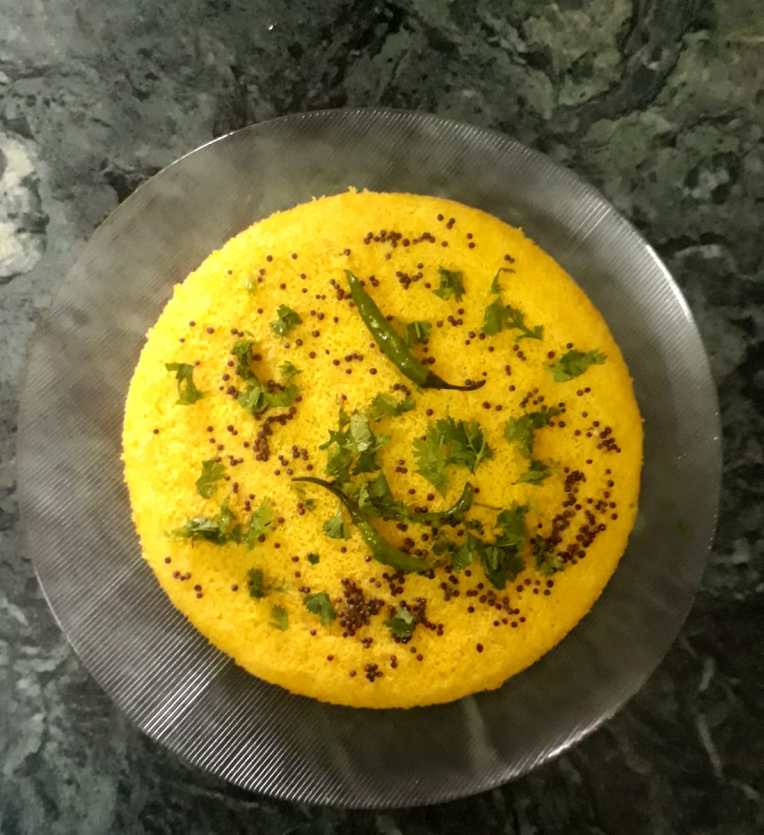
Recipe of Dhokla with hidden herbs and nuts:

Let’s make every dish tasty and nutritious by ‘hidden’ nutrition of veggies, herbs and nuts.

Gram flour recipe by Iyurved

Check the Recipe made with Ayurvedic spread by Iyurved- DAILY NUTRITION spread.

CHECK MORE HEALTHY RECIPES LOVED BY KIDS.

PRODUCTS:

We are happy to introduce our range of nutritious & tasty kidโ€™s Ayurvedic foods!!
We know that preparing and feeding healthy foods everyday is a huge task. Even more tough when kids are picky eaters. Kids prefer certain foods and formats. It is not easy to feed kids bitter Ayurvedic herbs, variety of vegetables, fruits, nuts and seeds everyday.
Mixed with Ayurvedic herbs, this unique Ayurvedic spread is an easy solution to feed daily nutrition for Immunity, Brain development, Bone strength and overall-growth to kids without any fuss.

Ayurvedic spread by Iyurved - weight healthy savoury spread

Indiaโ€™s First Tasty Kids Nutrition fortified with Ayurvedic herbs.

If your child is a picky eater or does not take enough nutrition for the day, you can give Weight Healthy Savoury Spread | Made with clinically proven ‘5 Ayurvedic Herbs and 7 Nuts’ | ORDER | 0% preservative | 0% Palm oil |

Check more products for: Immunity, Gut health, Digestion, Weight, Brain development, Speech delay, Epilepsy, Eye health, Hormones, Sleep, Hyperactivity, Bones and Overall growth

(shipping in India and Singapore only)

Join whatsapp group for FREE CONSULTATION

Foods and Remedies by a Nutrition Expert
Read more blogs:

How to Avoid Frequent Infection in Kids?
12 Foods to Avoid for Pregnant Ladies
Most Effective Home Remedies And Foods For Pneumonia
10 Effective Home Remedies and Foods for Throat Pain in Kids
5 Home Remedies and Foods to Cure Bedwetting


Tips and Foods to Increase height of Your Child

Every parent wants their kids to be taller than them. Children grow at their own pace and the rate of their growth is also different, some kids gain height in early years while others in their late teenage years. But generally both girls and boys are likely to gain 2 inches in height every year. but there are certain tips and balanced diet to increase height of the kids. The height of the kids depends upon many factors as listed below:

WHATSAPP for concerns like Speech Delay, Low Weight, Frequent Illness, Hyperactivity, Low Concentration, Weak Eyesight, Improper Sleep, Pigmentation, Pores, Face Marks, Fine Lines, Lactation etc.

Factors that influence kid’s height

Genetics: Genetics play an important role in determining a kid’s height. They got their physical characteristics from their parents, all aspects of their personality such as , height, weight, body structure, skin , hair and eye color, all influenced by their parents genes. Usually taller parents have taller kids and vice versa.

Nutrition: After genetics nutrients is the main factor on which the height of the kids depends, as everything the body needs comes from the food we eat. Malnutrition can lead to many deficiency diseases that can adversely affect the childโ€™s growth and development.

Also check, How to keep track of daily kids nutrition?

Exercise and outdoor activities: Outdoor activities and regular exercise helps kids to grow well and reach their developmental milestones on time. If they regularly play outdoors or do some exercise daily, it will help keep them healthy by strengthening their immune system.

Also check, How to control the weight of the child?

Hormones: Growth hormones play an important role in a child’s physical growth. These are made in pituitary gland and are crucial hormones for growth. If the production is low due to any health condition it will adversely affect the children’s height.

Also check, Foods that are good to balance the hormones?

Sex: boys and girls grow in different rates. Males tend to be taller than females. Even males continue growing for longer than females.

This is a reference Height and Weight Chart for Indian Boys and Girls upto 5 years of age.

Indian Boys Growth Chart

*Weight in Kg and Height in cm.

Indian Girls Growth Chart

*Weight in Kg and Height in cm

Tips on how to increase height of kids

Balanced diet to increase height:

You are what you eat, your personality is the mirror of your diet. The foods that kids consume have to be healthy so that they grow up to be tall. A balanced diet is one which includes protein, carbohydrates, fats, vitamins and minerals in correct proportions. Minerals like calcium and potassium are key nutrients for bone development and should be present in the foods to increase height. Also keep a check on the consumption of processed foods as it adversely affects the kidโ€™s growth.

Also check, Nutrition tips for toddlers?

Exercise and yoga:

Outdoor play and exercise must be part of a kid’s lifestyle. There are some exercises which help in gaining height like stretching, as it helps elongate the spine and also improves the posture of the child at all times. Hanging from the bar also helps the spine elongate, which is important to be taller. The next exercise for gaining height is skipping, in which the body stretches entirely and promotes the overall growth in the kids. Swimming is another sport or exercise which keeps your child active and energetic, itโ€™s a full body exercise which involves lots of stretching which helps kids to grow taller. Apart from these exercises you can also motivate your child to do some yoga poses, which is an age-old practice and helps children to make them taller. Some of the asanas are surya namaskar and chakrasana, which are proven to have positive effects on a kid’s height.

Also check, What kind of supplements should healthy kids eat?

Good sleep:

Sleep is the golden chain that ties your health and body together. Proper sleep is one of the most important factors in your kids overall development and an essential part of a healthy lifestyle. Sleeping releases a growth hormone called HGH, which plays an important role in increasing height. The effects of sleep deprivation (insufficient sleep) can lead to many developmental issues.

Also check,How is sleep linked to brain development and what foods help in better sleep?

Sunlight:

Sunlight is the great source of vitamin D, which helps in muscle and bone growth and development that is crucial for a kid’s height. Vitamin D also helps your body to absorb calcium from the foods and aids in strengthening the bones. So always encourage our child for outdoor activities, so that they get a daily dose of vitamin D through the sun.

Also check,What foods are a good source of calcium and vitamin-D?

Posture:

Posture of your child has a great impact on their height, as slumping can put unnecessary pressure on the spine. A good posture not only elevates stress and pain in neck and back but it can change your physical height also. Always interrupt your child to sit and walk straight when you see them slouching.

Kids are growing fast and gaining height so their Calcium needs are also high. One of the most important minerals in our body is CALCIUM. Bones are 70% calcium and it is only calcium which gives bones their hardness for protection and support. Vitamin D helps the body to absorb calcium and works with it to build strong bones and increase height. It moves calcium from the intestine to the bloodstream and into the bones. From age 9 โ€“ 18 children need more calcium to meet the daily recommended intake. Interestingly, it is only till mid-20s that kids can improve their bones and increase height, which will last them a lifetime

Foods to increase height :

Calcium and vitamin D rich Indian vegetables and foods can help to grow taller and increase height in children.

Cowโ€™s milk and its products:

It is the most commonly consumed type of milk and naturally a good source of many nutrients like calcium, protein, phosphorus and Vitamin B2 and is one of the best foods to increase height. In several countries, it is fortified with vitamin D because milk doesnโ€™t naturally contain vitamin D, but is one of the most widely used calcium rich foods for kids. These two work together to keep the bones strong. There are some dairy products made of cowโ€™s milk like cheese, yogurt which are a good source of vitamin D. All of these play a role in increasing the height of kids.

Egg yolk:

Eggs are one of the highest natural sources of vitamin D. Just one whole large egg provides 50% of vitamin D required for the day. It helps to maintain strong bones and teeth. Those who can may opt for fish (salmon, sardines) also as a source of vitamin D. Egg is the food if you are looking for height gainer foods. Include eggs on regular basis in kids diet chart to increase height.

Moringa:

Moringa is a superfood. It has 3 times more calcium than milk which makes it one of the best foods to increase height to treat weak or damaged bones and also one of the best non-dairy sources of calcium. Some studies also indicate that moringa can heal damaged bones thus making it a must have calcium rich foods for bones. Dried moringa leaf powder has 17 times more vitamin D than fortified milk. In addition to this, itโ€™s a fix for digestion troubles, immunity and iron.

Ragi:

Ragi is also one of the foods high in calcium and vitamin D.  It is said that no other plant source provides calcium the way ragi can, making it one of a popular non-dairy sources of calcium. Ragi also has vitamin D and along with calcium, it can help in improving bone strength. It is a whole grain that is gluten free also and can be used in baking cakes and cookies.

Potassium rich food:

If the child eats lots of comfort-food, then consuming Potassium rich foods (banana, spinach, cucumber, peas, and sweet potato) will save Calcium from being robbed from the bones.

Almonds:

Amongst all the nuts, almonds are the highest in calcium. One ounce of almonds or about 22 almonds, provides 8% of the recommended daily intake of calcium. (Iyurved’s Daily Nutrition Chocolate and Savoury spread made of Almond and 6 other nuts and seeds)

Seeds:

Many seeds are good sources of calcium. For instance, 1 tablespoon (9 grams) of poppy seeds has 13% of the recommended daily intake, while the same serving of sesame seeds packs 9% of the recommended daily intake. In addition to calcium, chia seeds are also rich in omega 3 fatty acids.

Vegetables:

Cabbage, mustard (sarson leaves), broccoli & ladyfinger are a good source of calcium.

Lotus seeds/ Makhana:

Makhana or lotus seeds are grown in Asian countries and are considered as a power food to increase height. Makhana is an excellent source of many important nutrients. It is loaded with protein, fiber, calcium, magnesium, iron, phosphorus and carbohydrates. Just a bowl of makhana is a great snack for kids.


PRODUCTS:

Itโ€™s no SECRET that following an Ayurvedic lifestyle has numerous advantages. This unique collection of Ayurvedic spreads is an easy solution to feed daily nutrition for Immunity, Eye, Brain development, Bone strength and overall growth to kids without any fuss. To know more about kidโ€™s ayurvedic foods โ€“ SHOP HERE.

India’s First Tasty Kids Nutrition fortified with Ayurvedic herbs.

For Child height and overall growth and development, you can give Daily Nutrition Chocolate Spread and Daily nutrition Veggies and Dal powder | Made with clinically proven ‘5 Ayurvedic Herbs and 7 Nuts’| 0% preservative | 0% Palm oil  | ORDER


CHECK MORE PRODUCTS FOR:

Immunity, Gut health, Digestion, Weight, Brain development, Speech delay, Epilepsy, Eye health, Hormones, Sleep, Hyperactivity, Bones and Overall growth

what is the down's syndrome

PARENT REVIEWS:

Some parents have been kind enough to share their journey with us. Let’s hear them to closely understand the benefits of Ayurvedic spreads by Iyurved.


Read more blogs:

Disadvantages of Junk Food for Kids

Over the last two decades, so many fast food restaurant chains have emerged and are on a constant rise. Whether we are travelling, have guests, short on time, hanging around with friends or simply want to relax, pizza, burger and fries are an instant choice, both affordable and comfortable for parents and children. In reality, food with high sugar/ saturated fat/ salt (what does sugar do to kids?) and low nutrient value in terms of protein, fibre, vitamin and mineral is termed as Fast Food or junk food. Let’s learn more about disadvantages of junk food and some healthy alternatives.

WHATSAPP for concerns like Speech Delay, Low Weight, Frequent Illness, Hyperactivity, Low Concentration, Weak Eyesight, Improper Sleep, Pigmentation, Pores, Face Marks, Fine Lines , Lactation etc.

what are the Disadvantages of junk Food?

Many of our children are fond of such ready-made food or junk foods. The disadvantages of junk food on kidโ€™s health remain in the long run. Some of the concerning outcomes are obesity, stress, hormonal imbalance in kids. A single fast food meal could add 300-500 calories instantly without much added nutrition, terming it as empty calories (Why should kids eat a balanced diet?).

Kids love to enjoy meals with high sugar content. Sugar can be consumed in many forms like Bread which is extremely high in added sugar and one of the most staple foods in every household for kids. Other common sources of sugar are white sugar, brown sugar, cane sugar, cookies, candy, donut, cake, canned drinks, packed juices, bottled shakes and smoothies, granola bars, sauces, jams and many others. Such intake on a regular basis can deplete four of the best bone-friendly nutrients from your childโ€™s body.

How Sugar affects the body?

During the early years, the bones of kids develop and grow while also being depleted at the same time. If the consumption of calcium, Vitamin D and other required minerals are sufficient, the health of bones will be positive. When sugar is consumed, there is acid thatโ€™s released in the body. In order to balance this acid, calcium is extracted from the bones resulting in Calcium deficient weaker bones. Vitamin D assists in absorption of Calcium by the bones. Consumption of sugar increases an enzyme that degrades vitamin D and thereby also results in reduced absorption of calcium by the bones. Double whammy!

Vitamin C helps to make collagen and also delays the decaying process of bones. Sugar intake restricts the absorption of this vitamin into our body cells resulting in weaker bones.

Magnesium works on keeping the bones strong. Sugar strips the body of magnesium too by releasing it out through urine.

BEST SNACKS FOR CHILDREN:

Many packaged snacks for kids are extremely unhealthy. They are often full of refined flour, added sugars, and artificial ingredients like colours and flavours. Snacks can act as a great opportunity to sneak some extra nutrients into your childโ€™s diet. Instead of highly processed fast foods, fill your childโ€™s tummy with healthy whole food snacks that will provide energy and complete nutrition. (Disadvantages of junk food and preservatives)

  • You may consider popcorn as junk food, but itโ€™s really a nutritious whole grain healthy fast food for kids. As long as you donโ€™t drown it in unhealthy fat like margarine, popcorn can be a snack for kids. It is also loved by them. Popcorn actually has 4 grams of fibre per 3-cup serving, which makes it a filling snack and good for digestion.

Amongst many minerals and vitamins that contribute towards Brain Healthโ€“ Development and Function, a few are Manganese, Vitamin B6 and B9. Just a cup of Makhana is enough to meet 50% of Manganese requirements for the day.

It is those rare snacks which are loaded with a good balance of Vitamin Bs. Not just Brain, Makhana also supports strong bone development of a growing child.

  • You can make them healthy fast food for kids, when you use the right ingredients. Healthy cookies contain whole grain flour, which provide protein, vitamins, minerals, and fibre. It can be a favourite treat for kids and adults as well. Adding ground seeds like flax, chia or sunflower seeds to the cookie mix make them more nutritious. By swapping out the added sugar and using other alternatives like puree of dates or raisins or dried berries can make the cookie a healthier choice.
  • Bread is a staple food in many households. Healthy spreads for bread can be a good way to feed essential nutrition to children. It can not only calm down a kid’s hunger pangs but also give a dose of good fat, protein and vitamins. Peanut butter mixed with cocoa and dates or honey is a bread spread which is loved by adults and kids alike. It is enough to provide with essential nutrients as well as antioxidants. (Check Iyurved’s Daily Nutrition Chocolate spread)
  • Mixed nut balls or laddoo are the best snacks for children to settle their sweet cravings. Peanut butter (or any other nut butter) mixed with almond flour, dipped in melted dark chocolate is just the perfect snack for anytime during the day. Consuming Nuts and seeds is among the best food with protein to meet the daily requirement of the body and also among the best foods for children in their developing years.
Laddoo/ Sweet ball using Iyurved’s Daily Nutrition Chocolate Spread
  • Smoothies are a great way to pack fibre and vitamin rich fruits and vegetables, calcium, protein and good fats into a drinkable meal or snack. They are really easy and fast to make at home, and you can create lots of flavour combinations using what you have. An addition of kefir instead of yogurt adds the necessary bacterias to the drink.
  • Cake or cupcake is undoubtedly a favourite and healthy fast food for kids. Using whole wheat flour and mixing with seeds of Sunflower, Pumpkin and Melon together offer a great source of nourishment to the body. 1 tablespoon of this seed mix provides 5g of protein. A spread of this can easily blend with any dish and won’t even get noticed by kids.

Let’s try to make every food tasty and nutritious with herbs and nuts.

Check the Recipe made with Ayurvedic spread by Iyurved- DAILY NUTRITION spread.

CHECK MORE HEALTHY RECIPES LOVED BY KIDS.


PRODUCTS:

It’s no SECRET that following an Ayurvedic lifestyle has numerous advantages. This unique collection of Ayurvedic spreads is an easy solution to feed daily nutrition for Immunity, Eye, Brain development, Bone strength and overall growth to kids without any fuss. To know more about kid’s ayurvedic foods – SHOP HERE.

Ayurvedic spread by Iyurved

India’s First Tasty Kids Nutrition fortified with Ayurvedic herbs.

If your child is a picky eater or does not take enough nutrition for the day, you can give Daily Nutrition Chocolate Spread | Made with clinically proven ‘5 Ayurvedic Herbs and 7 Nuts’ | ORDER | 0% preservative | 0% Palm oil |


CHECK MORE PRODUCTS FOR:

Immunity, Gut health, Digestion, Weight, Brain development, Speech delay, Epilepsy, Eye health, Hormones, Sleep, Hyperactivity, Bones and Overall growth


Read more blogs: