Parent’s guide for the Anger Management in Kids

the anger management in kids

Are you shocked by your child’s anger? You are worried and do not understand what to do further? Relax!!!! Anger is a common and healthy human emotion. We all experience it at times in different situations. The kids also come across this. Before they face trouble and lose control, it is important to teach kids ways to identify their emotions; and express and manage them without harming their own personalities. In this article, we will understand anger in child, the anger management strategies, tips to control anger and foods that can help.

WHATSAPP for concerns like Speech Delay, Low Weight, Frequent Illness, Hyperactivity, Low Concentration, Weak Eyesight, Improper Sleep, Pigmentation, Pores, Face Marks, Fine Lines , Lactation etc.

What is Anger in Child?

Anger is a strong emotion that the child experiences when something goes wrong or when someone wrongs them. Stress, frustration, and irritation are common feelings associated with it. Anger is something that everyone experiences from time to time. It’s a totally typical reaction to challenging or stressful conditions.

Anger becomes a problem only when it is shown excessively and begins to interfere with daily functioning and relationships. Anger can range from mild irritation to rage in intensity. It can be difficult to keep your child’s emotions under check in these situations, which may lead them to act in ways they wouldn’t normally.

Reasons for anger in child:

Multiple factors can contribute to the child’s anger. The common reasons that bring out anger in a child:

  • Disappointment: Kids don’t get what they want
  • Helplessness: Kids are forced to do something which they might not feel like doing
  • Sadness: Kids feel sad due to poor performance in academics or rejections by their peers
  • Fear: Kids fear losing something or someone like fear of losing parent when forced to go to school for the first time
  • Impatience: Kids lose their patience easily and this might cause anger
  • ADHD or learning disability
  • Lack of sleep (How sleep & brain development is connected?)

HELP kids to identify their anger:

Firstly, the most important thing in managing anger for kids is to help them understand their feelings. The child should be able to communicate their anger, depression or frustration. But how do you help them identify anger? Well!! You can play games such as “Displaying emoji faces” with your kids. Say, for example, you can ask your child to show a happy, sad, or angry face and then ask them the reason why someone might have that feeling. Apart from this, you can encourage them to read stories about emotions and have open discussions about the good and bad feelings that they possess. (How to improve concentration in kids?)

Help them to differentiate between anger & aggression:

Anger is a human feeling or emotion while aggression is the behavior shown as a result of anger and is often expressed in the form of destruction or violence. Explain the difference between angry feelings and aggressive behavior. Aggressive behavior like temper tantrums, disrespect, fighting, spitting, throwing things, slamming doors, etc., are the result of anger and frustration. Teach them, “ Getting angry is fine but showing the above aggressive behavior is totally unacceptable”. Help them to make sure they are in control of their behavior when they are angry. Also, try to understand the reasons behind their anger or frustration. (Foods that help in brain development?)

anger management strategies for children:

It’s never too early to educate your child on how to manage his/her anger rather than allowing it to control him/her. However, keep in mind that mastering these anger management strategies is challenging for young children. They will require your assistance – as well as a great deal of practice:

  1. Put an end:  The child who is angry and out of control, should be separated and taken away from the other person with whom he/she is angry.  It is better to walk out of the place.
  2. Keep cool: Teach your child how to utilize calming techniques/strategies when he/she is experiencing bodily signs of anger. Taking deep breaths, drinking a glass of water, playing with toys, distracting with songs or stories can help the child. 
  3. Think and act: Explain to your child to question herself/himself in situations that provoke their anger, like “ What does this bring to me?” Help them understand that actions taken in anger and frustration are worthless. Understanding and making right decisions are useful. 
  4. Respect other’s feelings: You can help your child to show empathy to others. Teach your child to respect others’ feelings as he/she wants his/her feelings to be respected. 
  5. Identify potential solutions: Always find possible solutions that help both parties to compromise. Accepting the mistakes and apologizing can often bring peace between them.

How to control anger in child?

The anger in child must be controlled and kids must learn appropriate ways to cope up with their anger. Instead of saying “Don’t do that”, teach them other healthy ways to express their anger. 

Some tips to control anger in child:
  • Going for a walk
  • Deep breathing
  • Blowing bubbles
  • Playing with toys
  • Counting numbers and alphabets together, say 1-A, 2-B,3-C, and so on. 
  • Visualising happy moments
  • Drawing and colouring 
  • Listening to soothing music
  • Reading storybooks
  • Singing a song

You should also remain calm when your child is angry. When your child is in angry mode, you don’t shout or take a lecture. Rather calm your child by speaking in a low and neutral tone. They can’t process information in anger, so keep repeating the same phrases like “ I understand”, “Let me help you”, “It’s OK” etc. If you show anger or shout at them during this situation, it teaches them it is alright to yell or raise the voice in anger. Take them to a calm place and recognise or identify their triggers. Understand what’s making them angry and help them practice coping skills.

Set the anger management rules:

You have to set the anger management rules and list out the pleasant and unpleasant behaviors that are acceptable when the child is angry.  Unpleasant behaviors such as slamming the doors, raising the voice, destroying property, and using foul language should not be encouraged.

Teach kids to use anger in a healthy manner:

As the saying goes “ Home is the first school and parents are the first teachers”, it’s you who have to set an example by showing them how to deal with your emotions when you are angry. Kids usually follow the actions of their parents. If you lose your temper, they will likely follow the same. Instead, if you handle your anger in a kind and gentle manner, they get the hang of that too. Refer to the situations when you got frustrated and explain to them how you dealt with it. Expressing your feelings verbally will teach kids to talk about their emotions.

You should also apologize to your kids when you lose your temper. Explain to them the reason and discuss what you should have done instead of yelling or screaming. 

Offer rewards for their behaviours:

You can follow a reward system to encourage your kids to follow the anger rules. Consider a sticker/ star reward chart and put a sticker /star each time your child follows anger rules. On the other hand, you can remove a sticker/ star when they do not follow the rules. And based on the stars/ stickers earned, you can gift them their favorite toys or color pens. This inculcates healthy and positive anger management skills in kids. 

TAKE IT SLOW AND Be patient:

It is not easy to teach children new ways to cope up with anger and it takes time. Keep repeating and practicing things. Take it slow and work on one behaviour at a time. Observe the changes and reward them. 

Foods that can help to control anger in child:

Magnesium:

In our body, Magnesium is responsible for nerve transmission and nerve-muscle coordination. In other words, it protects against the excessive excitement in a child (which can be traumatic). There is enough research going on how Magnesium can help in fixing or preventing neurological disorders. Banana, avocado, pumpkin seeds and spinach are some food sources of magnesium.(What are some disorders in which magnesium can help?)

Complex carbohydrates:

Having whole grains and less processed food and flours reduces risk of blood sugar spikes, also they feel full for longer, this will prevent them from unnecessary snacking. It also enhances mood and encourages better sleep. Fruits, vegetables, whole grains, beans and lentils are carbs rich foods.(Importance of good carbs for kids)

Banana:

Bananas contain dopamine that helps in enhancing mood. They also contain vitamin B, A, C & B6 which helps nervous system and also aids sleep. Bananas are also a good source of magnesium which enhances mood and tryptophan which is used in cure of anxiety and depression.

Dark Chocolate:

A study showed that eating cocoa for five days improved blood flow to the brain. A small part of dark chocolate helps the brain to discharge endorphins and boost serotonin levels. It helps in lowering stress hormones and decreasing anxiety levels. What better to give child than this favorite food. (Check this recipe for Hazelnut Dark Choco Balls)

WALNUTS:

Walnuts look like human brain’s shape and can help brain health. It contains omega3s, vitamin E, melatonin and antioxidants which are helpful for the human brain. It decreases the enhanced vulnerability to oxidative stress. And it offers the mixed mood-boosting elements of omega-3 fatty acids, tryptophan, and vitamin B6. Walnuts can not only boost happiness but also help with the anger management in child. (What are other benefits of walnuts?)


PRODUCTS:

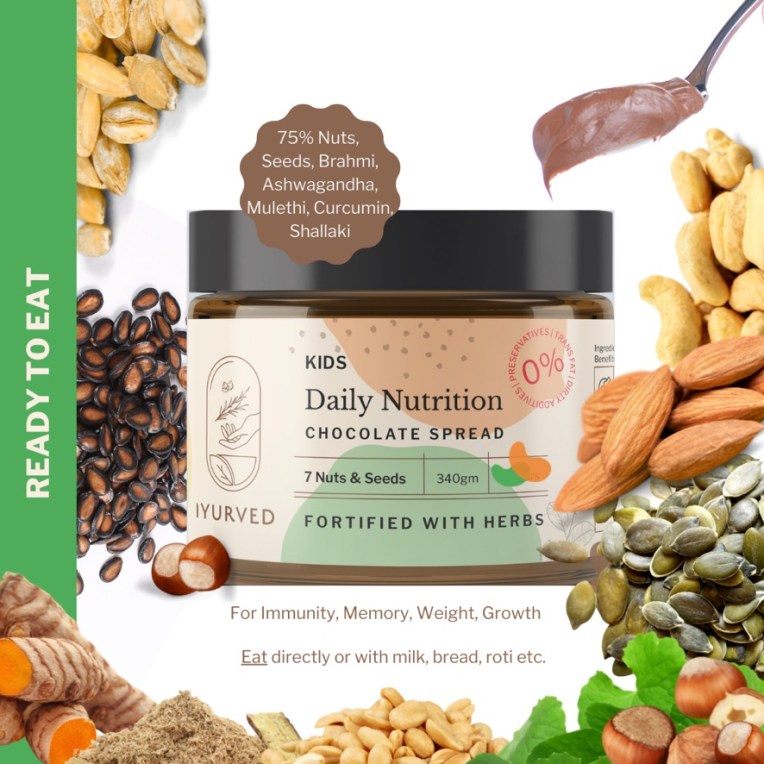
It’s no SECRET that following an Ayurvedic lifestyle has numerous advantages. This unique collection of Ayurvedic spreads is an easy solution to feed daily nutrition for Immunity, Eye, Brain development, Bone strength and overall growth to kids without any fuss. To know more about kid’s ayurvedic foods – SHOP HERE.

India’s First Tasty Kids Nutrition fortified with Ayurvedic herbs.

For Nutritional deficiency in Kids and overall growth and development , you can give Daily Nutrition Savoury Spread | Made with clinically proven ‘5 Ayurvedic Herbs and 7 Nuts’| Rich in Calcium, Vitamin B12 and Vitamin D| 0% preservative | 0% Palm oil  | ORDER


CHECK MORE PRODUCTS FOR:

Immunity, Gut health, Digestion, Weight, Brain development, Speech delay, Epilepsy, Eye health, Hormones, Sleep, Hyperactivity, Bones and Overall growth

what is the down's syndrome

Read more blogs:

बच्चों का वजन बढ़ाने के लिए भोजन: 7 अति पौष्टिक आहार

वजन बढ़ाने के लिए भोजन

आमतौर पर हम बच्चों में मोटापे के बारे में सुनते हैं और माता पिता उनके वज़न नियंत्रण  के लिये परेशान होते हैं पर आपको यह जानकर हैरानी होगी कि कई लोगों को बच्चों के लिए वज़न बढ़ाने के लिये टिप्स चाहिये होते हैं या बच्चों के वज़न बढ़ाने के लिए भोजन की तलाश करनी पड़ती है। कम वज़न वाले बच्चों को आमतौर पर बहुत अच्छी भूख नहीं लगती है या वे स्नैक्स या फास्ट-फूड से ही अपना पेट भर लेते हैं। इसलिए शरीर के लिए आवश्यक पोषक तत्वों की आवश्यकता कभी पूरी नहीं हो पाती है। कई माता-पिता वजन में कमी को खाने की कमी से भी जोड़ते हैं। हालांकि यह सच हो सकता है, लेकिन बच्चों में वजन न बढ़ने के कई कारण होते हैं।

वज़न न बढ़ने के आम कारण :

वज़न न बढ़ने का सबसे आम कारण बच्चों के शरीर की ज़रूरतों को पूरा करने के लिए स्वस्थ और पौष्टिक भोजन का सेवन न करना है। दिन भर में बच्चों की खाने की आदतों में कुछ छोटे-छोटे बदलाव करके आप उन्हें मिलने वाली कैलोरी बढ़ाने में उनकी मदद कर सकते हैं। अगर बच्चा ठीक से खा लेता  है, तो वजन कम होने की चिंता कम होती है। यह अंततः उम्र के साथ ठीक हो जाता है  और जब तक ऐसा नहीं होता, यह स्वास्थ्य के लिए हानिकारक नहीं है।

अगर बच्चा खाना ठीक से नहीं खाता या बहुत मान मनुहार से मुश्किल से खाता है तो चुनौती पोषक तत्वों से भरपूर उच्च कैलोरी वाला खाना खिलाने की है। बच्चों के लिए आवश्यक वसा, कार्ब्स, प्रोटीन, फाइबर, विटामिन और खनिजों से भरपूर भोजन का सेवन करना महत्वपूर्ण है। बच्चों के लिए पौष्टिक भोजन की अधिक खपत को सक्षम करने के लिए भोजन के समय पेय पदार्थों को कम करना भी एक उचित युक्ति है क्यों कि पानी या पेय पेट को जल्दी से जल्दी भर सकता है। अन्य युक्तियों में तीन बड़े भोजन देने के बजाय चार या पांच छोटे भोजन शुरू करना और दिन में कुछ स्वस्थ नाश्ते को प्रोत्साहित करना शामिल है। ये कुछ प्रयास हैं जो वास्तव में आपके बच्चे को न केवल वज़न बढ़ाने में मदद कर सकते हैं बल्कि एक स्वस्थ और सक्रिय शरीर भी प्रदान कर सकते हैं।

बच्चों का वज़न बढ़ाने के लिए आहार:

कुछ पौष्टिक भोजन, जिन्हें अपने बच्चे के आहार में शामिल करके आप उसे स्वस्थ वज़न बढ़ाने में मदद कर सकते हैं:

केला:

वज़न बढ़ाने के लिए केला सबसे अच्छे खाद्य पदार्थों में से एक है, क्योंकि ये पोटेशियम, मैग्नीशियम, कैल्शियम और विटामिन बी 9 से भरपूर होते हैं। यह फल कार्बोहाइड्रेट में भी समृद्ध है और तत्काल ऊर्जा का स्रोत है। केले  में प्राकृतिक चीनी अधिक होती है जो अन्य खाद्य पदार्थों की तुलना में तेज ऊर्जा आपूर्ति कर सकती है। यह कई अन्य फलों की तुलना में उच्च कैलोरी वाला भोजन भी है। एक कप सेब के स्लाइस में लगभग 55-60 कैलोरी होती है, जबकि एक कप केले के स्लाइस में लगभग 130 कैलोरी होती है, हालांकि दोनों पौष्टिक होते हैं। (केले के मफिन की रेसिपी:)

आलू:

प्रत्येक आलू में लगभग 4 ग्राम फाइबर और 4 ग्राम प्रोटीन होता है, जो बच्चों को भरा हुआ महसूस कराता है। एक सरल कार्ब होने के कारण जो पचने में आसान है, आलू तुरंत ऊर्जा के स्तर को भी बढ़ा सकते हैं। इस भोजन को अधिक पोषक बनाने के लिए, उसे उसके छिलके के साथ उपभोग करना पसंद किया जाता है, जो आहार में फाइबर और अन्य पोषक तत्व जोड़ता है और बच्चों के वजन बढ़ाने के लिए पसंदीदा और सर्वोत्तम खाद्य पदार्थों में से एक बनाता है। समान कैलोरी सेवन के साथ शकरकंद का सेवन भी अधिक पौष्टिक विकल्प है। ( शकरकंद की रेसिपी: )

अंडे:

यह उच्च गुणवत्ता वाले प्रोटीन और स्वस्थ वसा के साथ पैक किया जाता है। जब वे वजन बढ़ाने की कोशिश कर रहे होते हैं तो अंडे बच्चों के खाने के लिए पौष्टिक भोजन  हैं। स्वस्थ वसा के लिए शरीर की मांगों को पूरा करने के लिए अंडे की ज़र्दी अनिवार्य है। यह प्रोटीन के साथ-साथ विटामिन बी2, फॉस्फोरस और विटामिन डी की एक महत्वपूर्ण मात्रा प्रदान करता है। आहार में दो अंडे जोड़ने से 12 ग्राम प्रोटीन के साथ 120 कैलोरी और शरीर के लिए बहुत अधिक पोषण मिलता है।

दूध:

दूध और अन्य डेयरी उत्पादों में प्रोटीन और कैल्शियम होता है, जो वजन बढ़ाने और मांसपेशियों के निर्माण के लिए आवश्यक होता है। यदि लक्ष्य वजन बढ़ाना है, तो संपूर्ण दूध सबसे अच्छा विकल्प हो सकता है क्योंकि इसमें कुछ संतृप्त वसा के साथ प्रोटीन की अच्छी मात्रा होती है। शोधकर्ताओं का मानना ​​है कि  प्रोटीन मांसपेशियों की मरम्मत और विकास (घर पर मट्ठा कैसे बनाएं?) के लिए प्रोटीन के सेवन का एक भरोसेमंद स्रोत हो सकता है। अतिरिक्त अध्ययनों से पता चला है कि दूध या मट्ठा और कैसिइन संयुक्त अन्य प्रोटीन स्रोतों की तुलना में अधिक बड़े पैमाने पर लाभ प्रदान कर सकते हैं। (मट्ठा प्रोटीन बन्स के लिए नुस्खा:)। पनीर और पनीर से बने व्यंजन उच्च कैलोरी के अन्य पोषक स्रोत हैं।

मेवे और बीज:

वज़न बढ़ाने के लिए ये सबसे अच्छे खाद्य पदार्थों में से हैं। यदि आप अपने बच्चों का वजन बढ़ाने के लिए कुछ खाद्य पदार्थों की तलाश कर रहे हैं तो नट्स और नट बटर बिल्कुल सही विकल्प हैं। सिर्फ एक मुट्ठी कच्चे बादाम में 170 कैलोरी, 6 ग्राम प्रोटीन, 4 ग्राम फाइबर और 15 ग्राम स्वस्थ वसा होता है। पिस्ता, अखरोट, काजू, सूरजमुखी के बीज, कद्दू के बीज, चिया और अलसी के बीज भी वसा और कैलोरी में उच्च होते हैं और वजन बढ़ाने और मस्तिष्क के लिए आवश्यक वसा प्रदान करने में मदद कर सकते हैं। (अखरोट कुकीज़ या केक के बनाने की विधि: ) या ( मेवे चॉकलेट की विधि : )

सोया:

सोया खाद्य पदार्थों को कैलोरी में उच्च कहा जाता है, जिसका अर्थ है कि वे बच्चों के लिए सबसे अधिक पौष्टिक भोजन हैं और वजन बढ़ाने में उनकी मदद कर सकते हैं। 1/2 कप सोया नगेट्स/ग्रेन्यूल्स लगभग 100 कैलोरी देंगे। सोया प्रोटीन वज़न बढ़ाने में मदद करने के लिए आहार में शामिल करने के लिए एक बेहतरीन उत्पाद है।

इस प्रकार आपने देखा कि कुछ पौष्टिक  भोजन  या आहार  और व्यंजन हैं जो बच्चों के लिए न केवल वज़न बढ़ाने में सहायक  हैं अपितु स्वास्थ्य वर्धक  भी हैं।

रागी , नट और जड़ी बूटियों के साथ आलू पराठा की रेसिपी:

आइए सब्जियों, आइए सब्जियों, जड़ी-बूटियों और नट्स के ‘छिपे हुए’ पोषण से हर व्यंजन को स्वादिष्ट और पौष्टिक बनाते हैं।


उत्पाद/प्रोडक्ट्स:

हमें बच्चों के लिए पौष्टिक और स्वादिष्ट उत्पादों की अपनी श्रृंखला पेश करते हुए खुशी हो रही है !!

हम जानते हैं कि प्रतिदिन स्वस्थ भोजन तैयार करना और खिलाना एक बहुत बड़ा काम है, और भी कठिन है जब बच्चे अपने द्वारा चयनित भोजन खाने वाले होते हैं। बच्चे कुछ खाद्य पदार्थ और प्रारूप को पसंद करते हैं। बच्चों को हर रोज कड़वी आयुर्वेदिक जड़ी बूटियां, तरह-तरह की सब्जियां, फल, मेवा और बीज खिलाना आसान नहीं होता।

आयुर्वेदिक जड़ी बूटियों के साथ मिश्रित, यह अनूठा उत्पाद बिना किसी झंझट के बच्चों को प्रतिरक्षा(इम्युनिटी), मस्तिष्क के विकास (ब्रेन डेवलपमेंट) , हड्डियों की मजबूती(बोन स्ट्रेंथ) और समग्र विकास (ओवरॉल ग्रोथ) के लिए दैनिक पोषण (डेली न्यूट्रिशन) प्रदान करने का एक आसान उपाय है।


Iyurved Immunity Boost Chocolate Spread

आयुर्वेदिक जड़ी बूटियों के साथ भारत का पहला स्वादिष्ट किड्स न्यूट्रिशन।

बच्चों और किशोरों के लिए  इम्युनिटी बूस्टर चॉकलेट स्प्रेड | 0% प्रेज़र्वेटिव्स | 0% परिष्कृत चीनी | 0% ताड़ का तेल | आमला, गिलोय, तुलसी के साथ | यहाँ आर्डर करें

बच्चों के लिए अन्य उत्पादों की जाँच करें: दैनिक पोषण, मस्तिष्क विकास, नींद, हार्मोन और नेत्र स्वास्थ्य।

(शिपिंग केवल भारत और सिंगापुर में )


छोटे बच्चों और किशोरों के माता-पिता के लिए बच्चों के पोषण और स्किनकेयर समुदाय में शामिल हों।

पोषण विशेषज्ञ द्वारा अनुशंसित खाद्य पदार्थ और उपचार।

Read more blogs:

Nutritional Needs in Adolescence

Nutritional needs in Adolescence

How healthy or disease free your adulthood will be, depends on the foods you consumed during your early childhood and teenage days. Certainly, children go through various stages of growth and development from infant (0 to 1 years old), toddler (1 to 3 years old), early childhood (4 to 8 years old), middle childhood (9 to 11 years old) to adolescence (12 to 18 years old) . That is why at each stage, you will observe various mental and physical developments in your child. How are nutritional needs in adolescence different from earlier years? (Power foods for kids of all ages)

WHATSAPP for concerns like Speech Delay, Low Weight, Frequent Illness, Hyperactivity, Low Concentration, Weak Eyesight, Improper Sleep, Pigmentation, Pores, Face Marks, Fine Lines, Lactation etc.

What is Teenage?

Teenage is the time between thirteen to nineteen years of age in a person’s life. And this is the time for some major physical, mental and hormonal changes. Since there are so many changes taking place in the body, it becomes very important for parents to know what are daily nutritional requirements for teenagers. So when kids enter their teens, parents should understand how nutritional needs in adolescence are different from preteen years. (What is Puberty?)

Growth and Development during ADOLESCENT years:

Teenagers undergo major physical development during their puberty phase. These physical changes are regulated by changes in the levels of hormones which are produced by the pituitary gland: luteinizing hormone (responsible for menstrual cycle in girls) and follicle-stimulating hormone (responsible for reproductive system in both girls and boys). As a result, in the early puberty phase, luteinizing hormone and follicle-stimulating hormone increase, resulting in major physical changes including weight gain, outbursts of acne, height gain and behavioral changes like anxiety, hyper-activity and short-temperedness. (Fruits for teens?)

WHAT ARE THE Nutritional needs IN ADOLESCENCE?

Teenagers tend to make more food choices on their own as they become more independent and are often influenced by their peers. So it becomes parent’s responsibility to provide them with good examples and nutritious foods and minimize the consumption of junk or packaged food. (Kids can deplete their calcium by eating junk food.)

Calorie requirements:

Due to the growth spurt of puberty, there is a surge in appetite around the age of ten in girls and twelve in boys which leads to increase in daily calories requirement during this time. Calories are the measurement used to express the energy delivered by food. The body of an adolescent needs more calories during than at any other time of life. (What is growing leg pain?) On average, boys require 2,800 calories per day while girls require 2,200 calories per day.

Essential Nutrients:

Due to so many changes taking place in the body, there are daily nutrients and habits that kids need to keep themselves happy and healthy. Nutritional needs in adolescence includes all the essential macronutrients and micronutrients in the right quantity. (What is balanced diet?)  

Macronutrients:
  • Protein: Adolescent needs a balanced meal with adequate amounts of protein during puberty as protein helps in growth and repair of muscles and tissues. It also generates enzymes and hormones. Protein rich diets help them to feel energetic throughout the day. Nuts, seeds, chicken, eggs, fish and cheese are a few high protein foods. (Top nuts and seeds for protein)
  • Carbohydrates: They are the biggest source of energy for teenagers. Almost 60% of energy (calories) for the day must come from carbohydrate foods. They provide instant energy and keep the kids on their toes. Fruits, vegetables, nuts, seeds, whole grains and sugar are rich in carbohydrates. (Food for immunity?)
  • Dietary Fat: Fat should make up no more than 30% of the diet. A teenager who indulges in a fat-heavy diet is going to put on weight, even if he or she is active. Dietary fat contains varying proportions of three types:
  • Monounsaturated fat is the healthiest kind of fat and is found in olives, olive oil, peanuts, peanut, peanut butter, cashews, walnuts, walnut oil and canola oil.
  • Polyunsaturated fat is found in corn oil, safflower oil, sunflower oil, soybean oil, cottonseed oil, and sesame-seed oil.
  • Saturated fat is the most cholesterol laden of the three and is found in meat and dairy products like beef, pork, lamb, butter, cheese, cream, egg yolks, coconut oil, and palm oil. (Natural sources of saturated fats?)

Your family’s intake of saturated fat should not more than 10% of your total daily calories. The other 20% of daily calories from dietary fat should come equally from the two unsaturated kinds of fat.

Micronutrients:
  • Iron: Iron is essential for teens, especially for girls as they lose more of it once menstruation starts. Iron rich foods such as meat, fish, poultry, green leafy vegetables, nuts and seeds should be  teenagers on a daily basis.(How iron deficiency affects children?)
  • Calcium and Vitamin D: Adolescent needs calcium to build strong bones which can help them later in life. Deficiency of calcium can increase the risk of developing osteoporosis (a condition in which bones become weak and can easily break). Consumption of vitamin D is equally important as it helps in absorption of calcium. Calcium rich foods include low-fat milk, other dairy foods and dark green vegetables, along with fortified foods like fortified juice and cereal. (Why calcium and vitamin D are important?)
  • Vitamins: Vitamins are water-soluble or fat-soluble. Leafy vegetables, animal products, nuts & seeds, vegetable oils, dairy foods are rich in fat-soluble vitamins (vitamin A, D, E and K ). Whereas nuts & seeds, fruits, vegetables, grains, milk and dairy foods are high in water-soluble vitamins (vitamin C, the B vitamins). (What foods have which vitamins?
  • Minerals: Minerals include calcium, iron, sodium, phosphorus, magnesium, chloride and Sulphur are found in nuts, seeds, shellfish, chicken, eggs, beans, cocoa, avocados, berries, yogurt and cheese. (Why calcium?)

PRODUCTS:

It’s no SECRET that following an Ayurvedic lifestyle has numerous advantages. This unique collection of Ayurvedic spreads is an easy solution to feed daily nutrition for Immunity, Eye, Brain development, Bone strength and overall growth to kids without any fuss. To know more about kid’s ayurvedic foods – SHOP HERE.

India’s First Tasty Kids Nutrition fortified with Ayurvedic herbs.

For nutritional needs for growth and development of teens, you can give Daily Nutrition Chocolate Spread and Daily nutrition Veggies and Dal powder | Made with clinically proven ‘5 Ayurvedic Herbs and 7 Nuts’| 0% preservative | 0% Palm oil  | ORDER


CHECK MORE PRODUCTS FOR:

Immunity, Gut health, Digestion, Weight, Brain development, Speech delay, Epilepsy, Eye health, Hormones, Sleep, Hyperactivity, Bones and Overall growth

what is the down's syndrome

Read more blogs:

Puberty in girls

During parenting you experience many things while watching your kids grow. Infant (0 to 1 years old), toddler (1 to 3 years old), early childhood (4 to 8 years old), middle childhood (9 to 11 years old) and adolescence (12 to 18 years old), as each stage passes you observe some mental and physical development in your child. During the first three stages (Infant, toddler and early childhood) kids generally go through many natural physical changes of growth. These first 8 years of kids are extremely important for their healthy development and lifelong learnings. Cognitive, social, emotional, language and physical development during this time plays an important role in their life. At every stage a child needs you to understand the learnings and changes that they are experiencing around them. As they enter the puberty phase it becomes more important to be with them. This is the time for some major physical and hormonal changes, which may pop up some questions, which have to be answered properly, But the main question is what puberty is and at what age puberty starts?

What is Puberty? At what age puberty starts?

Puberty is the time when a boy or girl goes through a series of biological and physical transformations. Everyone has experienced this phase in life. It is a transition from childhood to adolescence. Teens go through some changes in their body and hormone levels during this phase. Puberty often begins early in girls as it falls between the ages of 8 to 13 in them. Although every girl has her own unique journey and puberty timing differs in each girl, it definitely brings some hormonal, physical and emotional changes in girls which are absolutely normal. 8 years of age sounds really young for seeing any physical changes. So, it is a little bit awkward to discuss puberty stages and the female reproductive system with your young girls, but it is important to start educating them on these topics before changes happen to best prepare them. It will make them much more comfortable to understand and accept the changes.

Sings of puberty among girls

Breast development: It is the first visible sign of puberty among most of the girls. One can notice “breast buds”, little bumps under the nipples. It is normal for the left and right breast to grow at different speeds. Its also normal for breast buds to be tender or sore, usually it improves with time. A sports bra can be a good choice to wear at this stage.

Body hair: In about 15-20% girls public hairs may be the first sign of puberty. These hairs begin to grow under the arms, around genital areas and on the legs. It is another sign of puberty among girls.

Vaginal discharge: This is a sign of growing numbers of estrogen hormones in the body. Girls experience a small amount of clear or white vaginal discharge that starts about 6-12 months before their first periods. It is considered as a sign of puberty among girls.

Periods: Girls usually get their first periods within 1-2 years after the development of breast buds. It is important to be aware that periods are a normal natural process of growing up. It can be irregular during the first few months as the body is adapting to some fast physical changes. Normal menstrual cycle can be from 21 days to 35 day. (Which foods can help during menstruation?)) Cramps and pains are normal with periods. There is nothing to worry about. But if menstrual cramps are severe and affecting school and normal day to day activities, talk to gynecologists. 

Some other changes during puberty phase
Brain

Girls obviously face fast changes during puberty phase and thus their brain needs time to adjust. (Top 10 foods to boost kids brain power) It affects their behavior and social skills. You may observe some sort of clumsiness in their activities.

Bones

If girls hit puberty at an older age they may have lower bone density and can face bone issues further in life. so, it is the ideal time to invest in bone health. Including calcium and vitamin D rich foods in their diet can help them to get strong bones for lifetime. (How vitamin D can help to absorb calcium?)

Weight

There might be an increase in weight. (How to manage weight issues?) During puberty the brain instructs the ovaries to make female hormones estrogen. This hormone is responsible for the change in size and shape of a girl’s body. Fat can be seen around the upper arms, thighs and backs. Hips tend to become wider and curvy. Their organs like stomach, intestine also increase in size during this phase. More healthy and nutritious foods with protein, minerals calcium and iron should be included in their diet at this point of time.

Height

Girls may grow taller during puberty. While entering into puberty girls can see an increase in height by 7-8 cm per year. Peak growth in girls’ height can be seen 6-12 months before the onset of their periods.

Sleep patterns

During puberty or you can say teenage there is a pattern developed in kids of staying up late at night and sleeping longer in morning. (Which foods can help to get better sleep naturally?) This happens because their body takes time to produce melatonin, a sleep promoting hormone. Sleep research suggests that a teenager should get at least 8 to 9 hours of sleep. But most of them get only 6-7 hours.   

Skin and hairs

During puberty phase oil glands become more active. Due to this girls face acne issues. (How to treat my kids acne?) Sometimes it’s just an occasional pimple that occurs right before each menstrual cycle. But for some teens it can be a chronic condition which is known as acne. Mostly oily skin and acne issues go hand in hand. Many teen girls also face excessive sweat on the palm, soles of feet, under the arms, and in the scalp. Some teenage girls experience hair fall as they enter puberty. (What is the root cause of hair fall in kids?) Though it is curable and can be managed by following a healthy diet.

PCOS IN TEENS

PCOS stands for polycystic ovary syndrome. It has become a common condition in teenage girls nowadays. Women make a female hormone that is entrogen. But she also makes male hormone testosterone in small amounts. The girls with PCOS make little extra of these male hormones. Though it is not clear what exactly causes PCOS, it is said that the genes you inherit from your family is the main cause for this hormone imbalance. If a mother has PCOS, daughters are at high risk of having it. The signs and symptoms include:-  Irregular menstrual periods, very heavy and pain full periods, facial hair growth, acne and weight problems. If your girl has any of these issues, consult your gynecologist. PCOS is treatable and can be cured by making some changes in lifestyle in terms of diet and exercise.

Nutrients that can help during puberty   
Protein

Girls need a balanced meal with adequate amounts of protein during puberty. It helps in growth and repair of muscles and tissues. It also generates enzymes and hormones. Protein rich diets help them to feel energetic throughout the day. (How can I provide needed protein to my kids?)

Iron

Many girls lead to iron deficiency and anemia. (How to overcome from iron deficiency?) This happens due to lack of iron because of an unbalanced diet. As per RDA (Recommended dietary allowances) guidelines 2020, the iron need for a girl ranges from 28-30mg/d. A girl needs more iron during puberty to restore their menstrual loss. It helps in muscle growth and increases blood volume too.

Calcium

Girls need at least 800-1000mg of calcium per day. (How calcium helps in building strong bones?) They need it to build strong bones which can help them later in life. Deficiency of calcium can increase the risk of developing osteoporosis (Condition in which bones become weak and can easily break). Consumption of vitamin D is equally important as it helps in absorption of calcium.

Zinc

The RDA for zinc is highest for teen girls ranging from 9- 12mg/day. Deficiency of zinc can lead to growth retardation in girls. It also promotes bone mineralization during puberty and helps to increase bone density.

Vitamin A

This is the most essential nutrient to include in a girl’s diet. It helps in strengthening the uterus during puberty phase. Besides this it promotes healthy skin and optimum growth. It repairs tissue and helps in vision too.(How can we absorb vitamin A from foods?)

Useful herbs

Manjishtha

Ayurvedic herbs are well known for their healing and treating properties since ages. Manjishtha is one of the herb known for its blood purifying properties. Apart from that it is well known for treating pimples, enhancing moods, develops smooth blood flow during thus reduces the menstrual pain and helps in regulating periods and treating PCOS.

Neem

Neem is incredibly effective in treating acne issues. As girls enter into teenage their oil glands become more active and causes acne. The anti-bacterial and anti-inflammatory properties of neem have a positive impact on any kind of pimples, black or white heads. It control the harmful effects of acne causing bacteria. It also has antioxidants and medicinal properties which helps to purifies blood and promotes regular periods. Consuming neem leaves can help to fix period pain as it is an excellent pain reliever. (Why do we need antioxidants?)

Turmeric

Turmeric (Haldi) has medicinal benefits which helps to treat many medical conditions. It helps in balancing hormones and regulating menstrual cycle in girls. Turmeric is also rich in vitamin A, Thiamine (B1), Riboflavin (B2) and vitamin C and works as a perfect immunity booster food for teenage girls. Curcumin stimulates the production of bile in gallbladder it is used by liver to eliminate toxins and purify blood which helps to cure PCOS. (Immunity powder for kids) 

Nuts and seeds

Nuts and seeds are packed with protein, antioxidants, fiber and vitamins and minerals. They also include healthy fats which have anti-inflammatory effects and provide healthy structure to body cells. All of these nutrients are essential and beneficial for balancing hormones. Eating flax seeds, Pumpkin seeds, Sunflower seeds, Almonds and Hazelnuts on regular basis can help to reduce the symptoms of PCOS.

Ashwagandha

Ashwagandha is an adaptogen herb. It is an excellent stress reliever and can be immensely helpful for teenage girls. Researchers suggest that its root has sleep inducing compounds which can help to get better sleep naturally. It also induce raising the level of acetylcholine, the most important neurotransmitter associated with boosting brain power. (Health benefits of ashwagandha for kids)

Recipe: Wheat Berry cookies with hidden herbs and nuts

Let’s make every dish tasty and nutritious by ‘hidden’ nutrition of veggies, herbs and nuts.

Check the Recipe made with Ayurvedic spread by Iyurved- DAILY NUTRITION spread.

CHECK MORE HEALTHY RECIPES LOVED BY KIDS.

Products:

We are happy to introduce our range of nutritious & tasty kids Ayurvedic foods!!
We know that preparing and feeding healthy foods everyday is a huge task. Even more tough when kids are picky eaters. Kids prefer certain foods and formats. It is not easy to feed kids bitter Ayurvedic herbs, variety of vegetables, fruits, nuts and seeds everyday.
Mixed with Ayurvedic herbs, this unique Ayurvedic spread is an easy solution to feed daily nutrition for Immunity, Brain development, Bone strength and overall-growth to kids without any fuss.


Ayurvedic teens hormone chocolate spread by Iyurved

India’s First Tasty Kids Nutrition fortified with Ayurvedic herbs.

For teens facing acne on cheeks, forehead or nose, experiencing early greying of hair or hair fall and for girls going through period pain or irregular periods, give Kids & Teens Hormone Balance Chocolate Spread| 0% preservatives | 0% refined sugar | 0% Palm oil | Fortified with MANJISTHA, TURMERIC and NEEM | ORDER |

Check more products for: Immunity, Brain development, Digestion, Healthy weight, Eye health Bones, Autism, Hyperactivity, Sleep and Overall growth

(shipping in India and Singapore only)


Join Facebook group for FREE CONSULTATION

Foods and Remedies by a Nutrition Expert

Read more blogs:

Tips to Improve Concentration In Kids

Is your child always fidgeting and not focusing on his/her homework? Is it difficult for you to make your child sit and study for just 20-30 minutes? Read on to understand what are the concentration problems in kids and how you can help your child develop focus and concentration skills with some foods and tips on how to improve concentration in kids.

Getting children to focus is not easy, and many parents have to struggle really hard. It is often a challenge for parents to get their child to sit in one place, teach them how to focus on their studies and finish it without getting too distracted. It makes parents worried and some parents may also start thinking that there is something wrong with their children. But rest assured, concentration problems are very common in children.

With the rising competition in not only school related academics, but also various kinds of additional competitions like spell bee, Olympiads, quizzes etc., the pressure on parents and children is rising and all this requires the child to have sharp memory & concentration power.

WHATSAPP to talk an expert!!

SIGNS OF POOR CONCENTRATION IN KIDS:

If your child has difficulty focusing on something for very long, he/she might be suffering from low concentration or concentration problems. This lack of focus can be seen in his/her studies and other activities as well. Let’s understand the signs of poor concentration in kids:

  • Easily distracted
  • Lack of interest
  • Inability to sit still and think
  • Inability to follow instructions
  • Loses things easily
  • Moody, irritable and cranky most of the time
  • Hyperactive
  • Fidgety
  • Inability to organize his/her things

Also check, Focus and attention building games for brain.

What CAUSES poor concentration in kids?

Lots of distractions:

Children are naturally curious and their mind is always wandering. TV, video games, mobile phones etc. act as an easy distraction for them. Make a schedule or time table for study time, tv time, play time and make sure they following it regularly. Gradually your child will understand  that during study time, he/ she needs to focus only on studies and they will get to do the rest of the things as well.

Challenging tasks:

Sometimes children might find the question or task given to them too difficult or challenging. In such cases, they might not be able to focus completely and will lose interest also. Breaking down the big task into smaller and simpler tasks which are age appropriate for your child and motivate your child on completion of every single task.

Lack of sleep:

Studies have shown that kids who regularly get adequate amounts of sleep have improved concentration, attention, behavior, learning, memory and most importantly, mental and physical health. Most of a baby’s brain development happens during sleep. At least eight to twelve hours of sleep every night is very important for the proper brain development of children. Make sure that your child gets enough sleep and also try to not disturb their routine by staying up too late. Also check, Sleep for brain development?

Seeking parent’s attention:

Sometimes kids don’t do their work and concentrate properly just to get the attention of their parents. Spend some quality time with your child everyday and help them feel more secure and loved.

Poor diet:

Skipping breakfast and improper nutrition can also affect your child’s concentration power. Help your child by giving him/her a balanced diet every day and ensure that your child doesn’t skip any meal, especially breakfast.

Also check,Why is balanced diet so important?

Emotional disturbance:

If there is any kind of disturbance at home like a parent’s fights, divorce or death of a loved one, then the child might be emotionally disturbed and this will affect not only his/her concentration but also overall performance. Keep your child away from the troubles at home and give them more emotional support during this troubled time.

Less physical activity:

Less physical activity or lack of physical exercise can make your child lazy and lethargic thereby affecting his/her concentration negatively. Take your child out for cycling, running, outdoor activities and games.

Lack of motivation or interest:

Lack of interest or motivation in a particular subject or activity also causes poor concentration in kids. Advanced kids or kids who have higher than average IQ levels, suffer more due to lack of interest or motivation. Motivate and encourage your child for every small achievement.

Cluttered and disorganized workspace:

Having a cluttered workspace or notebook may lead to spending more time looking for the things than focus on what is being taught. Teach your child to be organized and help them to stay clutter free.

Learning difficulties:

In some cases, learning difficulties like ADHD, Dyslexia or ADD might be responsible for low or proper concentration in kids. You can help by consulting a professional for proper diagnosis and guidance in such cases.

Tips on how to improve concentration in kids:

Here are some simple activities for concentration and memory of kids,

Brain exercises: Solving different kinds of puzzles or playing memory games, sudoku, chess can help to improve concentration in kids.

Meditation: Meditation and mindfulness practices can help in improved concentration. Studies suggest that practicing meditation, mindfulness training, Yoga and deep breathing can help kids to increase attention, memory, focus and other cognitive abilities. Hence, it is one of the best tips to improve concentration.

Listening to music: Studies support the benefits of listening music to improve concentration. Turning on music while working or studying may help to improve concentration. Experts generally agree that classical music or nature sounds are good choices to help increase focus.

Spending time in nature: Another tips to improve concentration in kids is spending time in nature. Research suggests that natural environments could benefit brain development and may also improve concentration power in children. Even a 20-minute walk in the park could help improve concentration in kids more than a walk of the same length in an urban setting.

Foods to Improve concentration and memory in kids:

Foods that help to improve memory and concentration in studies include:

Omega 3 fatty acids:

Research has established a link between omega 3 fatty acids and brain development in early childhood. These healthy fats have amazing brain boosting power and play a vital role in enhancing memory and attention span. Fish & walnuts are a very good source of omega 3 and hence one of the best foods to improve concentration and memory.

Also check, Why is Omega 3 important for your kids?

Blueberries:

Blueberries contain anthocyanins, a group of plant compounds with anti-inflammatory and antioxidant effects. Antioxidants act against both oxidative stress and inflammation and thus can help to prevent brain aging and neurodegenerative diseases. Also check, Why antioxidants?

Green Leafy vegetables:

Green veggies are the brain’s favorite food. Vegetables like spinach, cabbage, mint and kale contribute to brain health as they are rich in vitamin Bs, iron and antioxidants that help in the growth of new cells and aids in sharp thinking. As spinach has a wide variety of brain-boosting nutrients such as Vitamin A, B12, K and Iron, it is considered as best food for toddler’s brain development.

Also check, Nutrition tips for toddlers

Eggs:

Eggs are a good source of several nutrients tied to brain health, including vitamin B6, B9 and B12. Eating whole eggs (egg white and yolk) helps regulate memory because of Choline. Research suggests that regular consumption of eggs improves cognitive performance in kids and adults.

Also check, Why kids need vitamins?

Dark chocolate:

A study showed that eating cocoa for five days improved blood flow to the brain. Compounds in dark chocolate boost memory, attention span, reaction time and problem-solving skills. It is a kid’s favorite and works as child brain development food.

Also check,Recipe for no sugar chocolate twix bar

Nuts and Seeds:

Nuts like peanuts, walnuts, pistachios, almonds and cashews are very important for a child’s brain development and cognitive functions. Including them in your child’s daily diet is very beneficial.

Also check, Other benefits of nuts and seeds

Water:

Staying hydrated can also have a positive impact on concentration. Even mild dehydration can make it harder to focus or remember information.

Herbs to improve concentration in kids:

Curcumin: Curcumin has a protein called brain-derived neurotrophic factor (BDNF) which is found in the brain and spinal cord that plays a key role in keeping nerve cells healthy, as well as regulating communication between nerve cells, which is critical for learning and memory for kid.

Also check, Foods for overall brain development?

Brahmi: Brahmi is a superfood for the brain and is believed to sharpen the brain by protecting cells and increasing chemicals associated with learning and memory. It has shown to improve spatial learning and retaining power in kids. In older times, kids were often given Brahmi powder with ghee/honey. This would increase their focus and attention, while keeping them calm and distressed.

Also check,How can ayurvedic herbs help with brain development?

Ashwagandha: This herb is known to reduce anxiety and stress. And is used to increase acetylcholine levels which support better memory, mental focus and intelligence. This herb also reduces mental fatigue and enhances sleep quality. It protects the brain nerve cells from damage. It is the best food for toddlers’ brain development.

Also check, Why Ashwagandha?

Shalaki: This herb improves brain function mainly due to its antioxidant property. The antioxidants present fight against the free radicals responsible for causing brain cell damage and support stronger memory and hence is used as child brain development food.

Also check, What are free radicals?


PRODUCTS:

It’s no SECRET that following an Ayurvedic lifestyle has numerous advantages. This unique collection of Kids Ayurvedic Brain Booster is an easy solution to feed daily nutrition for Brain development to kids without any fuss. Made with Proven Ingredients. No Preservatives or Artificial Colour or Flavour. No Side Effects. Trusted by 20000+ Parents and Practitioners. To know more about kid’s ayurvedic foods – SHOP HERE.

India’s First Tasty Kids Nutrition fortified with Ayurvedic herbs.

For Improving focus and concentration, Brain development, give Kids & Teens Brain Booster Chocolate/ Savoury Spread | 0% preservatives | 0% refined sugar | 0% palm oil | Fortified with SHANKHAPUSHPI, ASHWAGANDHA, BRAHMI | Contains OMEGA 3, PROTEIN | ORDER |


CHECK MORE PRODUCTS FOR:

Immunity, Gut health, Digestion, Weight, Brain development, Speech delay, Epilepsy, Eye health, Hormones, Sleep, Hyperactivity, Bones and Overall growth

what is the down's syndrome

PARENT REVIEWS: LET’S HEAR FROM AYESHa, KOLKATA

Some parents have been kind enough to share their journey with us. Let’s hear them to closely understand the benefits of Ayurvedic spreads by Iyurved.

Check here to know how Ayesha helped her child increase focus and concentration.

CHECK MORE PARENT REVIEWS HERE.

To get your doubts or queries answered by Nutrition expert, whatsapp us.


read more blogs:

Breakfast Ideas that are healthy For Kids

Your morning sets up the success of your day. If your child starts their day with healthy and nutritious breakfast you will see a difference in their health and academic performance. Studies show that kids who eat breakfast do better in school, have better concentration, perform better in sports and remain energetic throughout the day. Breakfast is the most important meal of the day out of all the meals as it refuels your body after a long night of sleep. A healthy breakfast is very important for your kid’s growth and weight management

WHATSAPP for concerns like Speech Delay, Low Weight, Frequent Illness, Hyperactivity, Low Concentration, Weak Eyesight, Improper Sleep, Pigmentation, Pores, Face Marks, Fine Lines , Lactation etc.

Benefits of breakfast

  • Eating breakfast boosts your metabolism.
  • Improves concentration and attention
  • Keeps you feeling fuller for long and reduces the risk of starving, hence control weight.
  • Studies have shown that people who eat breakfast consume more vitamins, minerals and fiber throughout the day.
  • Keeps you energetic throughout the day.
  • If you skip your breakfast, obviously you are going to eat much in the next meal, this will increase the chances of being overweight.
  • If you don’t eat breakfast you may be in a bad mood throughout the day.
  • Doing Breakfast keeps the blood sugar level stable during the day.

A healthy breakfast should be packed with protein, fiber and carbohydrates that will give you energy to kick start your day and keep you full for a longer time. Below are some breakfast ideas that are healthy and nutritious too. Recipes that you can daily offer your child so that they can jump start their day.

breakfast ideas that are healthy

Try these breakfast ideas that are healthy and easy to make with your family and friends

Let’s make every dish tasty and nutritious by ‘hidden’ nutrition of veggies, herbs and nuts.

Quinoa Peas Meal

Ingredients:

  • ½ cup quinoa boiled in equal water
  • 2 tbsp oil
  • 1 small onion chopped.
  • ½ cup peas.
  • 1 pod garlic and ginger chopped.
  • 1 tsp cumin seeds.
  • 2 tbsp Iyurved’s 3 herbs and 7 nuts savoury spread (order here)
  • Lemon juice fresh
  • Green chilli chopped (optional)
  • Salt
  • Chopped handful coriander

Heat oil in a pan. Put cumin ginger garlic and onion. Sauté for a minute. Add peas, salt and chilies. Cook for 3 min. Add boiled quinoa (no water at all)and Iyurved’s savoury spread. Cook for 5 min. Add lots of lemon juice to taste spicy, salty and sour. All flavors! Garnish with coriander. Serve!

Paneer Paratha with hidden radish

Ingredients:

  • 4 small radish
  • 2 cups Jowar/ sorghum or whole-wheat flour (or as much required to make super soft dough)
  • Salt (as per taste)
  • 4 tbsp Iyurved’s 3 herbs and 7 Nuts savoury spread (order here)
  • Paneer or firm tofu (mixed with spices of choice)

Keep the dough very soft. Take a ball of dough Scramble Paneer or firm tofu. Add spices of choice and salt stuff mixture in the fattened ball of dough, roll the ball into a thin paratha/tortilla, cook on both sides and apply little ghee

Sprouted Mung Bean (Moong Dal) Cheela/ Pancake

Ingredients:

  • 1 cup mung bean/ moong dal
  • Salt
  • 1 tsp Ajwain/ Carom seeds
  • 3 tbsp Iyurved’s 3 herbs and 7 nuts savoury spread (order here)
  • 1 pod ginger
  • 1 tsp cumin seeds

Wash and soak for 30 min to remove impurities (Why soak?). Add fresh 2 cups of water and leave to soak further for 4-5 hours. Grind the paste with ginger pod. (Added health benefits of fermenting?) Leave the mixture covered with a lid to ferment for a few hours or make immediately. Add salt, herb and nut spread, cumin and carom seeds when ready to cook. Heat iron or non-stick pan. Grease lightly. Spread one big spoon of mixture and spread circular till thin. Cook covered with a lid. Flip to cook on the other side. Serve with any sauce or plain! (Added health benefits of using iron pan?)

Millet Upma

Ingredients:

  • Ghee (clarified butter) or oil
  • 1 tbsp mustard seeds
  • Curry leaves
  • Crushed roasted Peanuts
  • Medium size chopped onion (or more veggies)
  • 1 tbsp grated ginger
  • 1 cup little millet or semolina
  • 3 tbsp Iyurved’s 3 herbs and 7 nuts savoury spread (order here)
  • 2 cups water

After the veggies are cooked and turn brown, add Iyurved’s 5 herbs and 7 nuts savoury spread (order here). Roast again. Add millet or semolina. Add water. Cover and cook for 8-10 minutes till soft and water is absorbed. Garnish with coriander. Serve hot!

Millet Halwa


  • 1.5 cups Ragi (finger millet)
  • 2 tbsp Ghee (clarified butter)
  • 3 tbsp Iyurved’s 3 herbs and 7 nuts savoury spread (order here)
  • ½ cup jaggery
  • Water
  • ½ tsp Cardamom powder

Roast Ragi/ millet once aromatic add Ghee and Iyurved Spread Keep Roasting till change in colour (keep low flame) Take water and jaggery and melt once mixture thickens slightly, add mixture. Keep mixing. Add more water if the paste becomes too hard to mix. Soon the mixture will be cooked well and will leave edges. Add Cardamom powder. Serve garnished with nuts and cardamom powder.

Beetroot Wrap

  • 1cup Ragi flour (optional)
  • 1 cup chickpea flour or mung bean paste (soak mung bean for 4 hours, blend with water to make thick batter)
  • 1 beetroot grated/ puréed (uncooked)
  • 200mg Tofu (mashed)
  • 3 tbsp Sesame Seeds
  • Water (as required)
  • Salt (as per taste)
  • 2 tbsp grated ginger
  • 1 tsp Ajwain/ Carom seeds
  • 2tbsp Iyurved’s 3 herbs and 7 nuts savoury spread (order here)
  • Coriander leaves (chopped)

 Mix all these ingredients together to make it better. Spread 1 serving spoon batter on a non-stick pan. Apply some oil. Flip the other side. Taste best with coconut chutney.

(What happen when you eat beetroot daily?)

Whole Grain Pizza cups

Stuffing:

  • Sprouts of any kind (pea sprout, alfaalfa etc)
  • Cheddar cheese or vegan or any
  • chopped onions
  • chopped tomato
  • basil, pine nut, sesame spread (blend basil, garlic, pine nuts and sesame seeds, nut milk in a thick smooth paste form) or use Iyurved’s 5 herbs and 7 nuts savoury spread (order here)

Dough:

  • Equal part Ragi flour or amaranth flour or Rye flour or Sorghum flour (any two)
  • Put salt and oregano
  • Add 2 tbsp psyllium husk (optional but good)
  • 1 boiled sweet potato (optional)
  • 1 tsp yeast (optional)
  • 5 tbsp Iyurved’s 3 herbs and 7 nuts savoury spread (order here)
  • water or yogurt to knead into sticky dough
  • 1 tbsp nutritional yeast (optional but good)
  • Mix all this together into a sticky dough and leave to rise for 2 hours covered lightly with a cotton cloth and loose lid.

Preheat 5 minutes, Bake for 15 minutes at 200 Celsius.

Apple and Banana Muffins

  •  Eggs or 2 tbsp chia or flax seeds powder soaked in 6 tbsp warm water till it becomes lumpy
  • 2 mashed banana
  • 1 tbsp butter or Iyurved’s 3 herbs and 7 nuts savoury spread (order here)
  • 1.5 cup whole-wheat flour or almond flour
  • ¾ tsp baking soda
  • Pinch of salt
  • 1 small apple cut in small chunks
  • Honey (optional)
  • Choco chips (optional)

Preheat the oven at 175 Celsius for 5 min.Mix eggs/ chia or flax paste, banana, and butter or Iyurved’s 5 herbs and 7 nuts savoury spread (order here) in a bowl. Add flour, baking soda, apple chunks, salt to the bowl and Mix well. Feel free to add chocolate chips to the mixture. Taste the mixture for sweetness or else add honey. Divide batter into muffin pan or moulds. Bake for 16 to 18 minutes or until golden brown and the toothpick/ knife inserted into the center comes out clean. Cool on the wire rack and eat! Feel free to add chocolate chips to the mixture. Add melted dark chocolate or Iyurved’s 5 herbs and 7 nuts Choco spread (order here) on top (optional) (Benefits of eating banana and apple)


PRODUCTS:

It’s no SECRET that following an Ayurvedic lifestyle has numerous advantages. This unique collection of Kids Ayurvedic Brain Booster is an easy solution to feed daily nutrition for Brain development to kids without any fuss. Made with Proven Ingredients. No Preservatives or Artificial Colour or Flavour. No Side Effects. Trusted by 20000+ Parents and Practitioners. To know more about kid’s ayurvedic foods – SHOP HERE.

what is the down's syndrome

India’s First Tasty Kids Nutrition fortified with Ayurvedic herbs.

For Focus, Concentration, Memory,Kids & Teens Brain Booster Savoury Spread | 0% preservatives | 0% refined sugar | 0% palm oil | Fortified with SHANKHAPUSHPI, ASHWAGANDHA, BRAHMI | Contains OMEGA 3, CALCIUM, PROTEIN | ORDER |


CHECK MORE PRODUCTS FOR:

Immunity, Gut health, Digestion, Weight, Brain development, Speech delay, Epilepsy, Eye health, Hormones, Sleep, Hyperactivity, Bones and Overall growth

what is the down's syndrome

Read more blogs:

Health Benefits of Pumpkin Seeds for Kids

Most of us know pumpkin as the fruit used for decorating Jack-o’- lanterns for Halloween, but other than just being a decorative fruit or vegetable, pumpkin offers numerous health benefits to your kids. This winter squash is not a vegetable, but rather a healthy fruit that also contains nutritious edible seeds. The origin of pumpkin is not known but there is evidence that pumpkins were grown in Mexico and North America about 5000 to 7000 BC. There pumpkin seeds health benefit for kids are many. These health benefits can range from improved brain development, help in getting sound sleep, improved liver health, possesses antimicrobial properties, improved urodynamics and supply of essential vitamins and minerals.

WHATSAPP for concerns like Speech Delay, Low Weight, Frequent Illness, Hyperactivity, Low Concentration, Weak Eyesight, Improper Sleep, Pigmentation, Pores, Face Marks, Fine Lines , Lactation etc.

When can I start giving pumpkin seeds to my kids?

You can start giving pumpkin seeds to your toddler once he/she has strong enough teeth to chew regular solid food, which can usually be between 1 ½ years of age to 2 years of age. If you are worried whether or not your child can chew the seeds, then you could simply grind the seeds and give it. You can prepare and store it in a jar. An important thing to keep in mind is that when you start collecting these seeds from pumpkin fruit, make sure that before you serve the seeds to your child or if you’re trying to make a paste out of it, you need to remove the outer husk or layer that surrounds the seed. Although this is a time-consuming process, considering the benefits your child can get, it is worth the effort.

 What are the benefits of pumpkin seeds?

Here are some benefits of pumpkin seeds,

Improves Brain Development:

Benefits of pumpkin seeds for brain are that it is a great source of omega 3 and omega 6 fatty acids. These fatty acids are highly recommended for kids because of brain development. Brain development in children is as essential as the development of the rest of the body and this is one of the most important pumpkin seeds benefits for brain.

Also check, Foods for your child’s brain development?

Promotes sound sleep:

Another pumpkin seed benefits for health is that they promote proper sleep in kids and adults. Tryptophan is an essential amino acid which helps in producing serotonin and this in turn gets converted into melatonin which is a hormone that helps in getting better sleep. If your kid has trouble sleeping, having a few pumpkin seeds before bed with small amounts of carbohydrates such as a piece of fruit, may be beneficial in providing the body with tryptophan needed for melatonin production, which can lead to better sleep. For younger kids, powdered pumpkin seeds can be an option.

Also check, Why is sleep so important for your child’s brain development?

Possesses Antimicrobial Properties:

Pumpkin seeds also possess antimicrobial properties. Studies suggest that pumpkin seeds are effective in controlling bacteria such as S. aureus, E. coli and P. aeruginosa.

Improves Urodynamics:

Traditionally, pumpkin seeds have been used for regulating passage of urine. Recent studies have confirmed that pumpkin seed oil can reduce bladder pressure, increase bladder compliance and reduce urethral pressure.

Rich in antioxidants:

Antioxidants are compounds produced in your body or naturally found in some foods that scavenge or neutralize the effects of cell damage by potentially harmful molecules known as free radicals. Pumpkin seeds benefits for brain are tremendous and including it in diet is a good choice. Pumpkin seeds are a rich source of antioxidants.

Also check, What are antioxidants?

High in magnesium:

Magnesium is one of the top four abundant minerals in the body. So, any deficiency of this mineral will easily reflect in daily life. Magnesium is key in formation of bones, maintaining blood flow and keeping stress low. It also brings relief to girls who suffer from menstrual cramps, leg cramps and irritable mood. For kids who deal with Asthma, which is on a rise due to hazardous air quality levels, magnesium can help. This marvelous mineral has calming effects and hence aids in reducing hyperactivity and lack of focus in kids. Daily intake of magnesium is necessary to maintain stock of the mineral in the body. Pumpkin seeds are a rich source of magnesium, with 150 mg in a 1-ounce (28-gram) serving. 

Also check, Puberty in girls

Strengthens the liver: 

The unsaturated fats present in pumpkin seeds are good for strengthening the liver. Studies suggest that a mixture of pumpkin and flax seeds can reduce liver damage.

Also check, How to prevent liver disease in kids?

Loaded with zinc:

Zinc is considered an essential nutrient which means that the body cannot produce or store it. For this reason, it is very important to add zinc in your daily diet. Zinc is required for numerous processes in the body like gene expression, growth and development, immune function, protein synthesis, wound healing to name a few. Pumpkin seeds are a good source of zinc.

Also check, How can zinc help with hair and skin health?

Rich in phosphorus:

The health benefits of Phosphorus include supporting bone growth, aiding healthy digestion, eliminating toxins from the body, combating fatigue and weakness, preventing arthritis and osteoporosis and ensuring a healthy brain function.Phosphorus is found in high amounts in pumpkin seeds. 

High in Potassium:

Potassium is one of the seven essential macro minerals. The human body needs potassium to support the heart, the muscles, and the transmission of messages through the nervous system. Pumpkin seeds are rich in potassium. Potassium basically acts as an electrolyte and it is less harmful than sodium which is also an electrolyte. In most of our diets and also in our children’s diets, the presence of potassium is becoming very less and the presence of sodium is increasing rapidly which needs to be corrected.

Also check, How can potassium rich food help the bones?

 Pumpkin Seed Nutrition Facts:

In addition to this, other pumpkin seeds health benefit for kids are that they contain various other nutrients required by the body. They are a great source of healthy fats, vitamin K, magnesium, manganese, zinc, copper, and phosphorus.

How much pumpkin seeds to eat in a day? 28 grams of dried, roasted pumpkin seed kernals

Here’s a better look at the overall nutrition provided by one ounce (28 grams) of dried, roasted seed kernels. According to The National Nutrient Database, the nutritional profile of Pumpkin Seeds includes:

NutritionValue per 100 gNutritionValue per 100 g
Protein30.23 gCarbohydrates10.71 g
Fat49.0 gDietary Fiber6.0 g
Calories559 kcalWater5.623 g
Calcium46 mgCopper1.3 mg
Iron8.82 mgMagnesium592 mg
Manganese4.54 mgPhosphorus1233 mg
Potassium809 mgSodium7 mg
Zinc7.81 mgNiacin4.98 mg
Vitamin B60.143 mgCholine63 mg
Folate58 mcgVitamin C1.9 mg
Vitamin A16 IUVitamin E2.18 mg
Vitamin K7.3 mcgThiamine0.273 mg
Riboflavin0.153 mgPantothenic Acid0.75 mg
Pumpkin seeds health benefit

PRODUCTS:

It’s no SECRET that following an Ayurvedic lifestyle has numerous advantages. This unique collection of Ayurvedic spreads is an easy solution to feed daily nutrition for Immunity, Eye, Brain development, Bone strength and overall growth to kids without any fuss. To know more about kid’s ayurvedic foods – SHOP HERE.

India’s First ever Tasty Kids Nutrition fortified with Ayurvedic herbs.

If your child is a picky eater or does not take enough nutrition for the day, | ASHWAGANDHA | MULETHI | SHALAKI | VITAMIN B12 | VITAMIN D  | ORDER | 0% Preservative | 0% Palm oil | 0% Refined Sugar


CHECK MORE PRODUCTS FOR:

Immunity, Gut health, Digestion, Weight, Brain development, Speech delay, Epilepsy, Eye health, Hormones, Sleep, Hyperactivity, Bones and Overall growth

what is the down's syndrome

Read more blogs:

Popcorn or Makhana- the better snack for Kids

Giving healthy snacks to kids every time when they have cravings in between meals is the toughest job for every mother. By handing over a pack of chips, sugary cookies and cold drinks we miss the chance to feed them something healthy and nutritious. In this article we will discuss which is healthier of the two snacks: Popcorn or Makhana (lotus seeds) and will see who wins the race in being more nutritious.

Popcorn: What makes a movie perfect? The answer is popcorn. Whether it is in the theatre or at home, movies are incomplete without popcorn. They are considered as one of the healthy snacks for kids. It has ample dietary fiber and low calorie count. Popcorn is also a good source of polyphenols, an antioxidant that helps in better blood circulation and digestive health. And is considered to be a food that can aid in weight loss too. Although always remember that vending-machine popcorn is not just high in calories but also in sodium. Air-popped would be a good way to prepare popcorn.

Makhana (Lotus seeds): Makhana or lotus seeds are grown in Asian countries and considered as a power food. It is an excellent source of many important nutrients. Moreover, it is loaded with protein, fiber, calcium, magnesium, iron, phosphorus and carbohydrates. It also contains antioxidants like gallic acid, chlorogenic acid and epicatechin, which reduces inflammation, helps to neutralize harmful free radicals and prevent oxidative stress. To sum up, makahan and popcorn both are healthy snacks options. Its a kind of co win situation for you to offer these healthy snacks to your kids.

Makhana (Lotus Seeds) vs. Popcorn

Amongst many minerals and vitamins that contribute towards brain development and function, a few are Manganese, Vitamin B6 and B9. They are abundantly present in Makhana.

  • Just a cup of Makhana is enough to meet 50% of Manganese requirements for the day.
  • It is those rare snacks which are loaded with a good balance of B vitamins, 5 times that of popcorn.
  • Makhana has 1/4th of the calories of popcorn. This gap is huge in the limited amount of calories a child can be fed. Every calorie a child consumes should be loaded with nutrients and not be an empty calorie.
  • Not just Brain, Makhana also supports strong bone development of a growing child.

Hence we can say that if we have to choose between Popcorn or Makhana as a healthier snacks for kids, Makhana wins over many folds in nutrition. However, popcorn is not an unhealthy snack option, but Makhana is definitely more nutritious and healthier. So next time when you are watching a movie or otherwise, offer your kids roasted makhana. They will surely love this crunchy healthy snack.

Health benefits of Makhana:

Strengthen bones:

Calcium is crucial for bone development and strengthening, especially for kids in growing years to have strong bones for lifetime. In addition to this, Makhana being high in calcium helps kids in bone development and adults in bone strengthening.(Foods that help build strong bones?)

Gluten free:

This superfood is gluten free, which means if you are gluten intolerant or somebody who avoids gluten foods, can enjoy it without worrying about the reactions. (Foods that can help with allergies?)

Weight loss:

Loaded with sufficient amounts of protein, this healthy snack for kids helps to stay full for longer and prevents overeating. Also low in calories, makhana is an ideal food for weight loss. Moreover, the fiber in it moves slowly through your digestive tract to keep you feeling full for a long time. (Foods that can help with weight control?)

Helps in cognitive function:

Makhana have high thiamine content, which helps with sustaining the cognitive function of the nerves and contributes to the process of neurotransmission. (Brain developments foods for kids?)

Better digestion:

The high fiber contents of makhana aids in digestion and keeps the bowel movement regular. The antioxidant properties of makhana make them even better for digestion. It also helps in prevention of excessive and frequent urination. (How to fix gut health?)

Improve heart health:

Makhana is the great source of magnesium, which significantly improves the quality of blood and oxygen in the body and reduces the risk of heart diseases. Makhana is high in potassium and low in sodium, which keeps the blood pressure level in check. (How to keep the liver safe from fatty liver disease?)

Good for skin

Makhana contains several amino acids, which help promote skin elasticity and skin health. Also the antioxidant properties in it help fight free radicals, thus they act as an anti-ageing agent. Since Makhana is high in a natural flavonoid called kaempferol, it helps to keep away the signs of ageing such as hair loss, graying of hairs and formation of wrinkles. So it is not only good for kids but for adults too. (Remedies and foods to avoid rashes in skin?)

To conclude we can say that Makhana and popcorn both are healthy but Makhana has more nutritional benefits than popcorn.


Recipe for Makhana (Lotus seeds) Ice Cream with hidden herbs and nuts:

Let’s try to make every food a child wants to eat more tasty and nutritious with (hidden) veggies, herbs and nuts.

Makhana ice cream recipe by Iyurved

Check the Recipe made with Ayurvedic spread by Iyurved- DAILY NUTRITION spread.

Check more healthy recipes loved by kids.


Benefits OF ADDING DAILY NUTRITION Chocolate SPREAD:

PRODUCTS:

We are happy to introduce our range of nutritious & tasty kids Ayurvedic foods!!
We know that preparing and feeding healthy foods everyday is a huge task. Even more tough when kids are picky eaters. Kids prefer certain foods and formats. It is not easy to feed kids bitter Ayurvedic herbs, variety of vegetables, fruits, nuts and seeds everyday.
Mixed with Ayurvedic herbs, this unique Ayurvedic spread is an easy solution to feed daily nutrition for Immunity, Brain development, Bone strength and overall-growth to kids without any fuss.

Ayurvedic chocolate spread by Iyurved

India’s First Tasty Kids Nutrition fortified with Ayurvedic herbs.

If your child is a picky eater or does not take enough nutrition for the day, you can give Daily Nutrition Chocolate Spread | Made with clinically proven ingredients to meet daily Nutrition |ORDER | 0% preservative | 0% Palm oil |

Check more products for: Immunity, Gut health, Digestion, Eyesight, Weight, Brain development, Sleep, Bones and Overall growth

(shipping in India and Singapore only)

Join Iyurved group for FREE CONSULTATION

Foods and Remedies by a Nutrition Expert

Read more blogs:

Natural Remedies for different type of Allergy

Allergies are the major cause of sickness in most of the children and it is disheartening for the parents to see their child suffering. Though it is not possible for parents to control or prevent it fully but early detection of type of allergy can enhance the child’s quality of life, and decrease the number of missed school days and help parents reduce their leaves from work to take care of the child. An allergic disease affects about 35% of all children and has been increasing in recent years.

WHATSAPP for concerns like Speech Delay, Low Weight, Frequent Illness, Hyperactivity, Low Concentration, Weak Eyesight, Improper Sleep, Pigmentation, Pores, Face Marks, Fine Lines , Lactation etc.

A MOM’S OPINION ABOUT HOW IMMUNITY BOOSTER HELPED TO FIGHT AGAINST ALLEGIES

What are allergies?

Allergies are abnormal reactions from your immune system to things that are usually harmless to most people. Our immune system protects us from harmful organisms that cause illness. If you have an allergy that means your immune system mistakes a harmless substance as an invader. There are various substances that can cause different type of allergy or allergic reactions like some foods, dust, plants, pollens, or medicines and these substances are called allergens.

Also check, Dry skin for babies

Why do allergies occur?

The reason for different type of allergy can be unkown. Inheritance can be one reason. If your close family member has allergies, you can be at higher risk of having them. There are also some substances that cause an allergic reaction. When the immune system fights with allergens thinking it will harm the body and it causes symptoms on the body which can range from mild to fatal at times. To defend the body, the immune system makes antibodies called immunoglobulin E (IgE) and these antibodies can cause certain cells to release chemicals into the bloodstream. The release of these chemicals is what causes the allergic reactions and it can affect eyes, nose, throat, lungs, skin and gastrointestinal tract.

Some type of allergy are seasonal which means that they occur at a specific time of the year (when pollen count is high) while other allergies can happen when a person comes in contact with an allergen.

In children, skin allergies are most common followed by food allergies and respiratory allergies.

Also check, Foods that help with Eczema

What are some of the common allergens?
  • Skin allergies are caused by dust, dirt, dyes or mold.
  • Air borne allergens are the most common which are carried through the air and include dust mites, pollens, pets and cockroaches.
  • Food allergies are caused by food allergens like cow’s milk, eggs, fish, shellfish, peanuts, soy and wheat.
  • Insect allergies can cause swelling, redness and itching at the site of the bite.
  • Few medicines can also cause allergic reactions.
  • Chemicals in dyes, household cleaners and pesticides also act as allergens.

Also check, Tips for sensitive skin care

What are the symptoms?

The type or severity of symptoms may vary from person to person and allergy to allergy. 

Skin allergies can cause redness, rashes, eczema, hives and contact dermatitis and can be painful and irritating for your child.

Whereas type of Airborne allergy can cause allergic rhinitis, which mostly develops by the age of 10 in kids, reaches its peak in teens and early twenties and often disappears between the ages of 40-60. Symptoms may include sneezing, itchy nose, sore throat, stuffy nose and coughing. 

Food, medicines or insect allergies cause wheezing, trouble in breathing, coughing, hoarseness, throat tightness, stomachache, vomiting, diarrhea, hives, swelling and itchy, watery or swollen eyes.

Also check, Home remedies for dry cough in kids

How to diagnose allergies?

For skin allergies, your doctor will ask for the medical history of your child and family to identify a potential allergen. If required, the doctor might conduct a patch test or a skin prick test. In both these tests, a small amount of allergen is introduced in the skin to check for any allergic reaction. If diagnosed with a skin allergy, your pediatrician will prescribe an ointment or a gentle skin cleanser for your child’s skin allergy treatment.

If your child has cold-like symptoms which last for longer than a week or two or develops a cold at the same time every year, then your doctor might diagnose an allergy and prescribe some medications. Skin tests and blood tests are conducted to find the cause of an allergy. 

To detect food allergies early in toddlers, paediatricians advise introducing one new food to the baby at a time. Maintain a food diary and note down the food along with the date when you first gave it to your child and note down any discomfort or allergies that the child developed.

Also check, Home remedies for dust allergy

Home remedies for allergies:

Although there is no specific cure for allergies, the symptoms can be managed either by avoiding the allergen or taking proper medications. Few home remedies for allergies are mentioned below:

Saline nasal solution:

Nasal solution has been found to reduce the effects in both children and adults as it helps to clean mucus from the nose.

HEPA filters:

HEPA filters trap the airborne particles such as dust, pollen & pet dander and efficiently reduce the allergens inside the home.

Acupuncture:

Acupuncture has shown positive results in both seasonal and perennial allergic rhinitis

Honey:

Honey is one of the best naturally available home remedies for different type of allergy. It contains amino acids, vitamins and antioxidants which helps in healing. According to a theory, eating locally manufactured honey might reduce your allergic reaction over time to the pollen that the bees collect in your area to make their honey. But in some cases, when the honey is produced, it might get contaminated with bee pollen and pollen from other plants like buckwheat, tulips and sunflower. In case you are allergic to pollen, so you might also become allergic to honey.

Also check, Benefits of honey

Air Conditioners and Humidifiers:

Air conditioners and humidifiers can lower the growth of mildew and mold that cause allergies.

Peppermint oil:

Peppermint oil has anti-inflammatory properties that can lower the symptoms of bronchial asthma and allergic rhinitis.

Eucalyptus oil: 

Eucalyptus oil has antimicrobial properties that acts as a wonderful home remedies for allergies.

Steam inhalation:

Inhaling steam can help to ease a stuffy nose and breathe comfortably.

Also check, Seasonal allergies in kids

Nutrients/ Foods that can help: 

Vitamin C: Vitamin C boosts the immune system and acts as a natural antihistamine. Fruits & vegetables like bell peppers, broccoli, cauliflower, citrus fruits, kiwi, strawberries, winter squash, tomatoes and tomato juice are high in vitamin C.

Also check, Vitamins for teeth grinding

Bromelain: Bromelain is an enzyme found in pineapple juice and is also available as a supplement.

Probiotics: Probiotics help the body maintain a healthy balance of gut bacteria and boosts the immune system which helps to fight allergies. It can be found in fermented food like wine, buttermilk, yogurt, kimchi and pickled vegetables.

Also check, Link between Gut and immunity

Quercetin: Quercetin is an antioxidant that helps to lower allergy symptoms. It is found in apples, berries, black tea, broccoli, grapes, red onions and red wine.

Also check,What fruits are food for teens?

Cold compress: Rashes can be treated naturally by applying cold compress on the affected area.

Also check, How to reduce skin dryness or eczema?

Home remedies for Child’s Skin allergy treatment:

Oatmeal bath: Oats can help in treating eczema and reduce itchiness. Adding oats to your bath water will help.

Also check, Beta carotene for eye care

Aloe Vera: Aloe Vera helps in healing wounds and works as an anti-inflammatory, antimicrobial, antiviral and antioxidant.

Also check, Remedies for dandruff

Coconut oil: Coconut oil is high in unsaturated fats and has antiseptic and anti-inflammatory properties which can relieve itching and rashes and is an excellent remedy for child’s skin allergy treatment.

Also check,What oils to treat growing leg pain in kids?

Epsom salts (or Dead Sea salts): Adding Epsom salt or dead sea salts in your child’s bath water can help to soothe muscle pains and relieve itching and scaling.

Also check,What are the other numerous benefits of this salt?


PRODUCTS:

Fix your GUT with these Quick, Easy and Tasty PREBIOTIC Gut Drinks! This flavorful range of prebiotic gut friendly drinks helps with  Digestion, Constipation, Brain development, Allergies, Immunity, Hormonal balance, Acidity and Bloating and even more! Grab yours. NOW!

India’s First Tasty Kids Nutrition fortified with Ayurvedic herbs.

For Allergies, Constipation, Vomit, Brain Development | Family PREBIOTIC GUT DRINK | Made with Guar Beans | Prebiotic Fiber | Plant Sweetener | 0% preservative | 0% Artificial Colour | 100% Natural | No refined sugar | ORDER |

Available in 2 Flavours: LEMON and ORANGE

It’s no SECRET that following an Ayurvedic lifestyle has numerous advantages. This unique collection of Ayurvedic spreads is an easy solution to feed daily nutrition for Immunity, Eye, Brain development, Bone strength and overall growth to kids without any fuss. To know more about kid’s ayurvedic foods –SHOP HERE.

India’s First Tasty Kids Nutrition fortified with Ayurvedic herbs.

For Allergies in kids, give Immunity Boost Chocolate Spread | 0% preservatives | 0% Refined sugar | 0% Palm oil | With Amla, Giloy, Tulsi, Turmeric, Ashwagandha | ORDER |


CHECK MORE PRODUCTS FOR:

Immunity, Gut health, Digestion, Weight, Brain development, Speech delay, Epilepsy, Eye health, Hormones, Sleep, Hyperactivity, Bones and Overall growth

what is the down's syndrome

Read more blogs